Das Jane-Austen Wochenende
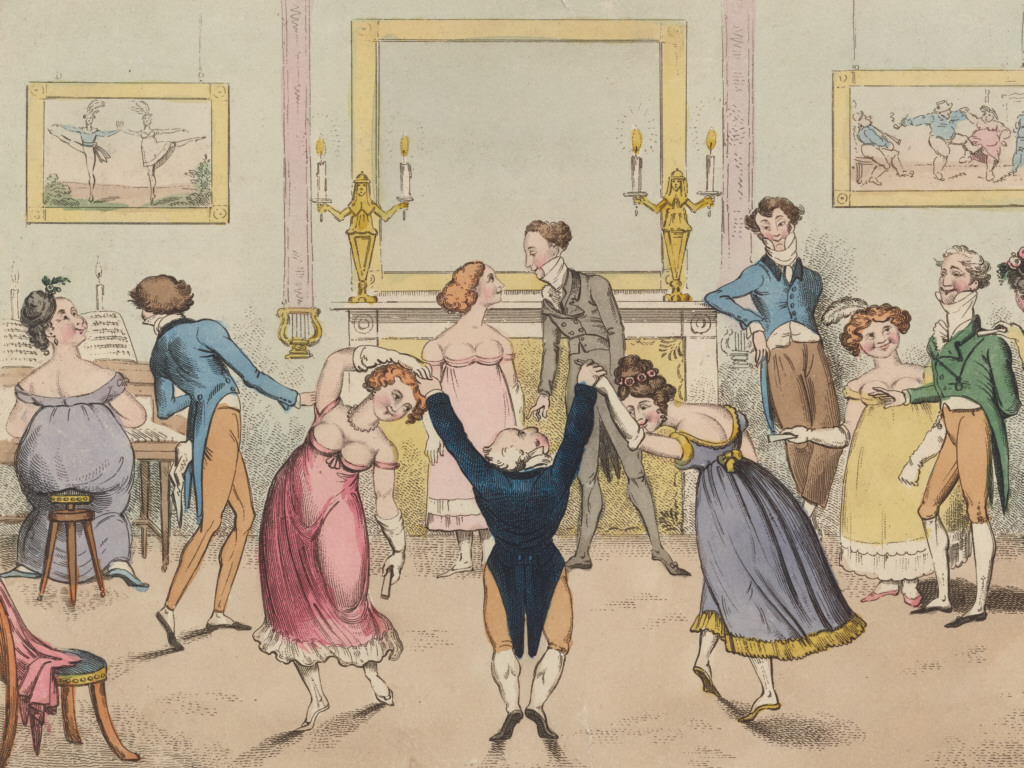
Auch in diesem Jahr ist Jane Austen für uns die Namenspatronin für die Tänze des späten 18. und frühen 19. Jahrhunderts, auch wenn diesmal kein rundes Jubiläum ansteht. Wir werden uns diesmal nicht ganz so eng an Jane Austen orientieren, schließlich wollen wir ja auch viele neue Tänze erlernen, der eine oder andere echte Jane Austen Tanz wird aber natürlich dabei sein.
Neben Tänzen aus England werden diesmal auch insbesondere Tänze aus deutschen Musenalmanachen auf dem Programm stehen. Dabei entsteht ein buntes Potpourri aus verschiedenen Tanzformen der Zeit.
Auch dieses Wochenende ist wieder besonders anfängergeeignet und bietet einen breiten Einblick in den Tanz der Empirezeit.
Wer mag, und entsprechende Kleidung hat, kann an diesem Wochenende auch gerne im Kostüm tanzen – wer also in ein Empire Kleid oder in einen Frack schlüpfen möchte, mag das tun, alle anderen tragen normale moderne Kleidung – wie immer.
Die Zeiten sind:
Samstag 13:00-15:30 und 16:30-19:00 Uhr
Sonntag 10:00-12:30 und 13:30-16:00 Uhr
Historischer Tanz in Frankfurt 2021:
- Sommerferienprogramm -
24.–25.7.2021 Barocktanz: Leichte barocke Solopaartänze zum Einstieg und Wiedereinstieg
31.7.–1.8.2021 (Zusatztermin) Barocktanz: Leichte barocke Solopaartänze zum Einstieg und Wiedereinstieg
21.–22.8.8.2021 Barocktanz: „The Princess of Hesse“ (1740)
- Reguläres Programm -
11.–12.9.2021 Barock/Rokoko: Hessen im Spiegel des Gesellschaftstanzes des 18. Jahrhunderts (Teil 1)
16.–17.10.2021 Barock/Rokoko: Hessen im Spiegel des Gesellschaftstanzes des 18. Jahrhunderts (Teil 2)
30.–31.10.2021 Barocktanz: Barocktänze für Kinder
13.–14.11.2021 Empire: Das Jane-Austen Wochenende
4.–5.12.2021 Barocktanz: „La princesse de Darmstadt“ (c1717)
Weitere Informationen finden sich auf meiner Webseite www.historische-tanzkunst.de sowie im Flyer.
- Workshop
- Playford
- Quadrilles
- Regency
- Beginner
- Intermediates
Höfischer Tanz
Wir tanzen überlieferte Gesellschaftstänze vergangener Epochen zur Musik des 16. - 19. Jahrhunderts.
Reigen, Kontratänze und Quadrillen sind sehr beliebte Formen und werden paarweise in einer Gruppe getanzt.
Alle Tanzfreudigen - mit oder ohne Partner - sind herzlich willkommen zum Schnuppern, Mitmachen, Lernen ...
Geselligkeit, Freude an Bewegung, klassische Musik - eine geniale Kombination!
- Workshop
- Baroque
- Playford
- Regency
- Beginner
Höfischer Tanz
- Teacher
- Baroque
- Playford
- 19th century
- Regency
HISTORICAL DANCE SUMMER COURSES 2021 / July, 27-31, Paris / English Country Dances and Baroque Dances / Cécile Laye and Pierre-François Dollé
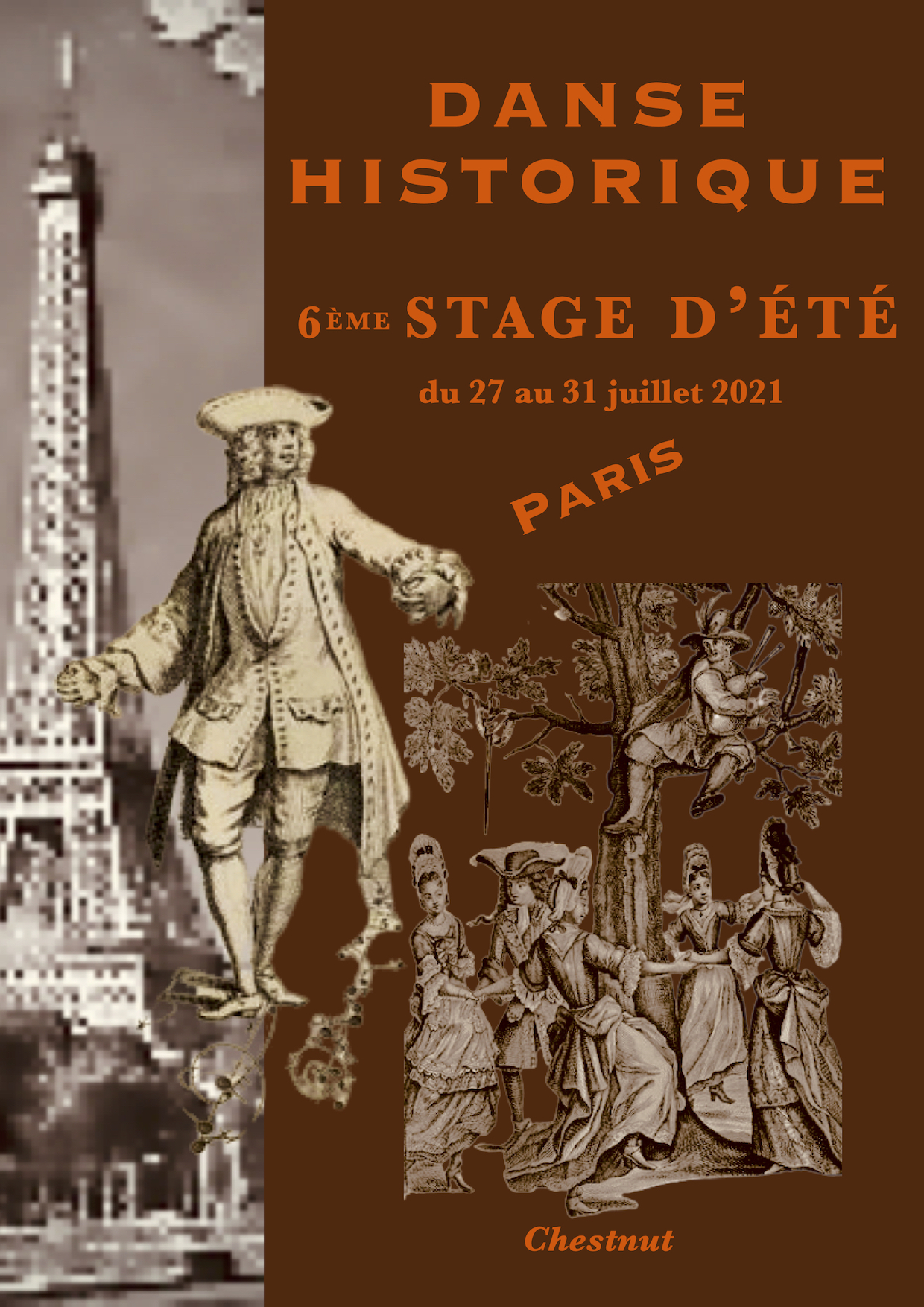
Due to the current health crisis and despite our attachment to the Tapis Vert in Normandy, the 6th edition of the summer courses of historical dance organized by chestnut in collaboration with Danses au (Pas)sé et HéliosKine will take place this year in Paris.
A good opportunity to experience Paris differently ! ....
This 6th edition retains all the advantages that make the success of these Summer Courses for 5 years! :
- 2 courses, 2 repertoires, 3 workshops
- the possibility to build your program according to your tastes and your energy. According to your wishes, you can concoct an intensive program (with a maximum of 6 hours of lessons/ day) or alternate in your day the moments of workshop with moments of relaxation or visit in Paris or its surroundings.
- studios adapted to the practice of dance
- a training place close to many cultural sites (Micadanses studios are close to the City Hall)
Please find all détails on chestnut website

2. Schedule
4. Instructors
5. Location
6. Fees
8. Registration
9. Contact
10. Flyers
PERIODS and CONTENTS
1. COURSE n° 1 from Saturday 17 to Wednesday 21 July
- 1. English Country Dances / Cécile Laye (Chestnut)
- 2. Baroque dances / Irène Feste (Danses au (Pas)sé)
2. COURSE n° 2 from Tuesday 27 July to Saturday 31 July
- 1. English Country Dances / Cécile Laye (Chestnut)
- 2. Baroque dances / Pierre-François Dollé (HéliosKine)
WORSHOPS' DESCRIPTION

COURSE n° 1 from Saturday 17 to Wednesday 21 July
1. English Country Dances (3 hours / day) / Cécile Laye
The workshop will again give us the opportunity to celebrate the incredible richness of the repertoire of English figure dances which have contributed so much to the history of ancient dance and which have reinvented themselves regularly from the 16th century to the present day.Programme: "Homonymous dances"
They are dances using the same music for different choreographies from ancient and modern repertoire: Le Basque (Cécile Laye); Kneeland Romp (Gary Roodman);Virgin Frolick (The Dancing Master, 1710);Hand to hand (Gary Roodman); The Merry Milkmaids (The Dancing Master, 1651 and 1728 versions) ; A trip to Macclesfield (Brian Wedgbury); An Enchanted Place (Antony Heywood); two versions of Drapers Gardent (The Dancing Master, 1706) including one in menuet steps.
and / or
2. Baroque dances (3 hours / day) / Irène Feste
Programme: "Unique choreographic scores"
- Entrée de l’Amiral de France en 1756 par M. Dupré (FL/Ms20.1/01)
- La Nouvelle Bourrée des Princesses par M. Rameau (FL/1728.1/14)
The singularity of these scores comes from the fact that they are the only dances choreographed, respectively by M. Dupré and by Pierre Rameau, which have reached us to this day.
Each of these choreographic scores is in a collection to learn the art of writing or describing dance.
After Raoul-Auger Feuillet’s “Chorégraphie….” in 1700, other dance masters tried to write a method.
La Bourrée des Princesses by Mr. Rameau, a dance for a man and a woman, is featured in the “Abrégé de la nouvelle Méthode dans l’Art d’écrire ou de tracer toutes sortes de Danses de Ville…” , by Pierre Rameau, published in 1728.
The Entrée de l'Amiral de France by M. Dupré, is described and noted in the “ Méthode pour apprendre de soi-même la Chorégraphie, ou l’Art de décrire…” , de Dupré, Maître à danser au Mans, published in 1757.
This is a ballet entrance for a man, quite approachable for a woman!
We will also see together that there is a surprise.

COURSE n° 2 from Tuesday 27 July to Saturday 31 July
1. English Country Dances (3 hours / day) / Cécile Laye
The workshop will again give us the opportunity to celebrate the incredible richness of the repertoire of English figure dances which have contributed so much to the history of ancient dance and which have reinvented themselves regularly from the 16th century to the present day.Programme: "From the Grand Square to the Square of Mahony"
From the old and modern directories, we will work on the evolution of a figure from the 17th century to the present day.The program will allow dancers to work with different aesthetics and proposals. The following dances will be included: Hunsdon House (The Dancing Master, 1670); Little Hunsdon (Pat Shaw); Les Lanciers (Alexander Strathy version, 1822); La Beaudri (La Cuisse, 1762);Cupid’s Garden (Marjorie Heffer); Play to win (Antony Heywood); Mary K (Gary Roodman)
and / or
2. Baroque dances (3 hours / day) / Pierre-François Dollé
Programme: "Les Caractères de la danse, fantaisie musicale de Jean-Fery Rebel"
After a gentle warm-up, mixing a moment of relaxation and body reconnection with progressive stretches, we will tackle together the technique of the «Belle Dance», returning to the fundamentals of all the steps necessary for the easy practice of this technique.
In a second time, we will explore the famous «Caractères de la danse», musical fantasy of Jean-Fery Rebel, a kind of exercise of style, which unfolds, like a thread of Ariane, most of the dances of ball and theatre in use in the first quarter of the eighteenth century.
After a prelude allowing the customary reverences, we will have pleasure to dance the Courante, the Menuet and the Bourrée, ball dances par excellence, then to travel in a lively and dense Chaconne, a Sarabande, a Gigue, a Rigaudon, a Passepied, a Lourre, a pastoral Musette to finish with an Italian Sonata, a sort of window open to a new fashion to come
These Characters of Dance were performed by many artists in the 18th century, including the dancers Marie Sallé and Marie-Anne de Camargo, who choreographed and danced them on the French and English stages in particular.
When Marie Sallé moved the audience with her sensitivity and charm, the Camargo impressed the Parisian public with its mastered technique, its jumps and its chats!
It is this whole range of intentions and styles that, in a choreography created by myself, in an idea of progression, we will study together, for the pleasure of dance, movement and the emotions that dance gives us.
Let’s dive together into these famous «characters», mythical piece if any!
INSTRUCTORS

Cécile LAYE
Cécile Laye is CHESTNUT’s teaching and artistic director. She studied old dance forms in England with the Dolmetsch Historical Dance Society, Nonsuch History and Dance and EFDSS (English folk Dance and Song Society). She worked in particular under such famed teachers and researchers as Anne Daye, Anne Cottis, Peggy Dixon, Ethyl Anderson, Marjorie Fennessy, Tom Cook and Alan Davies. In France she studied with Francine Lancelot, Andréa Francalancci and Barbara Sparti. At the end of the eighties, she founded AMARILLIS, a dance company meaning to bring to the public figure dances of the Stuarts’ time and the English inheritance, as well as some aspects of history and literature, with the collaboration of musicians and singers. AMARILLIS was replaced by CHESTNUT in 1998. CHESTNUT took over its predecessor’s artistic activities (creating dance and theatre shows), its teaching (preparing dancers for Balls through a rich program of workshops and classes) and its publication ones (CDs, dance descriptions, articles on Playford and modern dances). Over the years, Cécile LAYE has build up a strong experience as a dancing master and ball caller (French Renaissance balls/ English figure dances balls, or a mixture of both). She can pass on her taste for and pleasure in elegant dancing to beginners as well as seasoned dancers. Besides her activities in the field of dancing, Cécile Laye studied dramatic art and staging, graduating at Cours Florent. She also graduated at Eva Ruchpaul’s Yoga Institute and the Paris school of Gestalt-therapy. She played Shakespeare, Molière and Marivaux in Paris and elsewhere in France and takes part in creating new plays and shows, for children in particular. She draws on both sides of her extensive training, physical and artistic, to develop her teaching method. Her constant aim is to understand the needs of a given group and of each person making up the group, to build up a class so that each person gradually understands the dance, becomes aware of his/her body and its expressive capacities, be it during a lesson, a ball, or on stage.

Irène FESTE
From an early age, Irène Feste trained in classical dance with J. Pelletier, Y. Meyer, S. Prince and M. Denard.After a Master Engineer in Telecommunications and Networks and her Diploma of teacher of Classical Dance, she discovered Belle Dance and Baroque Eloquence awith the Cie L'Eclat des Muses de C. Bayle (Le Ballet de la Merlaison).She was introduced to the Italian Renaissance style with B. Sparti and G. Giordano. She is a performer in France and at the International for: Divertimenty, Les Corps Eloquents, Le Baroque Nomade, La Tempesta, Doulce Mémoire, Il Ballo and is choreographer-interpreter of Cie Fantaisies Baroques, co-founded with P.-F. Dollé (Danceries en Fables, L'Ile des Esclaves, 1717: Les Honneurs faits au Tsar, Métamorphoses - le Chat Botté...) In 2013 and 2019, she choreographed for director Pascal Ruiz: Le Masque d'Or, Le Secret des Mémoires. In 2015, she participated in the BBC’s The King who invented Ballet, for the tercentenary of the death of Louis XIV. Artist performer, choreographer and dancing master, through her research (Centre National de la Danse - Aide à la Recherche et au Patrimoine en Danse 2013,  2014, 2016, 2020), she contributes to the diffusion of ancient dance, from the sixteenth to the nineteenth centuries, during workshops in France and Europe, pedagogical and choreographic actions in schools and conservatories.
Since 2020, she has been choreographer and performer of the company Danses au (Pas)sé(Le Ballet des 5 Sens, a young audience performance).

Pierre-François DOLLÉ
Pierre-François Dollé, after a multidisciplinary training at the Balettakademie in Cologne, he danced very contrasting repertoires within different companies which led him to work, among others, in Germany and England. Back in France, he obtained his DE as a dance teacher and crossed paths with Christine Bayle, with whom he created many ballets. He also dances for the company l'Eventail, and works with many choreographers, directors and conductors of the baroque stage. In various styles, he now has a sustained activity of choreographer, notably in collaboration with the company Cracovia Danza, the Arts Florissants or for productions in Japan, United States and Germany. He founded Cie Fantaisies Baroques, with Irène Feste, in 2007. In 2013, 2014, 2016 and 2020, he obtained the Aid for Research and Heritage in Dance from the Centre National de la Danse for research on dances from the early 17th century and on Empire and pre-Romantic styles.
All our instructors are PRO DA members :

LOCATION
Located on rue Geoffroy l'Asnier in the 4th arrondissement of Paris, Micadanses studios are equipped and made available to amateur and professional dancers to host rehearsals, workshops, workshops and other meetings around dance.
FEES
Teaching Fees (€/pers.) :
1 workshop (15 hours) : 195 €
2 workshops (30 hours) : 360 €
HOW TO GET THERE
Micadanses studios are located at different numbers on Geoffroy l'Asnier Street. Numbers and access codes will be communicated to you later after your registration.
REGISTRATION
Registration confirmation is confirmed by returning the registration form together with the amount of the deposit.
Registration form COURSE n° 1 (July, 17 to 21): Course n° 1 Registration Form
Registration form COURSE n° 2 (July, 27 to 31): Course n° 2 Registration Form
CONTACT
contact@chestnut.fr ou 0033 660 222 321
FLYERS
- Workshop
- Summer School
- Tudor
- Baroque
- Playford
- 19th century
- Quadrilles
- Regency
- mixed
- All levels
HISTORICAL DANCE SUMMER COURSES 2021 / July, 17-21, Paris / English Country Dances and Baroque Dances / Cécile Laye and Irène Feste

Due to the current health crisis and despite our attachment to the Tapis Vert in Normandy and the welcome of Jean Galodé, its director, the 6th edition of the summer courses of historical dance organized by CHESTNUT will take place this year in Paris.
A good opportunity to experience Paris differently ! ....
This 6th edition retains all the advantages that make the success of these Summer Courses for 5 years! :
- 2 courses, 2 repertoires, 3 workshops
- the possibility to build your program according to your tastes and your energy. According to your wishes, you can concoct an intensive program (with a maximum of 6 hours of lessons/ day) or alternate in your day the moments of workshop with moments of relaxation or visit in Paris or its surroundings.
- studios adapted to the practice of dance
- a training place close to many cultural sites (Micadanses studios are close to the City Hall)
Please find all détails on chestnut website
2. Schedule
4. Instructors
5. Location
6. Fees
8. Registration
9. Contact
10. Flyers
PERIODS and CONTENTS
1. COURSE n° 1 from Saturday 17 to Wednesday 21 July
- 1. English Country Dances / Cécile Laye (Chestnut)
- 2. Baroque dances / Irène Feste (Danses au (Pas)sé)
2. COURSE n° 2 from Tuesday 27 July to Saturday 31 July
- 1. English Country Dances / Cécile Laye (Chestnut)
- 2. Baroque dances / Pierre-François Dollé (HéliosKine)
WORSHOPS' DESCRIPTION
COURSE n° 1 from Saturday 17 to Wednesday 21 July
1. English Country Dances (3 hours / day) / Cécile Laye
The workshop will again give us the opportunity to celebrate the incredible richness of the repertoire of English figure dances which have contributed so much to the history of ancient dance and which have reinvented themselves regularly from the 16th century to the present day.Programme: "Homonymous dances"
They are dances using the same music for different choreographies from ancient and modern repertoire: Le Basque (Cécile Laye); Kneeland Romp (Gary Roodman);Virgin Frolick (The Dancing Master, 1710);Hand to hand (Gary Roodman); The Merry Milkmaids (The Dancing Master, 1651 and 1728 versions) ; A trip to Macclesfield (Brian Wedgbury); An Enchanted Place (Antony Heywood); two versions of Drapers Gardent (The Dancing Master, 1706) including one in menuet steps.
and / or
2. Baroque dances (3 hours / day) / Irène Feste
Programme: "Unique choreographic scores"
- Entrée de l’Amiral de France en 1756 par M. Dupré (FL/Ms20.1/01)
- La Nouvelle Bourrée des Princesses par M. Rameau (FL/1728.1/14)
The singularity of these scores comes from the fact that they are the only dances choreographed, respectively by M. Dupré and by Pierre Rameau, which have reached us to this day.
Each of these choreographic scores is in a collection to learn the art of writing or describing dance.
After Raoul-Auger Feuillet’s “Chorégraphie….” in 1700, other dance masters tried to write a method.
La Bourrée des Princesses by Mr. Rameau, a dance for a man and a woman, is featured in the “Abrégé de la nouvelle Méthode dans l’Art d’écrire ou de tracer toutes sortes de Danses de Ville…” , by Pierre Rameau, published in 1728.
The Entrée de l'Amiral de France by M. Dupré, is described and noted in the “ Méthode pour apprendre de soi-même la Chorégraphie, ou l’Art de décrire…” , de Dupré, Maître à danser au Mans, published in 1757.
This is a ballet entrance for a man, quite approachable for a woman!
We will also see together that there is a surprise.
COURSE n° 2 from Tuesday 27 July to Saturday 31 July
1. English Country Dances (3 hours / day) / Cécile Laye
The workshop will again give us the opportunity to celebrate the incredible richness of the repertoire of English figure dances which have contributed so much to the history of ancient dance and which have reinvented themselves regularly from the 16th century to the present day.Programme: "From the Grand Square to the Square of Mahony"
From the old and modern directories, we will work on the evolution of a figure from the 17th century to the present day.The program will allow dancers to work with different aesthetics and proposals. The following dances will be included: Hunsdon House (The Dancing Master, 1670); Little Hunsdon (Pat Shaw); Les Lanciers (Alexander Strathy version, 1822); La Beaudri (La Cuisse, 1762);Cupid’s Garden (Marjorie Heffer); Play to win (Antony Heywood); Mary K (Gary Roodman)
and / or
2. Baroque dances (3 hours / day) / Pierre-François Dollé
Programme: "Les Caractères de la danse, fantaisie musicale de Jean-Fery Rebel"
After a gentle warm-up, mixing a moment of relaxation and body reconnection with progressive stretches, we will tackle together the technique of the «Belle Dance», returning to the fundamentals of all the steps necessary for the easy practice of this technique.
In a second time, we will explore the famous «Caractères de la danse», musical fantasy of Jean-Fery Rebel, a kind of exercise of style, which unfolds, like a thread of Ariane, most of the dances of ball and theatre in use in the first quarter of the eighteenth century.
After a prelude allowing the customary reverences, we will have pleasure to dance the Courante, the Menuet and the Bourrée, ball dances par excellence, then to travel in a lively and dense Chaconne, a Sarabande, a Gigue, a Rigaudon, a Passepied, a Lourre, a pastoral Musette to finish with an Italian Sonata, a sort of window open to a new fashion to come
These Characters of Dance were performed by many artists in the 18th century, including the dancers Marie Sallé and Marie-Anne de Camargo, who choreographed and danced them on the French and English stages in particular.
When Marie Sallé moved the audience with her sensitivity and charm, the Camargo impressed the Parisian public with its mastered technique, its jumps and its chats!
It is this whole range of intentions and styles that, in a choreography created by myself, in an idea of progression, we will study together, for the pleasure of dance, movement and the emotions that dance gives us.
Let’s dive together into these famous «characters», mythical piece if any!
INSTRUCTORS
Cécile LAYE
Cécile Laye is CHESTNUT’s teaching and artistic director. She studied old dance forms in England with the Dolmetsch Historical Dance Society, Nonsuch History and Dance and EFDSS (English folk Dance and Song Society). She worked in particular under such famed teachers and researchers as Anne Daye, Anne Cottis, Peggy Dixon, Ethyl Anderson, Marjorie Fennessy, Tom Cook and Alan Davies. In France she studied with Francine Lancelot, Andréa Francalancci and Barbara Sparti. At the end of the eighties, she founded AMARILLIS, a dance company meaning to bring to the public figure dances of the Stuarts’ time and the English inheritance, as well as some aspects of history and literature, with the collaboration of musicians and singers. AMARILLIS was replaced by CHESTNUT in 1998. CHESTNUT took over its predecessor’s artistic activities (creating dance and theatre shows), its teaching (preparing dancers for Balls through a rich program of workshops and classes) and its publication ones (CDs, dance descriptions, articles on Playford and modern dances). Over the years, Cécile LAYE has build up a strong experience as a dancing master and ball caller (French Renaissance balls/ English figure dances balls, or a mixture of both). She can pass on her taste for and pleasure in elegant dancing to beginners as well as seasoned dancers. Besides her activities in the field of dancing, Cécile Laye studied dramatic art and staging, graduating at Cours Florent. She also graduated at Eva Ruchpaul’s Yoga Institute and the Paris school of Gestalt-therapy. She played Shakespeare, Molière and Marivaux in Paris and elsewhere in France and takes part in creating new plays and shows, for children in particular. She draws on both sides of her extensive training, physical and artistic, to develop her teaching method. Her constant aim is to understand the needs of a given group and of each person making up the group, to build up a class so that each person gradually understands the dance, becomes aware of his/her body and its expressive capacities, be it during a lesson, a ball, or on stage.
Irène FESTE
From an early age, Irène Feste trained in classical dance with J. Pelletier, Y. Meyer, S. Prince and M. Denard.After a Master Engineer in Telecommunications and Networks and her Diploma of teacher of Classical Dance, she discovered Belle Dance and Baroque Eloquence awith the Cie L'Eclat des Muses de C. Bayle (Le Ballet de la Merlaison).She was introduced to the Italian Renaissance style with B. Sparti and G. Giordano. She is a performer in France and at the International for: Divertimenty, Les Corps Eloquents, Le Baroque Nomade, La Tempesta, Doulce Mémoire, Il Ballo and is choreographer-interpreter of Cie Fantaisies Baroques, co-founded with P.-F. Dollé (Danceries en Fables, L'Ile des Esclaves, 1717: Les Honneurs faits au Tsar, Métamorphoses - le Chat Botté...) In 2013 and 2019, she choreographed for director Pascal Ruiz: Le Masque d'Or, Le Secret des Mémoires. In 2015, she participated in the BBC’s The King who invented Ballet, for the tercentenary of the death of Louis XIV. Artist performer, choreographer and dancing master, through her research (Centre National de la Danse - Aide à la Recherche et au Patrimoine en Danse 2013, 2014, 2016, 2020), she contributes to the diffusion of ancient dance, from the sixteenth to the nineteenth centuries, during workshops in France and Europe, pedagogical and choreographic actions in schools and conservatories.
Since 2020, she has been choreographer and performer of the company Danses au (Pas)sé(Le Ballet des 5 Sens, a young audience performance).
Pierre-François DOLLÉ
Pierre-François Dollé, after a multidisciplinary training at the Balettakademie in Cologne, he danced very contrasting repertoires within different companies which led him to work, among others, in Germany and England. Back in France, he obtained his DE as a dance teacher and crossed paths with Christine Bayle, with whom he created many ballets. He also dances for the company l'Eventail, and works with many choreographers, directors and conductors of the baroque stage. In various styles, he now has a sustained activity of choreographer, notably in collaboration with the company Cracovia Danza, the Arts Florissants or for productions in Japan, United States and Germany. He founded Cie Fantaisies Baroques, with Irène Feste, in 2007. In 2013, 2014, 2016 and 2020, he obtained the Aid for Research and Heritage in Dance from the Centre National de la Danse for research on dances from the early 17th century and on Empire and pre-Romantic styles.
All our instructors are PRO DA members :
LOCATION
Located on rue Geoffroy l'Asnier in the 4th arrondissement of Paris, Micadanses studios are equipped and made available to amateur and professional dancers to host rehearsals, workshops, workshops and other meetings around dance.
FEES
Teaching Fees (€/pers.) :
1 workshop (15 hours) : 195 €
2 workshops (30 hours) : 360 €
HOW TO GET THERE
Micadanses studios are located at different numbers on Geoffroy l'Asnier Street. Numbers and access codes will be communicated to you later after your registration.
REGISTRATION
Registration confirmation is confirmed by returning the registration form together with the amount of the deposit.
Registration form COURSE n° 1 (July, 17 to 21): Course n° 1 Registration Form
Registration form COURSE n° 2 (July, 27 to 31): Course n° 2 Registration Form
CONTACT
contact@chestnut.fr ou 0033 660 222 321
FLYERS
- Workshop
- Summer School
- Tudor
- Baroque
- Playford
- 19th century
- Quadrilles
- Regency
- mixed
- All levels
L'Humor Bizzarro 2021 - Early Music & Dance Workshop
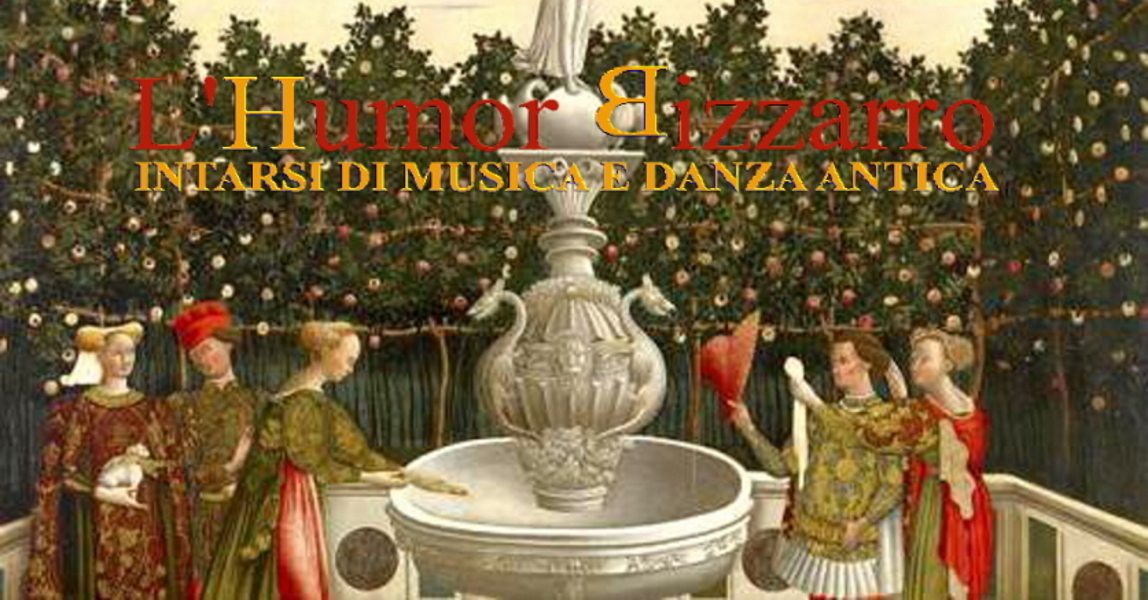
L'Humor Bizzarro - Early Music & Dance Summer Workshop
20th Edition – Rome 31 July – 1 August / 7 – 8 August 2021
organized by
Il Teatro della Memoria (artistic direction: Claudia Celi e Andrea Toschi)
Renaissance & baroque singing: Rosanna Rossoni
15th & 16th Century dancing: Claudia Celi
17th & 18th Century dancing: Ilaria Sainato
19th Century social dancing: Paolo Di Segni
Recorder: Marco Rosa Salva
Renaissance Lute, Theorbo & Baroque guitar: Francesco Tomasi
Baroque & classical Oboe: Angela Paletta
Cembalo Accompaniment: Paolo Tagliapietra
Qi Gong Seminar: Angela Paletta
Programs (in Italian) are available at this link.
Info abut registration and costs in English available on our blog.
- Summer School
- Quattrocento
- Cinquecento
- Baroque
- Regency
- All levels
Chestnut
- Dance group
- Edition
- Organizer
- Performer
- Resource
- Teacher
- Quattrocento
- Cinquecento
- French Renaissance
- Tudor
- Playford
- Quadrilles
- Regency
Gesellschaftstänze des 18. und 19. Jahrhunderts
"Gemeine oder gesellschaftliche Tänz sind zum gesellschaftlichen Vergnügen erfunden worden; deswegen müssen sie auch so beschaffen seyn, daß Personen, die sich kein Hauptgeschäft aus der Tanzkunst machen, dieselben lernen können. Sie kommen darin überein, daß zwei, und mehrere Personen, gemeinschaftlich nach einer kurzen Melodie, die in Bewegung (Takt) ihren eigenen bestimmten Karakter hat, nach bestimmten Figuren eine bestimmte Anzahl zusammengesetzter Schritte machen, und diese so lange wiederholen, als sie Lust dazu haben." (Tanzmeister Mädel im Jahr 1805)
In diesem Workshop erlernen wir einige Gesellschaftstänze des 18. und 19. Jahrhunderts und versuchen vor allem auch an den Feinheiten der Schrittausführung zu arbeiten.
Termin: 9. Jänner 2021
Kurszeiten: Sa 10:30h bis 13:30h (Saal 3) und 14:30 bis 16:30h (Saal 1)
Kursort: → Tanzstudio Manhardt, Neubaugasse 38, 1070 Wien
Kursleitung: → Pia Brocza
Anmeldung und Zahlungsmodalitäten -> www.zeitentanz.at
- Workshop
- Baroque
- Playford
- Rococo
- 19th century
- Regency
- Beginner
- Intermediates
- Advanced
Midsummer Early Dance & Music Festival
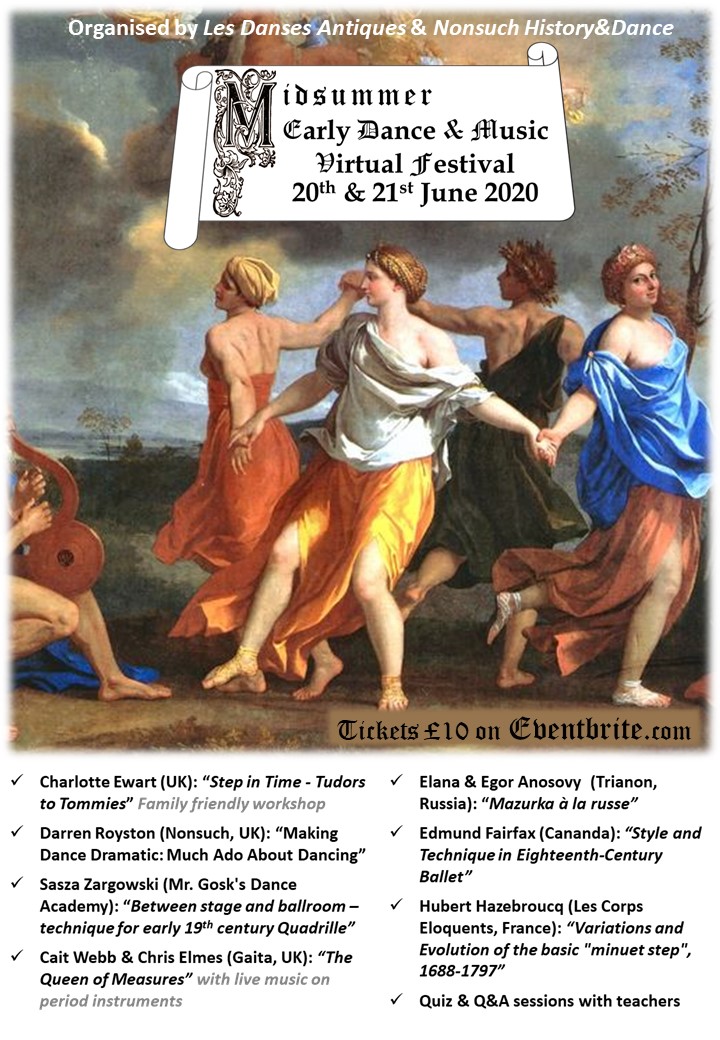
Discover the diverse world of early dance and experience the connection between movement, music, and beauty through time at this Midsummer Early Dance and Music Virtual Festival!
Midsummer Eve is one of the spirit nights of the year, when the boundaries between the worlds are the thinnest. Let’s use this magic to travel in time! Though science says it is impossible we will use dance & music as our time travel machine. During this virtual Festival we celebrate the longest day of the year with music and dance from 15th to 20th centuries.
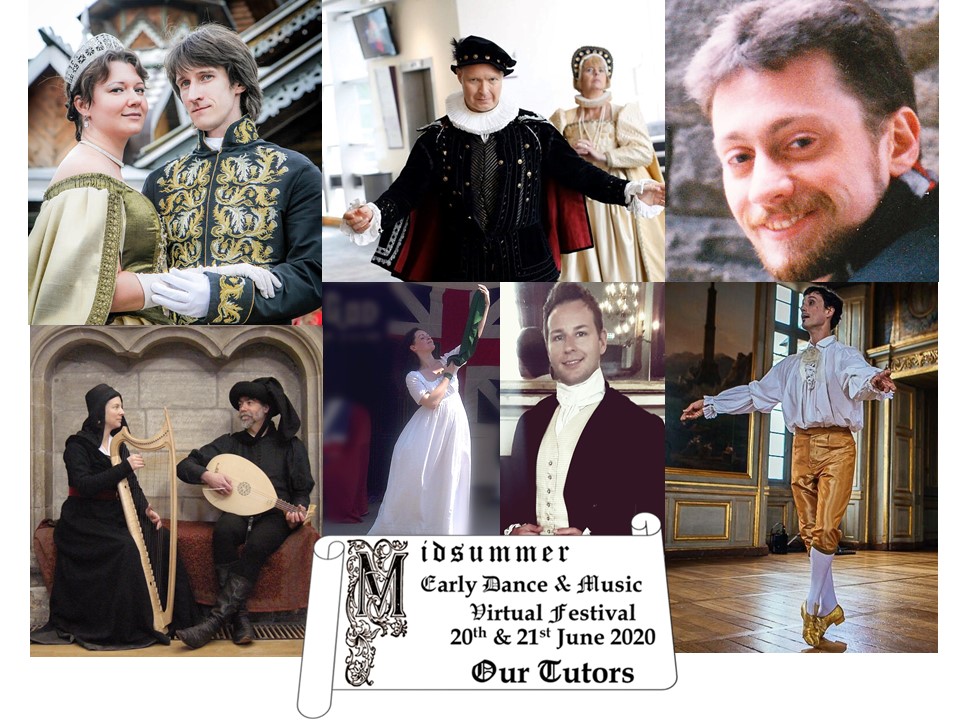
We will visit Italian Renaissance courts accompanied by ensemble Gaita and learn the connection between various steps and musical tempos with live music on period instruments. Darren Royston will transport us into the world of the Shakespearean England to connect the dance and theatre. We will travel with Hubert Hazebrouqc through the "long Eighteenth Century" with minuet to see how much its rhythms and even the movements changed. Edmund Fairfax will challenge the most common misconceptions about 18th century ballet and introduce us to dancers performing at magnificent Versailles, in iconic Paris Opera and in street as part of comedie de l'arte. We will visit the ballrooms and fashionable assemblies of Georgian Britain with Sasha Zargowski to learn the refined dance styles of the Enlightenment era. Elana and Egor Anosovy from Trianon dance school in Moscow will transport us in time and space to learn romantic and dashing mazurka à la russe. Charlotte Ewart will bring alive the convoluted history of British monarchy with her fun and accessible for the whole family session of dance. The Festival will be wrapped up with the Early Dance& Music themed Quiz and panel discussion with teachers to learn how they discovered early dance and a chance to ask your own questions.
The Festival will be held online on Zoom platform. The access link will be sent on the 20th of June.
- Workshop
- Renaissance
- Tudor
- Baroque
- 19th century
- Quadrilles
- Regency
- mixed
- All levels
Modern Dance Zeitgenössischer Tanz Yoga - Kurse Unterricht Workshops - Tanz Yoga Frankfurt am Main
Frankfurt am Main
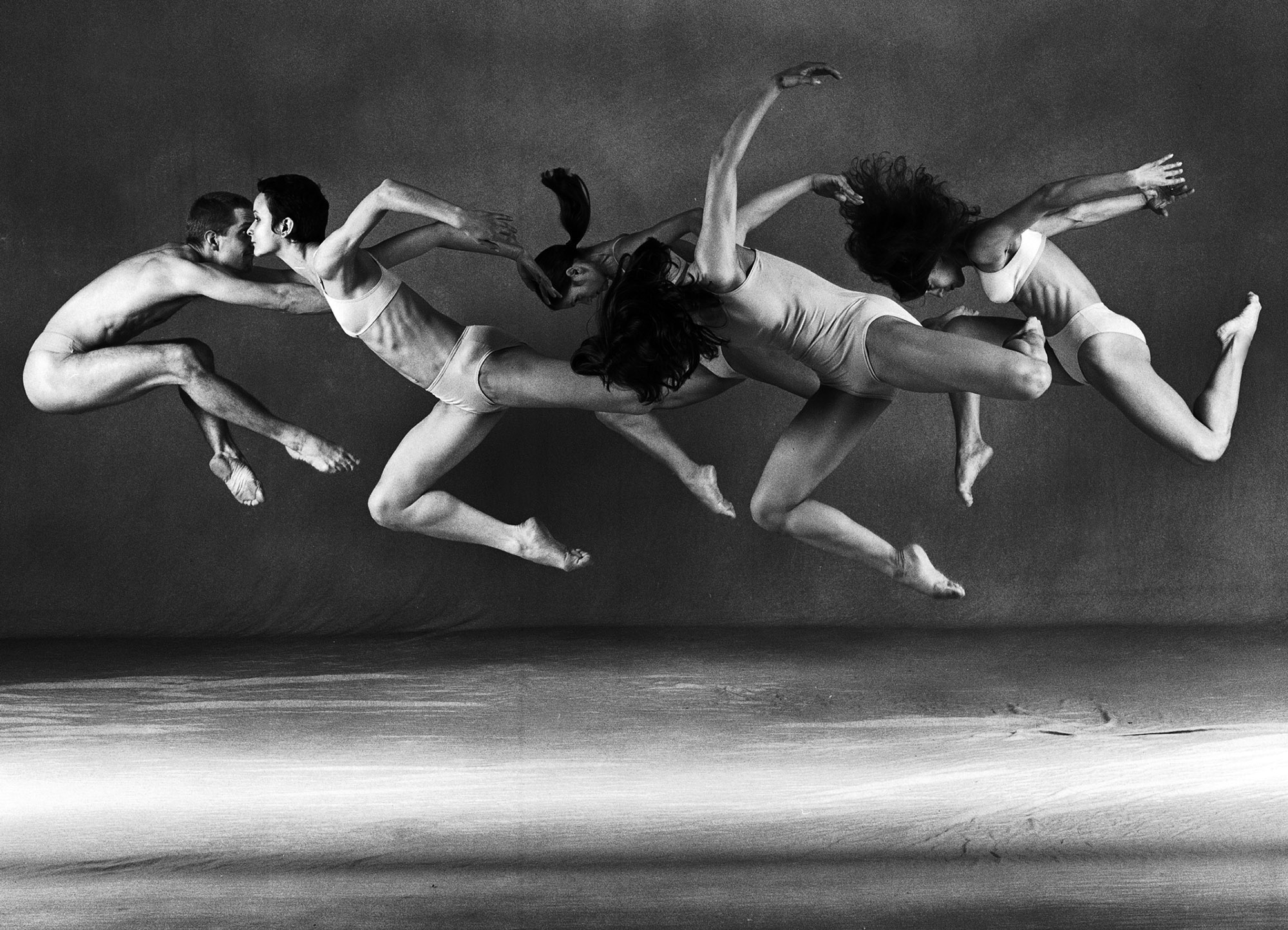
Modern Dance - Zeitgenössichr Tanz und Yoga
Jeden Dienstag und Mittwoch von 17:30-22:00 Uhr
Von Anfänger bis Fortgeschrittene
mit Jörg Wenzel
- Dance group
- Edition
- Organizer
- Performer
- Teacher
- Antique
- Greek
- Tudor
- Playford
- Rococo
- Spanish baroque
- 19th century
- Quadrilles
- Regency