Le Menuet sous toutes ses formes!
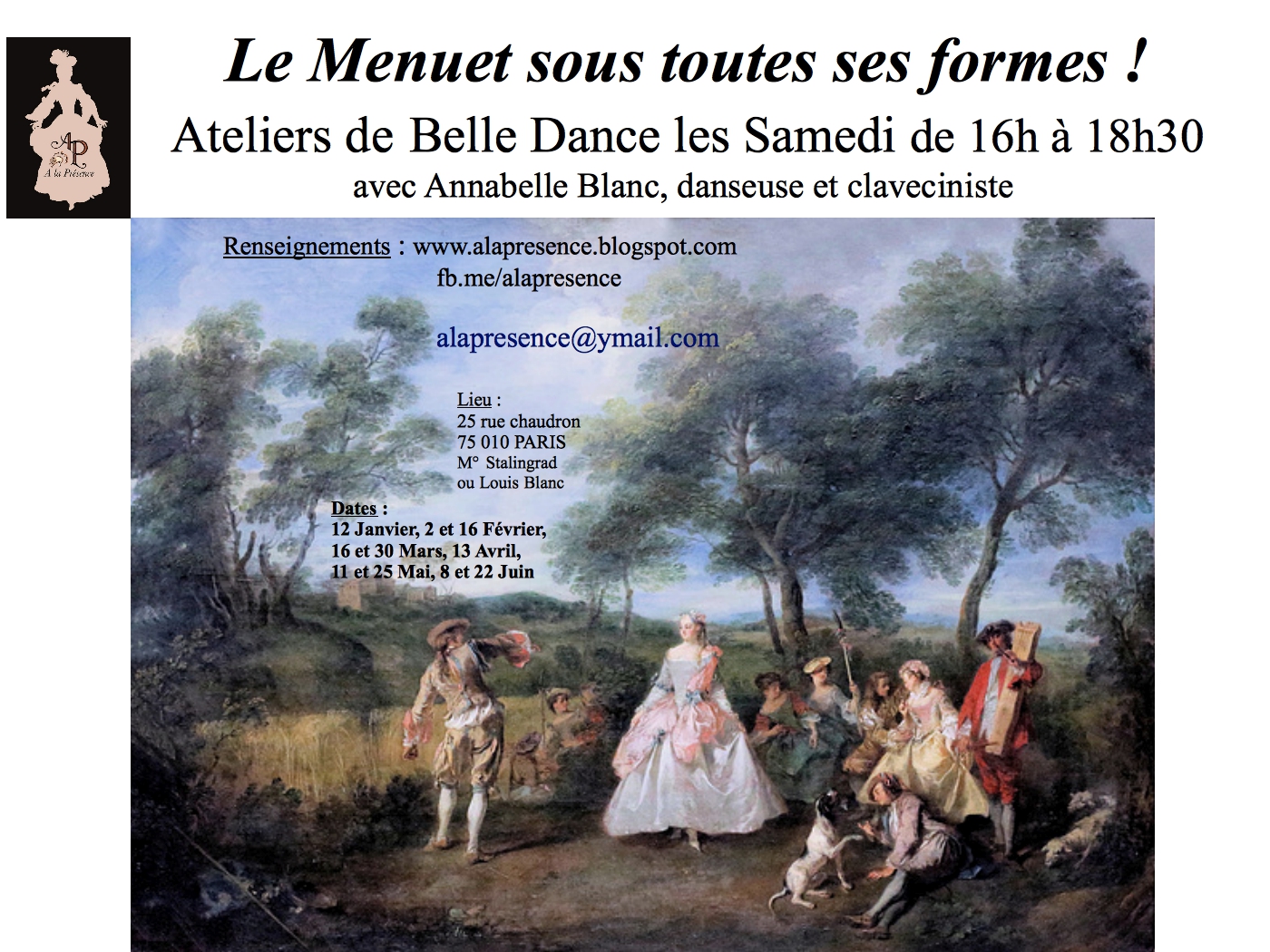
Le Menuet sous toutes ses formes : vif ou tendre, à la cour, au bal ou au théâtre, en couple, à 3 ou à 4, en France ou en Angleterre, en contredanse…
Cette série d'ateliers vous fera (re)découvrir tous les pas et les figures du Menuet à travers des exercices et chorégraphies variés.
Dates : 16 et 30 Mars, 13 Avril, 11 et 25 Mai, 8 et 22 Juin
- Workshop
- Ongoing classes
- Baroque
- All levels
“ Le Grand Bal du Guépard”
“ Le Grand Bal du Guépard”
“The Grand Ball of the Leopard”
Palermo 6 Aprile 2019 Villa Boscogrande
The Dream of the Principe di Salina
To exist also consists of the awareness that historical memories, traditions, past achievements and their legends are fully part of our artistic and cultural background. As such they will live on forever, for indviduals and places – alongside the historical events both written and lived through – food and drinking habits of this land of Sicily accompany our lives so as to become and integral part our memory. After the great success of the first edition the Dance Company Harmonia Suave directed by Carla Favata will organize the 2st Edition of the Historical Commemoration of the Gran Ballo dai Ponteleone as described in the Sixth Chapter of the acclaimed novel “The Leopard” by Giuseppe Tomasi di Lampedusa and as directed for the screen by Luchino Visconti in the omonymous ward-winning movie. Luchino Visconti.
“Le Grand Bal du Guépard”
“The Grand Ball of the Leopard”
The Dream of the Prince of Salina
Saturday April 6 2019, in Palermo within the enchanting Villa Boscogrande, location of the opening scene of Visconti’s movie.
The novel “The Leopard” is set in Palermo, 1860 in the aftermath of the landing on the the Island of Garibaldi’s Thousand. As such, it tells the story of the period stretching from the glories of the Romantic era to the annexation of the Kingdom of the Two Sicilies to the Kingdom of Italy.
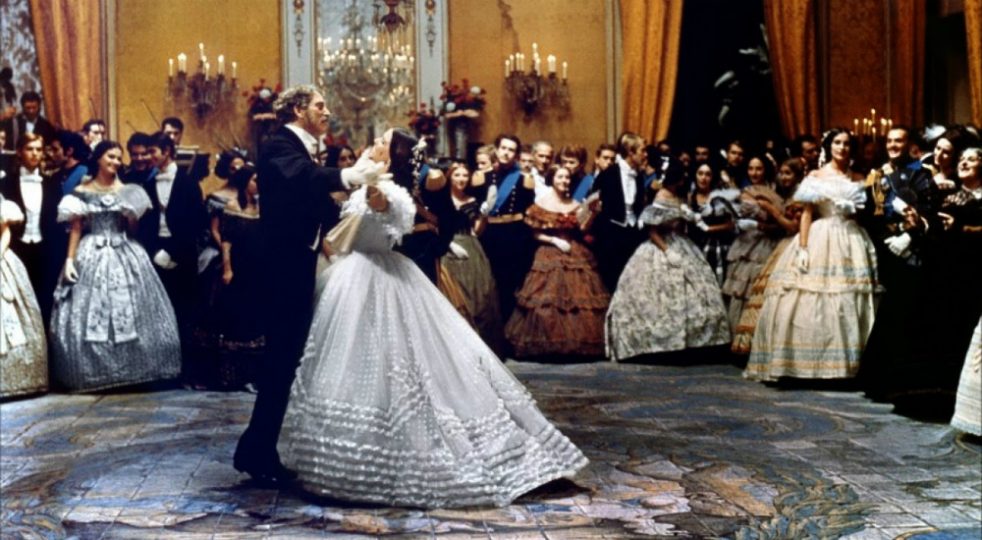
The novel’s pages are redolent with the memories of the wonderful places and memories now gone forever which the Principe di Salina experienced in his childhood and as a young man. Those places are now laying in ruins. The same are now brought back to mind in the most atmospheric scenes of the movie “The Leopard” and especially in the first, shot in the fascinating Villa Boscogrande, as well as in the sixth, which descrive the Gran ballo dai Ponteleone . The novel’s characters, the costumes and dances – such as the famous Waltz or Mazurka by Giuseppe Verdi and Nino Rota respectively – together with the magistereal coreographies by Alberto Testa, the places, the musical scores, landscapes and buffet where rhum jelly, timballo di maccheroni and rosolio – all will be celebrated during
“Le Grand Bal du Guépard”
“Il Gran Ballo del Gattopardo”
“The Great Ball of the Leopard”
The Dream of the Prince of Salina
Within both a nostalgic and intense atmosphere aimed at bringing back to life a crucial passage in the history of Sicily. “If we wish everything to stay the same, everything must change”. Thus Tancredi, the Prince’s nephew, in “The Leopard”: an apparently enigmatic and ambiguous phrase still nowadays rich in its implications. “Le Grand Bal du Guépard “ – “The Grand Ball of the Leopard” of the Dance Company Harmonia Suave diretta da Carla Favata, will re-enact the climax of the novel as contained in its Sixth Chapter in the description of the “Grande Ballo dai Ponteleone”.
This describes a crucial historical passage in which Palermo’s ruling elite lived in awe of the new events, for “following the arrival of the Piedmontese and the ominous events of Aspromonte [where the Piedmontes shot Garibaldi], having fears of expropriations and violence subsided, the two hundred people who constituted “‘the World” never got tired of meeting each other to congratulate themselves on being still in exsistence” ( G. Tomasi di Lampedusa “The Leopard”).
All participants will wear 1860 attires clothing; dances will be listed according to a rigorously philological carnet; the film location , the music, the buffet’s historical menu, the view from the Villa’s balconies and the smells of the land of Siciliy – and more: the Novel’s pages as well as the movie’s central scenes - all will scrupolously brought to life under Carla Favata’s direction, aimed at making participants live again the glories of time gone past forever cast in the pages of a novel that made history.
The Grand Ball, guided tours and visits to the venues of both “The Leopard” and Palermo will be organized by Compagnia Harmonia Suave directed by Carla Favata. For info, please contact: Carla Favata e-mail carla.favata@gmail.com
- Ball
- 19th century
- All levels
Einfache Tänze der Renaissance
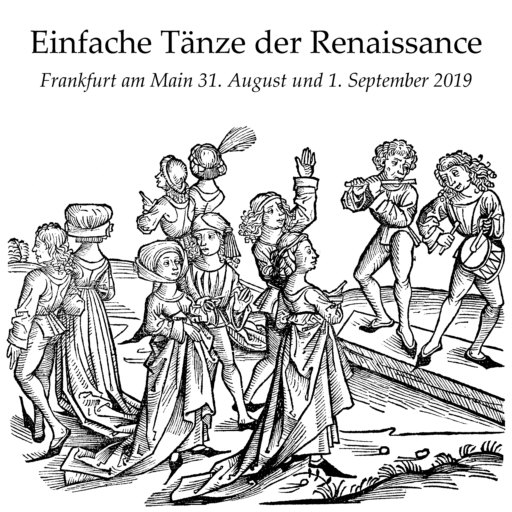
Domenico da Piacenza ist unser erster Held der Tanzgeschichte – er hat uns aus der Mitte des 15. Jahrhunderts ein erstes größeres Theorietraktat über den Tanz mit heute noch rekonstruierbaren Choreographien überliefert. Er und seine Schüler Antonio Cornazzano und Guglielmo Ebreo prägen so unseren Blick auf den Tanz im Italien der frühen Renaissance.
Ein weiterer Held der Tanzgeschichte ist Thoinot Arbeau (eigentlich: der Kleriker Jehan Tabourot), der in Frankreich Ende des 16. Jahrhunderts mit seinem Buch Orchésographie auf die Tänze seiner Jugend zurückblickt. Ihm verdanken wir den ersten Versuch einer verständlichen und an die Musik gekoppelten Tanznotation.
Dieses Wochenende richtet sich mit einer Handvoll vergnüglicher Tänze und einem übersichtlichen Schrittmaterial besonders an Anfänger, die sich auf eine kleine Zeitreise in das 15. und 16. Jahrhundert begeben möchten.
Die Zeiten sind:
Samstag 12:00-14:30 und 15:30-18:00 Uhr
Sonntag 10:00-12:30 und 13:30-16:00 Uhr
Historischer Tanz in Frankfurt 2019:
19.-20. Jan.: Das Menuett Wochenende
13.-14. Apr.: Alpenquadrillen von 1840
18.-19. Mai: Das Longway Wochenende
8.-10. Juni: „La Bourgogne“ (1700) (3-Tage Pfingstkurs)
31. Aug.-1. Sep.: Einfache Tänze der Renaissance
12.-13. Okt.: Das Cotillon Wochenende
9.-10. Nov.: Empire: Das Jane Austen Wochenende
7.-8. Dez.: „Entrée pour une Femme – Forlane“ (1704)
Weitere Informationen finden sich auf meiner Webseite www.historische-tanzkunst.de sowie im Flyer.
Flyer_2019_Renaissance.pdf
(253.52 KB)
- Workshop
- Renaissance
- Quattrocento
- Beginner
Das Longway Wochenende
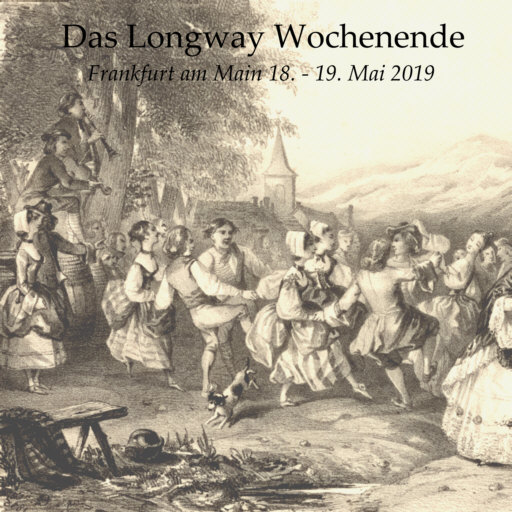
Wer schon einmal einen Barock- oder Rokokoball besucht hat oder ein Fan von Jane Austen Verfilmungen ist, kennt sie mit Sicherheit schon: Longways – Tänze in einer Gassenaufstellung, auch englische Tänze genannt. An diesem Wochenende widmen wir uns intensiv den Grundlagen und den Schritten dieser beliebten Tänze, sowie ihrer Entwicklungsgeschichte im 17. und 18. Jahrhundert.
Unsere kleine Reise in das Königreich der Longways beginnt in England bei John Playford, der diese ab 1651 in seiner Buchreihe „The (English) Dancing Master“ in kompakter Form veröffentlichte. Lorin brachte einige dieser Tänze dann 1685 nach Frankreich und verfeinerte sie mit französischen Schritten. Spätestens als Feuillet 1706 in Paris sein „Recüeil de Contredances [...]“ veröffentlichte, verbreiteten sich die Contredanses über Europa, so dass wir nun auch Quellen aus Deutschland, Italien und Spanien haben. In der zweiten Hälfte des 18. Jahrhunderts werden Longways dann in großen Mengen publiziert, typisch werden in der Zeit Dreipaartänze, wobei das dritte Paar meist nur wenig ins Tanzgeschehen involviert wird – aber die Rollen wechseln ja ständig.
Das Wochenende bietet einen leichten Einstieg in den Tanz und essenzielles Grundwissen für alle, die das 18. Jahrhundert interessiert oder es darstellen wollen. Aber auch wer etwas fortgeschrittener ist und Interesse an den Quellen und der Schritttechnik hat, wird von diesem Wochenende viel mit nach Hause nehmen. Wir werden in jedem Teil zwei bis drei verschiedene Tänze lernen und erhalten so einen Überblick über anderthalb Jahrhunderte Tanz und Musikgeschichte.
Die Zeiten sind:
Samstag 12:15-14:45 und 15:45-18:15 Uhr
Sonntag 10:00-12:30 und 13:30-16:00 Uhr
Historischer Tanz in Frankfurt 2019:
19.-20. Jan.: Das Menuett Wochenende
13.-14. Apr.: Alpenquadrillen von 1840
18.-19. Mai: Das Longway Wochenende
8.-10. Juni: „La Bourgogne“ (1700) (3-Tage Pfingstkurs)
31. Aug.-1. Sep.: Einfache Tänze der Renaissance
12.-13. Okt.: Das Cotillon Wochenende
9.-10. Nov.: Empire: Das Jane Austen Wochenende
7.-8. Dez.: „Entrée pour une Femme – Forlane“ (1704)
Weitere Informationen finden sich auf meiner Webseite www.historische-tanzkunst.de sowie im Flyer.
Flyer_2019_Longways.pdf
(206.95 KB)
- Workshop
- Baroque
- Playford
- Rococo
- Beginner
- Intermediates