Seminario di Country-dance da John Playford
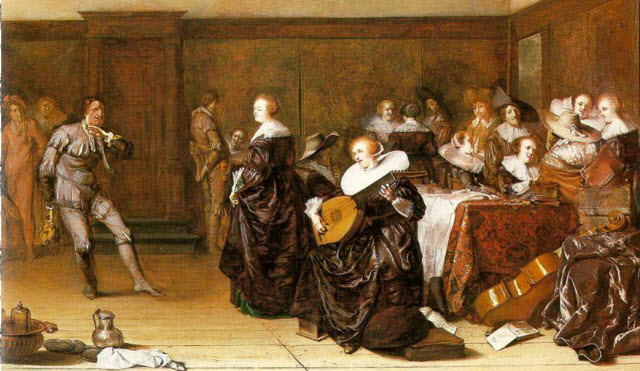
Seminario di Country-dance da John Playford
livello open a cura di Paolo Testi
Sabato 11 aprile, dalle 10 alle 13 e dalle 14 a 17.30
- Workshop
- Playford
Seminario di Country-dance da John Playford
livello open a cura di Paolo Testi
Sabato 11 aprile, dalle 10 alle 13 e dalle 14 a 17.30
Samstag / Sonntag, 30. / 31. Mai 2015, jeweils 09.15 bis 16.30 Uhr
Kursleitung
Bernhard Gertsch, Tänzer und Choreograph für historischen Tanz,
Erwachsenenbildner FA
Kurskosten CHF 350.00
Kursort Dübendorf, Schulhaus Stägenbuck, Singsaal,
Zwinggartenstr. 28, 8600 Dübendorf
Teilnehmerzahl begrenzt
Anmeldeschluss 22. April 2015
Anmeldung http://www.vzm.ch/anmeldung.phtml
We have been established and performing for over 30 years. Based in Norwich, Norfolk, UK. Our Tutor is Amanda Wiliams.
We meet weekly during term time at 7.30pm on Thursday evenings at Norwich High School,
Norwich Historical Dance offer friendly classes, learning dances from the 15th to the 20th centuries under Amanda’s caring tuition, with the possibility of performing in costume.
New dancers welcome, no partners necessary. What to wear: flexible soft-soled shoes and comfortable lightweight clothing.
Our costumes are created to be as authentic as possible and where ever possible we have live and authentic music for performances.

Stage de danse estival 2015 à Auxerre du 8 au 16 août 2015 organisé par Bassa Toscana
Renaissance Italienne, Bernadette Jacquet et Stéphane Quéant
Danse Baroque, Nick Nguyen
Danse Irlandaise, Philippe Lemoine
Flûte et Tambour, Solène Riot
Spectacle de fin de stage et bal Renaissance le 16 août 2015 à L'Abbaye Saint-Germain accompagné par l'Ensemble La Voilotte
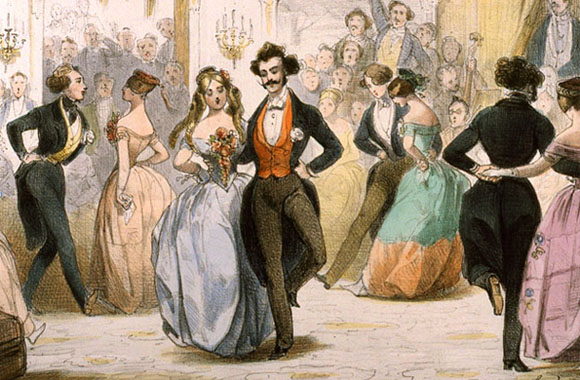
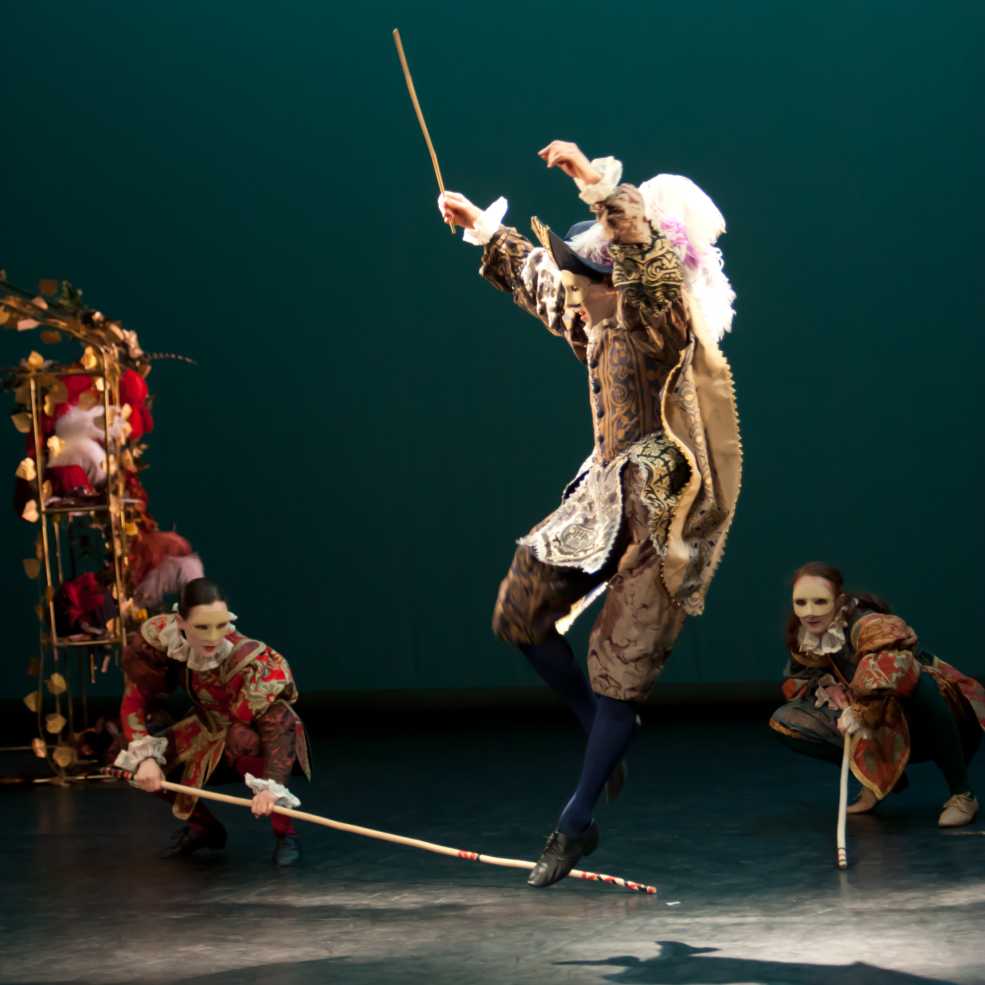
(English version: see below) Le Ballet de la Merlaison est un ballet de cour créé par Louis XIII en 1635 qu’il dansa lui-même avec ses compagnons pour le Carnaval à Chantilly puis à Royaumont.
La « Merlaison », mot que le Roi invente pour désigner une chasse au merle, devint le prétexte d’un ballet plein de fantaisie dans lequel il met en scène une « petite » chasse où, danseur lui-même, il se travestit en femme de marchand, puis en fermier collecteur d’impôts, et pourquoi pas, en merle farceur ou en oiseau avisé et prompt à déjouer les pièges.
Dans ce divertissement en musique, à la fois intime et public, la Compagnie Belles Dances fait le choix d’un style allant du sérieux au burlesque, faisant apparaître de nombreux personnages appartenant au rituel de la chasse : Gascons, Fauconniers, Arbalestriers, Pistoliers et autre Nobles du Pays, masqués et « armes » à la main. Sont aussi présents la Reine, Mademoiselle de La Fayette, que le Roi poursuivait alors de ses assiduités, ainsi que Richelieu, personnage incontournable du règne de Louis XIII.
Ce ballet pour neuf danseurs et ensemble instrumental reprend la partition initiale de Louis XIII, que Patrick Blanc a restaurée, complétée et ornementée.
Les chorégraphies originales ayant complètement disparu, c’est à partir de traités d’époque et un long travail de recherche que Christine Bayle propose une création chorégraphique entièrement nouvelle.
(Image ©Mathieu Dequirot)
This french musical entertainment is putting on a Ballet from the first half of the 17th century, often called Ballet de Cour. The dance company La Cie Belles Dances has created a new production of this ballet created in 1635 by Louis XIII who conceived the plot, wrote the poetry and music, designed the costums, and danced in it!
The original score of Louis XIII comprises 19 Entrées: this ballet can be called after St Hubert ("La Manière de composer et de faire réussir les ballets") a "beau ballet" : sufficiently striking was Le Ballet de la Merlaison to be evoked two centuries later by Alexandre Dumas in his novel The Three Musketeers. These Entrées (mostly in two phrases) have been harmonized, developed and rewritten by Patrick Blanc to give them greater richness and variety and for the choreography, created by Christine Bayle. In their instrumentation we find the colours of an “unrefined” score, the novel style of which has been ignored, both in terms of its musical value and in its relation to dance.
This production clarifies these relationships and gives back to this ballet its meaning and its historical value. Christine Bayle redoes the choroegraphy, entirely lost, after a new dramaturgy, between this "small" hunt and the context: Louis XIII is in love with the young Miss La Fayette, and Richelieu attends maybe this show. The war with the Spanish is close.
Why la Merlaison? Because the king devised this word to invent the feast which closed the blackbird hunt. This Ballet was acted and danced by the protagonists for whom he wrote it: that is to say a king, his half-brothers, his grand Equerry, his favourite and his group of companions, hunters, soldiers, pages, and dancing masters: for several days, between two estates, Chantilly and Royaumont, they celebrated mid-Lent, hunt and publicly acted out roles such as farmers, peasants, Gascons, Flemings, Lorrains, and curious birds.
This is neither a reconstruction nor a recreation: it is a creation based on research we experimented during many years.
Co-Production: Fondation Royaumont, Festival baroque de Pontoise, CnD, ADAMI, Ministère de la Culture et de la Communication.
We give historical dance classes both on a regular base l and as master-classes for children (from 5 years) and adults, taking their level of dance skills into account.
The dance classes program includes both dance class themselves and historical stories about daily life and culture of nobility. List of dances: polonaise, waltz, country dances, polka, quadrilles, mazurka, dances abroad 19-20th centuries. If necessary we study dances of 17-18th centuries and modern variations. All skills one can use at balls and dance evenings.
