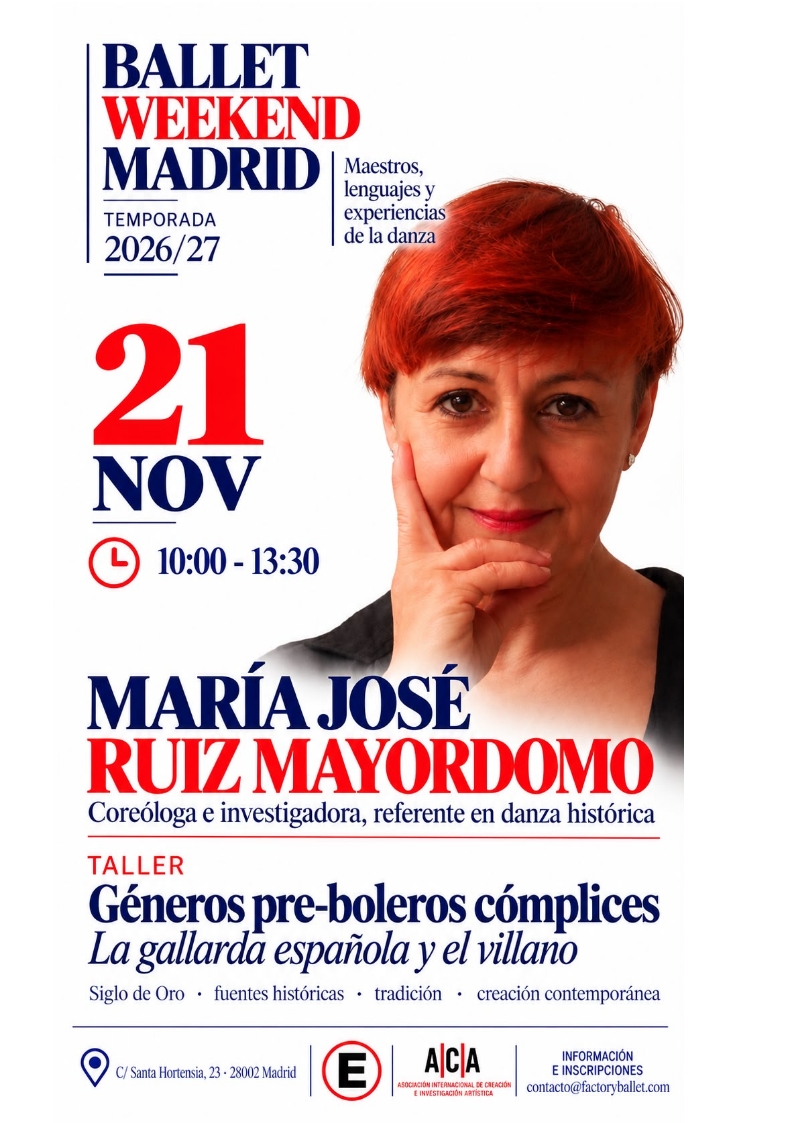
A choreographic symbiosis with universal consequences during the Spanish Golden Age.
There is no need to emphasize Spain’s dominant role in the choreographic landscape of European courts during the 17th century.
To cite just one example, Voltaire himself acknowledged that before Louis XIV, everything at the French court was Spanish.
These choreographic pathways facilitated the spread of Spanish dance across the known world, leaving echoes that would endure through the shaping of choreographic-stage language during Romanticism and the Silver Age, as well as the emergence of new dance movements throughout the 20th century—trends that continue into the 21st century.
This conference will explore the interplay between two seemingly opposite genres: the *Gallarda*, an aristocratic dance, and the *Villano*, a parodic dance based on the archetype of the vulgar dancer.
By examining Spanish manuscript dance sources from the mid-17th century and comparing them with similar sources from the early 18th century—once the change of dynasty had taken hold—dance professionals will gain insight into the possibilities for contextualizing, deconstructing, and utilizing these elements within contemporary concepts and aesthetics.
Una simbiosis coreográfica de consecuencias universales durante el Siglo de Oro Español.
No es necesario destacar el papel preponderante español en el paisaje coreográfico de las cortes europeas durante el siglo XVII.
Por poner un ejemplo, el mismísimo Voltaire reconoce que antes de Luis XIV, todo era español en la corte francesa.
Las autopistas coreográficas propiciaron la expansión de la Danza Española por el orbe conocido, de tal modo que los ecos perdurarían tanto en la conformación del lenguaje coreoescénico durante el romanticismo, la edad de plata y la eclosión de las nuevas corrientes dancísticas a lo largo del Siglo XX que tienen continuación en este siglo XXI.
En este a conferencia, se explorará la complicidad entre dos géneros aparentemente opuestos: La Gallarda como danza aristocrática y el Villano como baile paródico sobre el arquetipo del danzante vulgar.
A partir de las fuente coréuticas manuscritas españolas de mediados del siglo XVII y su comparación con el mismo tipo de fuentes a comienzos del siglo XVIII - con el “cambio de dinastía” asentado- será posible comprender y entender las posibilidades de contextualización, deconstrucción y utilización de elementos dentro del concepto y estética contemporáneas por parte de los profesionales de la danza.
- Workshop
- Spanish baroque
- Professionals

- Log in to post comments