9. International Dance Summer School - European and American Ballroom Dances from the Period 1800-1900
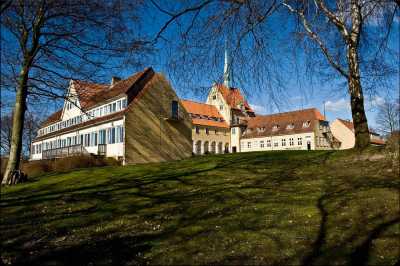
European and American Ballroom Dances from the period 1800-1900, Course, Thé-Dansant and Grand Ball. A week with dance, full lodging and posibility for sightseeing.
- Summer School
- Ball
- Course
- 19th century
- All levels
Curso Internacional de Danza Renacentista
El curso te ofrece la posibilidad de viajar al siglo XVI con el bailarín y coreógrafo Marco Bendoni. Sus investigaciones sobre la iconografía y coreografía del Renacimiento italiano permitirán a los estudiantes aprender danzas olvidadas en la historia.
Desde el inicio de su carrera, Marco Bendoni se interesa por la danza renacestista y barroca, llegando a trabajar con formaciones musicales de reconocido prestigio como Arpeggiata, Jordi Savall, Le Petit Bande, La Rossignol, etc
El curso esta dividido en 14 horas divididas en dos dias del fin de semana.
Más información: 652 67 52 65
- Course
- Renaissance
- All levels
„Es muß ein Stück vom Himmel sein ...“

This time, E. F. D. Helmke offers us his Coq-à-l'ane, which means a silly, or incoherent chatter. This delightful and unique Quodlibet sets a Tempo di Marcia, Contredanse, Minuet, Ecossaise, Waltz, Française, Polonaiseand Galopp-quadrillein a row in their respective formations (Taschenbuch für Tänzer und Tänzerinnen auf das Jahr 1833, Merseburg).
The Polka Mazurkawill be our second highlight. This charming couples dance with its special grace and variety came into fashion around the middle of the 19thcentury. From the two-part basic step, several step combinations can be gained. The resulting figures are chosen by each couple individually, or performed together with all the other dancers.[1]Some step sequences – among them a special version, which was popular in Vienna – complete the familiar movements of Johann Raab's L'Alliance, which according to our tradition is once again given a place of honor in the ball programm. (For those who have already learned, there will be a refresher.)
We review the 12 figures of Jean Jacques’ Redowa Polkafrom last year ("Maître de plaisir beim Tanze" Hamburg, 1869) and Jørgen Schou-Pedersen presents the five-part ConcordiaQuadrillein lines of Johann Raab "sincerely consecrated to the students of the jurisprudence" to the music of the Kapellmeister F.W. Swoboda (Prague, 1846).
In keeping with the Viennese ball tradition, before the gala buffet we dance the Quadrille françaisewith Cotillontouren (Germans).
We are opening our dance week on February 2nd2020 at 4:00 pm again in a museum. Then go together to a ‘Heuriger’, a Viennese winegrower's restaurant. There we can satisfy our hunger and thirst and also dance. The exact addresses of the location for the daily dance lessons, museum and restaurant will be announced upon registration.
Daily classes in English will start on February 3rd, from 10 am to 4.30.
This time in a centrally located place near the station "Wien Mitte" (U4, U3, S-Bahn 1-4, 7, tram O, bus 74A) with a possibility for a cheap lunch or a snack.
The motto of our fancy dress ball on Tuesday is “Imperial Vienna’s guests”. We start at 6.30pm (until 9.30pm high above Vienna, on Cobenzl in the foothills of the Vienna Woods again http://www.waldgrill-cobenzl.at; (Bus 38a from U4 terminal Heiligenstadt).
The Wednesday afternoon is free for individual activities.
The dance classes end on Friday around 1. p.m. to prepare for theThé Dansant(from 3 p.m. to 6 p.m.). Wearing evening dresses of the first half of the 19thcentury we can enjoy the unique Biedermeier charm in the Sträußelsäle, the last remaining dance hall in Vienna where Strauss and Lanner played for dances. The evening ends in Cafe Landtmann, the favorite Cafe of Sigmund Freud, where we can sit together and order individually food (reservation is necessery).
As in recent years, we can enjoy the incomparable ambience of the Palais Daun-Kinsky (1010 Vienna, Freyung 4) created by the famous baroque architect Johann Lucas von Hildebrandt. The oval ballroom is ideal for waltzing as much as for sets in squares and lines. An exquisite gala buffet is prepared for us in the Yellow Salon. We are looking forward to our proven ball music of the last years. (Arrival: 5. p.m. for changing and Solemn opening at 6 p.m.).
Following Viennese custom, we will have dance cards at the Ball made by Andrea. The dance program will include dances, we learned or rehearsed during the week, the common turning dances (waltzes, polkas and Galops) and some contradances as the Sir Roger or the Cotillon (Germans), which will be called.
Daily dance classes, Fancy dress Ball, afternoon Tea Dance and Grand Strauss Ball (buffets included, beverages not included):
Registration (Registration fee of 50.- € is included) 380.- €
Tea Dance (February 8th) and Strauss Ball (Feb. 9th(as above) 160.-€
Strauss Ball (as above) 115.- €
All venues will be NON-SMOKING!
Registration before December 7th2019 will reduce the fee from 380.- € to 343.- €.
If you wish, we can suggest hotels or pensions.Participants must make their own reservations.
Vienna offers visitors many low cost tickets, which include admissions to museums as well as unlimited trips on its fine public transit systems (subways, trams, and busses).
For participation for the danceweek, the Thé dansant and the Grand Straußball a registration by e-mail, mail or phone adressed to Hannelore Unfried is necessery. The registration fee of 60.- € is included in the prices above. The whole amount has to be settled until January 18th 2020. If the registration is canceled after 7.12.2019 the registration fee (60.- €) will be kept. For cancellations after 4.1.2020 half of the course fee is due.If canceled after 18. 1. 2020 no refund can be given.
Please support the grant for young persons by contributing “building blocks” of 15.- Euros.
Hannelore Unfried
Please send your registration to: Mag. Hannelore Unfried, e-mail: unfried@hofdantzer.at
A–1190 Vienna, Nußwaldgasse 23-25/13, mobile phone: 0043-664-404 9818,
Name:______________________________________________________________________
Address:____________________________________________________________________
Email:___________________________________________________Tel:________________
Registering for:
m Museum
m Heurigen
m Fancy dress ball
mDaily dance classes, afternoon Tea Dance, and Grand Strauss Ball (buffets included, beverages not included) 380.- €
m Tea Dance and Strauss Ball(as above) 160.-€
m Café Landtmann
mStrauss Ball (as above) 115.- €
Dancers participate at their own risk.
Signature:______________________________________________________Date:_________
Participants from the Euro-area please send your funds to:
Mag. Hannelore Unfried
IBAN: AT432022107201068835
BIC: SPHNAT21XXX
SPARKASSE HORN-RAVELSBACH-KIRCHBERG
From participants not belonging to the Euro-area we accept the confirmation of the flight (please send booking number) instead of the registration fee in advance (to save the conversion fees of the bank)
[1]Adam Reichert: Die moderne Tanzkunst. Olmütz 1881; François Lestienne-Dubois: Mazur, Polka und Polka=Mazur. Wien 1869; Friedrich Zorn: Grammatik der Tanzkunst. Leipzig 1887
- Workshop
- Ball
- 19th century
- All levels
Stage con Richard Powers
Stage con Richard Powers danze storiche ottocentesche da giovedi 19 dicembre a domenica 22 dicembre 2019.
Harmonia Suave sede di Mazara del Vallo e Palermo
CHRISTMAS BAL Palermo SABATO 21 DICEMBRE 2019
per info carla.favata@gmail.com oppure chiamare il numero +393471323805
- Course
- 19th century
- All levels
The Exotic Orient - A Napoleonic Weekend
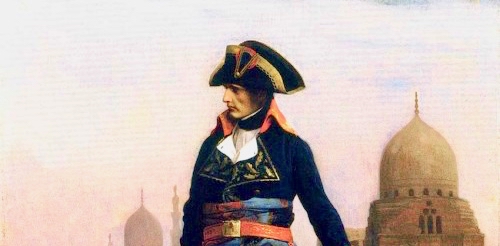
THE EXOTIC ORIENT
A NAPOLEONIC WEEKEND
June 5-7, 2020 Lucca
Programme of Events
(all in period dress - see page 11)
Friday 5th June, 4.45pm - 6pm
Palazzo Ducale Prefecture, Piazza Napoleone
VISIT ELISA’S APARTMENTS & “THE MEMORY OF SCENT” EXHIBITION
Friday 5th June, 7.30pm - 11pm
Palazzo Tucci, Via Cesare Battisti 13, Lucca
2 DANCE RUN-THROUGHS at 7.30pm - 9pm or 9.30pm - 11pm
Saturday 6th June, 10am - 1pm
Meet in Palazzo Ducale’s garden courtyard
GUIDED VISIT OF THE BOTANIC GARDENS, VILLA BOTTINI, A WALK ALONG THE CITY WALLS & SOME SECRET GARDENS IN LUCCA
Saturday 6th June, 7pm - midnight
Palazzo Ducale, Lucca
THE GRAND EGYPTIAN BALL
Dance Master: Donald Francis
Orchestra Leader: Valentino Zangara
Sunday 7th June, 9.30am - 6.30pm
Villa Reale and Park, Via Fraga Alta 2, Marlia, Capannori, north of Lucca
A SUMMER’S DAY AT MARLIA WITH ELISA
Sunday 7th June, 7.30pm - 12.30am
Bagni di Pisa, Largo Shelley, 18, San Giuliano Terme
A TURKISH OTTOMAN NIGHT AT THE BATHS
Information: margaritafm@yahoo.com.au
Programme available in Italian and French
- Ball
- Regency
- All levels
Stage de danse renaissance française et italienne
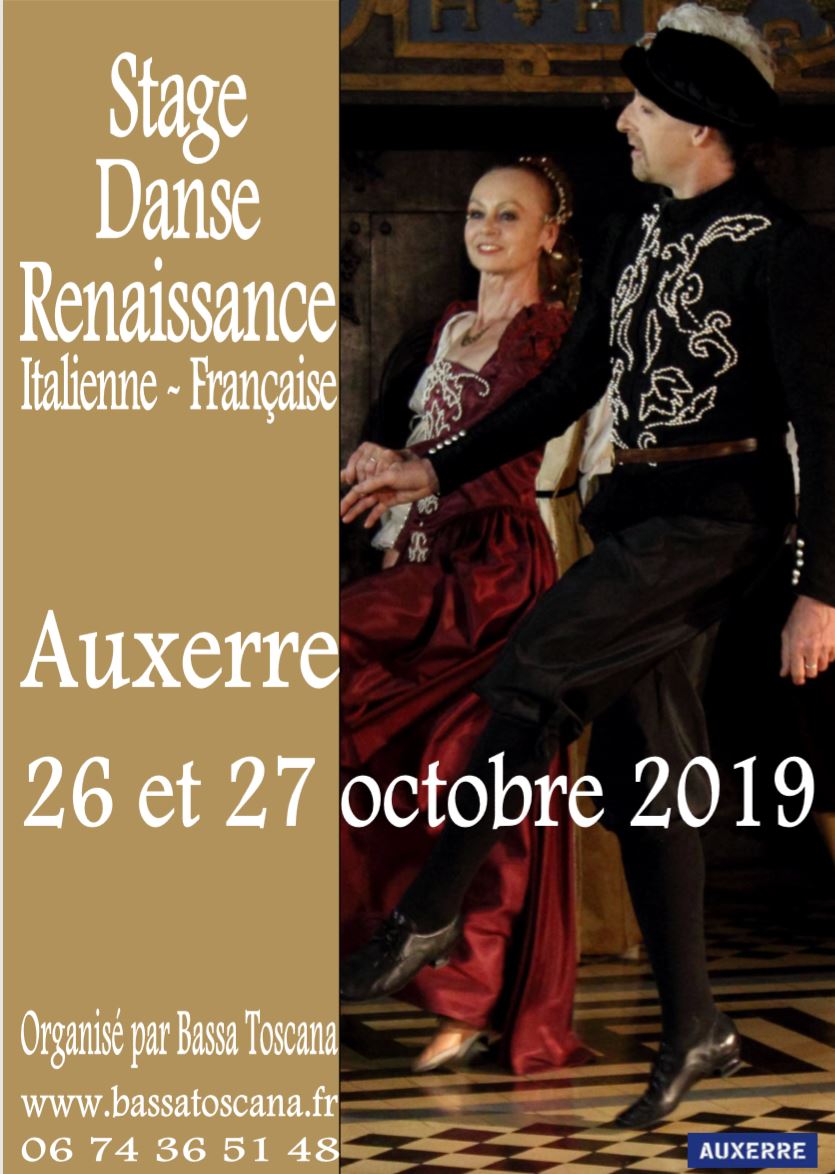
“ La danse est une espèce de réthorique muette, par laquelle l’orateur peut, par ses mouvements, sans parler un seul mot, se faire entendre et persuader les spectateurs qu’il est gaillard digne d’être loué, aymé et chéri… ” (Thoinot Arbeau, Orchésographie, Langres 1588 ). Du XVe siècle à la Renaissance, nous connaissons essentiellement la danse de cour. Bien danser, savoir chanter et jouer d’un instrument permettaient de tenir avec grâce et dignité son rang dans la société. La Renaissance en musique et en danse est caractérisée par l’introduction dans le registre courtois de formes et d’éléments populaires. C’est ainsi qu’une part importante est accordée aux rondes, facteur de convivialité et de cohésion sociale. Les traités du XVe siècle (Ebréo, Piacenza, manuscrit de Marguerite d’Autriche) et ceux du XVIe siècle (Negri, Caroso, Arbeau…) offrent les premières notations des pas et mouvements de danse. Deux formules répondront aux besoins des stagiaires, débutants ou initiés:
- Les bases de la danse de la Renaissance française seront enseignées à chacun des stages suivant le répertoire de Thoinot Arbeau, ( branle double, branle simple, branle coupé, branle morgué, branle gay, gavotte, pavane, gaillarde et volte...).
L’atelier chorégraphique s’attachera à l’étude du style et à l’expression esthétique des danses de la Renaissance italienne. La mise en espace du mouvement s’appuiera, soit sur des créations, soit sur des reconstitutions d’époque telles que: Basse danse Reale (Domenico), basse danse Cupido (Guglielmo), Leggiadra Marina, Lo Spagnoletto, Amor Costante Spagnoletta...
Production:
Bassa Toscana
23.rue des Grands Champs
Laborde
89000 Auxerre
Président:
Jean-François Méchain
Animateurs membres le la Fédération française PRO.D.A
Bernadette Jacquet
Stéphane Quéant
Lieu:
Maison de la danse
9, rue Milliaux
89000 Auxerre
Renseignements
Stéphane Quéant:
06 74 36 51 48
Renseignements
FORMULE 1 (initiation )
Horaires :
Samedi 14 h à 16 h
Dimanche 12 h à 14 h
Tarifs
1 après-midi : 27 €
2 après-midi : 38 €
FORMULE 2
( initiation + atelier chorégraphique )
Horaires :
Samedi 14 h à 18 h
Dimanche 12 h à 16 h
Tarifs :
1 après-midi : 38 €
2 après-midi : 46 €
Tarifs spécial couple:
Stage complet: 85 €
½ Stage: 70 €
ANNULATION :
L’association Bassa Toscana se réserve le droit d’annuler un stage, auquel cas les inscriptions reçues seraient intégralement remboursées. Les animateurs peuvent également intervenir sur le programme en fonction du niveau et du nombre de stagiaires.
- Workshop
- Course
- Renaissance
- Quattrocento
- Cinquecento
- French Renaissance
- All levels
Internationaler Balltanz Club
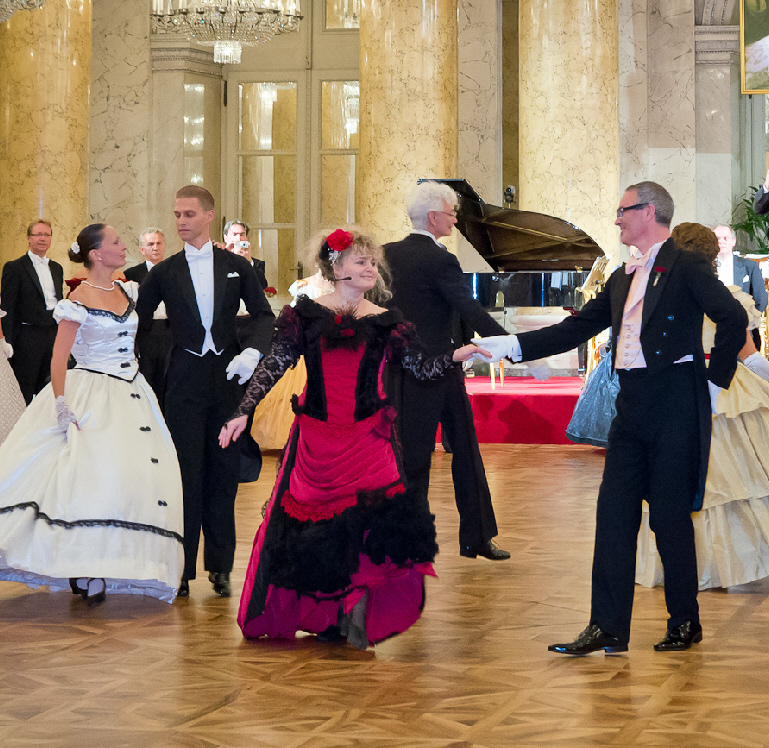
Tanzschwerpunkt sind exklusive Quadrillen, originale Paartänze des 19. Jahrhunderts & ein russischer Marsch - in Erinnerung an Russland
This year’s focus will be on exclusive quadrilles, original couple dances of the 19th century & the Russian March - in memory of Russia
Herzlich Willkommen in Dresden in 2019! Welcome to Dresden! Bienvenue à Dresden! Добро пожаловать в Дрездене! Hjertelig velkommen til Dresden!
Sylvia -- www.creanc.com
Language during the dance classes: English
Tänze die unterrichtet werden | Dances to be taught:
Bohemian Polka Quadrilles (aus „The Welcome Guest“, New York, 1863)
Die originale Polka Quadrille wird getanzt mit französischen und böhmischen Polka- Schritten zur schwungvollen böhmischen Polka- Musik. Sie besteht aus den fünf Quadrille- Figuren „Serious Family Polka“, „Baden Polka“, „Zingara Polka“, „Bohemian Polka“ und „Little Jeanette Polka“ mit lustigen Quadrilletouren und dem Rundtanz Polka-Walzer. Dieser Quadrilletanz - in der Aufstellung en carré für 4 Paare - ist eine neue Rekonstruktion von Sylvia aus dem Jahr 2019 und wird erstmalig in Dresden wieder zum Leben erweckt. Die originalen Polka-Melodien wurden in gewohnter Weise durch unseren Pianisten Stephan Müller eingespielt.
Polacca Waltz Quadrille „White Dove“ – Polonaise Walzer Quadrille „Die Friedenstaube“ (Arrangement von Sylvia Hartung basierend auf originalen Quellen von 1866-1896)
Der einrahmende Polacca-Teil der Quadrille besteht aus wechselnden Polonaise Figuren entsprechend polnischer Originalquellen des Institute of Music and Dance, Polen und einer gleichbleibenden Gleit-Walzer Schrittfolge (Glide waltz) gemäß der Schrittbeschreibung von Margitta Roséri (Leipzig 1896) sowie von Harvey (New York, 1889). Um den Unterschied von Gleit-Walzer (Glide waltz) zum beliebten 6-Schritt-Walzer den Tänzer erleben zu lassen, wurde in den Walzer-Teil durchgängig eine variierende Walzerfigur mit anschließendem 6-Schritt-Walzer Rundtanz (valse à trois temps) eingearbeitet. Damit entstand ein stets wiederkehrendes System für die vier Quadrille-Figuren. Der Hintergrund für die wechselnde Quadrille-Aufstellung von "en croisé" und "en carré" mit der Wanderung der Paare vom Ausgangsplatz einmal um die Quadrille herum, soll einerseits zwei beliebte Aufstellungen für 4 Paare in einem Quadrille-Tanz zeigen und andererseits den Tänzer mit der Friedenstaube um die Welt führen in den Figuren Norden, Westen, Süden und Osten. Der Walzerteil beinhaltet im Finale einen noch heute beliebten Walzertanz des 19. Jahrhunderts bekannt als "Familien-Walzer". In dieser Quadrille steht der Walzertanz für die "Menschheitsfamilie".
Mazurka Walzer „Cellarius Waltz“ (Quellen ab 1840 weltweit) - Coulon: “This dance was composed by Monsieur Cellarius in Paris, and introduced by me in London, at the Polish Ball, in 1844.”
Henry Cellarius entwarf diesen schönen Mazurkawalzer aus seiner Idee heraus, mit nur einem Tanzpartner im Rundtanz die aktuell beliebten Mazurkaschritte tanzen zu können und nicht zum Mazurkatanzen mindestens drei weitere Paare engagieren zu müssen z. B. für eine Quadrilleaufstellung oder gemäß polnischer Tanzweise für eine Kreisaufstellung mit Vortänzern. Der “Cellarius Waltz” besteht aus drei verschiedenen Mazurkaschritten: Valse simple, Coup de talon, und Valse double. Einen Ablauf für eine Kombination dieser drei Tanzschritte gibt Cellarius nicht vor, daher sind die drei Tanzschritte der jeweiligen Musik anzupassen. Den „Cellarius Waltz“ werden wir zur originalen Komposition von Jullien, arrangiert von S. Glover im Jahr 1882 und eingespielt von Stephan Müller tanzen. Im Jahr 1847 veröffentlichte Cellarius in La Danse des Salons in Paris in französischer und englischer Sprache seinen in 1844 entstandenen 3-teiligen Mazurka Walzer als „The waltz-mazurka, called the Cellarius“. In Anerkennung der Leistungen für diesen schönen neuen Paartanz benannten Cellarius Tanzschüler diesen Mazurkawalzer gemäß seinem Erfinder: „Cellarius Valse“ oder „The Cellarius“.
Stirienne
Besondere Freude und Entspannung bringt der Paartanz Stirienne, ein deutsch-österreichischer Walzer mit Balancé- und 6-Schritt-Walzer sowie Tyrolienne gemäß Friedrich Zorn und mit originalen Stirienne-Figuren beschrieben von Eduard Eichler von 1847. Die liebevolle Musik komponierte Joseph Lanner 1841 in Wien.
Russischer Marsch
Vom diesjährigen Tanzfestival in Moskau haben wir den schönen Russischen Marsch, choreografiert von Denis Aksyonoy in 2010, getanzt zur Musik von Johann Strauss II „Russische Marsch-Fantasie“ mitgebracht, der zum Thé dansant unsere glanzvolle Eröffnung sein wird.
Zum Thé dansant werden wir - wie in jedem Jahr - unsere Quadrille à la cour (Berlin, seit 1855) tanzen.
Bohemian Polka Quadrilles (from "The Welcome Guest", New York, 1863)
The original Polka Quadrille will be danced with French and Bohemian Polka steps to the beautiful Bohemian polka music. It consists of the five quadrille figures "Serious Family Polka", "Baden Polka", "Zingara Polka", "Bohemian Polka" and "Little Jeanette Polka" with funny quadrille tours and the polka waltz. This quadrille dance - in the arrangement of 4 couples “en carré” - is a new reconstruction by Sylvia from the year 2019 and will be revived for the first time in Dresden. The original polka melodies were recorded in the usual way by our pianist Stephan Müller.
Polacca Waltz Quadrille "White Dove" - symbol of peace (Arrangement by Sylvia Hartung based on original sources from 1866-1896)
The framing polacca part of the quadrille consists of alternating polonaise figures according to original Polish sources from the Institute of Music and Dance, Poland and a constant glide waltz step sequence according to the step descriptions of Margitta Roséri (Leipzig 1896) and Harvey (New York, 1889). In order to let the dancer feel the difference between the glide waltz and the popular 6-step waltz, a varying waltz figure with subsequent 6-step waltz round dance (valse à trois temps) was incorporated throughout the waltz section. This created a constantly recurring system for the four quadrille figures. The background for the changing quadrille arrangement of "en croisé" and "en carré" with the movement of the couples from the starting place once around the quadrille is to show on the one hand two popular arrangements for 4 couples in a quadrille dance and on the other hand the dancers let to flight together with the white dove around the world in the figures north, west, south and east. In the finale, the waltz section contains a waltz dance of the 19th century, still popular today, known as the "family waltz". In this quadrille the waltz dance stands for the "human family".
Mazurka Waltz "Cellarius Waltz" (sources from 1840 worldwide) - Coulon: "This dance was composed by Monsieur Cellarius in Paris, and introduced by me in London, at the Polish Ball, in 1844."
Henry Cellarius designed this beautiful mazurka waltz out of his idea of being able to dance the currently popular mazurka steps with only one dance partner in the round dance (like a waltz) and not having to engage at least three further couples for mazurka dancing, e.g. for a quadrille arrangement or, according to Polish dance style, for a circle arrangement with a leading couple. The "Cellarius Waltz" consists of three different mazurka steps: valse simple, coup de talon, and valse double. Cellarius does not provide a sequence for a combination of these three dance steps, therefore the three dance steps have to be adapted to the music. We will dance the "Cellarius Waltz" to the original composition by Jullien, arranged by S. Glover in 1882 and recorded by our Stephan Müller. In 1847 Cellarius published his mazurka waltz "The waltz-mazurka, called the Cellarius" in La Danse des Salons in Paris in French and English. In recognition of the achievements for this beautiful new couple dance, Cellarius dance students named this mazurka waltz after its inventor: "Cellarius Valse" or "The Cellarius".
Stirienne
The couple dance Stirienne, a German-Austrian waltz with balancé waltz and 6-step waltz as well as Tyrolienne according to Friedrich Zorn and with original Stirienne figures described by Eduard Eichler from 1847, brings special joy and relaxation. The loving music was composed by Joseph Lanner in Vienna in 1841.
Russian March
From this year's dance festival in Moscow we have brought the beautiful Russian March, choreographed by Denis Aksyonoy in 2010, danced to the music of Johann Strauss II "Russian March Fantasy", which will be our glamorous opening to the Thé dansant.
To the Thé dansant we will dance our Quadrille à la cour (Berlin, since 1855).
Kurs | dance lessons 27.11.- 29.11.2019 09:30 bis 17:00 Uhr
Kurs | dance lessons 30.11.2019 09:30 bis 12:00 Uhr
Thé dansant 30.11.2019 16:30 bis 19:30 Uhr
sylvia(at)creanc.com oder sy.hartung(at)t-online.de
Frühbucherpreis bei Buchung und Zahlung bis 30.09.2019 | Early booking price will be charged to those booking and paying by 30th September 2019
- Course
- 19th century
- All levels
Vampyre Regency Ball - City of London Guildhall, London
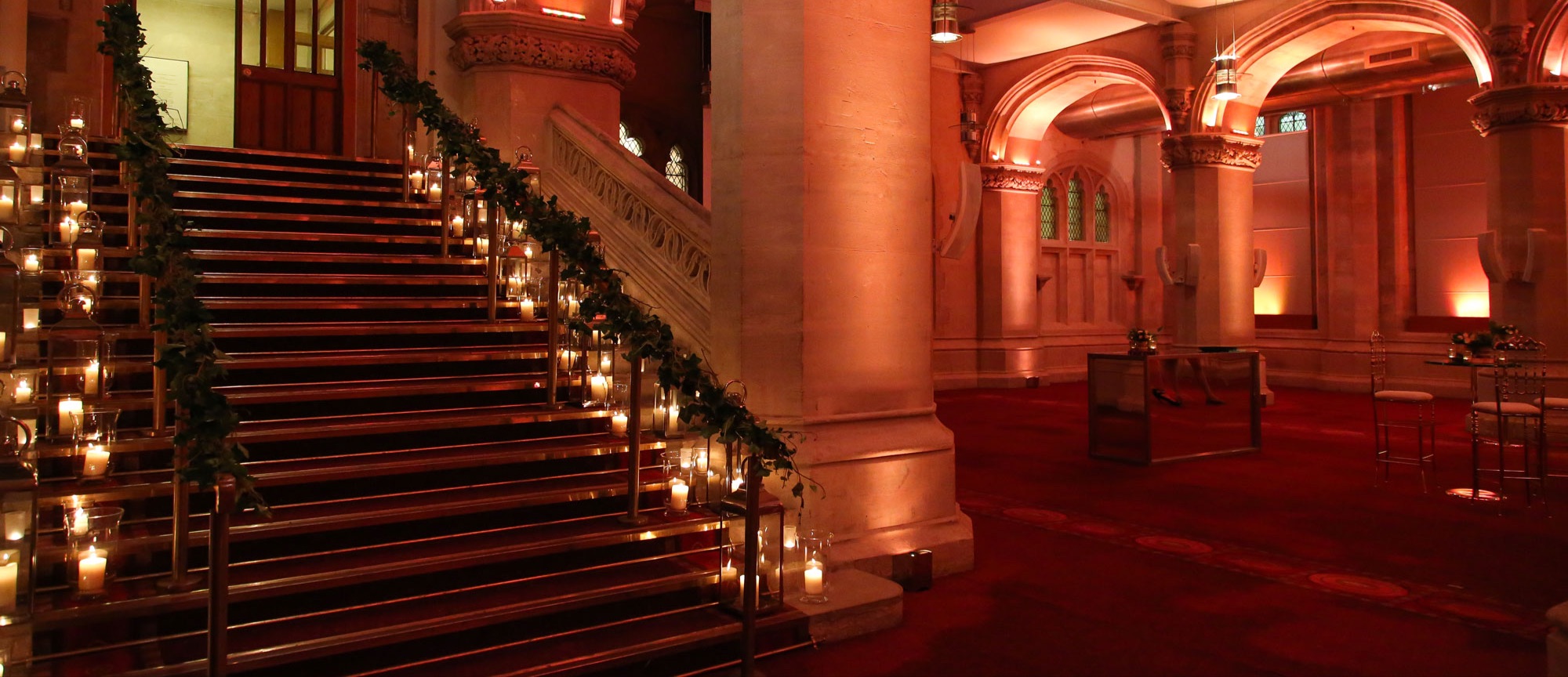
The Vampyre Regency Ball
6 September (Friday) - in the City of London Guildhall, 7.30pm - 10.30pm.
To celebrate the 200th anniversary of the very first vampire novel. Get a taste for a Regency ball!
Organised by the Guildhall Library with Mrs Bennet and the Fortuna Trio.
LAST MINUTE TICKETS £40
https://www.eventbrite.co.uk/e/the-vampyre-regency-ball-2019-at-the-livery-hall-guildhall-tickets-62250023496?fbclid=IwAR3n-TwUjI3WFqkt6Ha00bQA3Wq1zcK1Wry1NoJpEvG68cWsZ7WDlzfWOnw
Venue full address:
The Livery Hall, Guildhall
Basinghall Street
London
EC2V 7HH
This is a Regency Ball at the City of London Guildhall on Friday 6 September 2019 to mark the 200th anniversary of the publication of John Polidori's short story, The Vampyre, which spawned a new genre of romantic fiction!
Discover for yourself what it might have been like to attend a Regency ball in a historical setting with expert dance tuition from dance mistress, Libby Curzon of Mrs Bennet’s Ballroom and live Regency Music from the Fortuna Trio. This ball is aimed at both newcomers and regular dancers so come and enjoy this re-awakening of the past!
Cash bar and nibbles (but no food catering).
Regency Style Dress encouraged.
NB Ladies dresses are available to hire from Miss Bennet's Wardrobe. Please send an email if you are interested.
- Ball
- Regency
- All levels
Kathrein: Tanz durch die Jahrhunderte
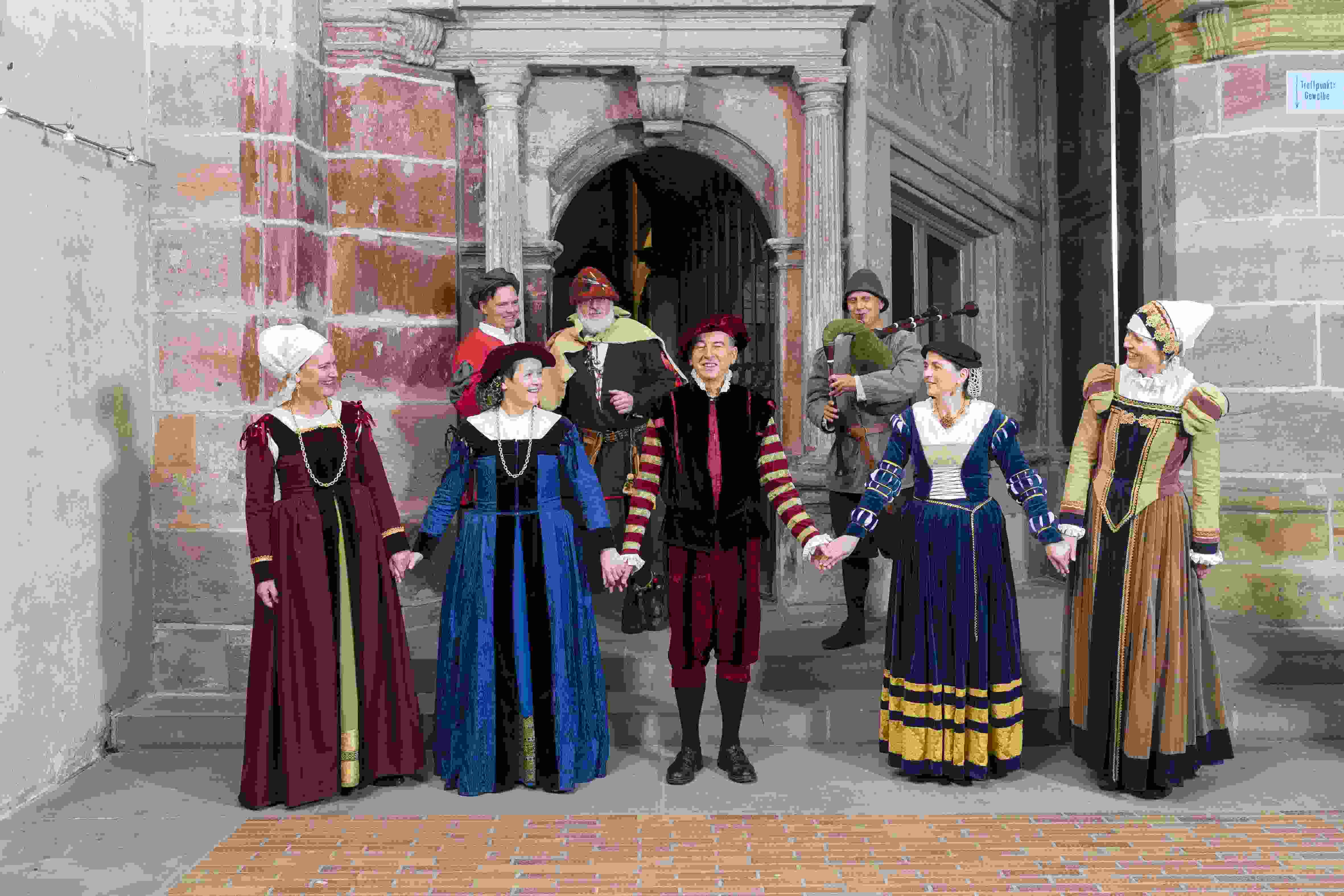
Der Katharinentag war traditionell der letzte Festtag vor der Adventszeit, in der früher ein striktes Tanzverbot und Fastengebot bestand. Also wurde an diesem Tag noch einmal ausgiebig getafelt und getanzt. Auch in diesem Jahr findet der Kathreinstanz in Kooperation mit den Altstadtfreunden an alt ehrwürdiger Stelle und stilistisch passend in der Renaissance-Halle des Peller-Hofs am Egidien-Platz statt. Deshalb sind uns historisch gewandete Gäste an diesem Fest-Abend besonders willkommen. Die Tanzmeister Siegfried Vogl und Agnes Graf-Then erklären einfache historische Kreis- und Gassentänze, die man nach kurzer Einführung gleich mittanzen kann. Musikalisch begleitet werden wir „live und unplugged“ von unserem Musikensemble und unseren Sackpfeifern. Als Gastensemble begrüßen wir in diesem Jahr die Gruppe Wild Violett.
Durch das Programm führt Rainer Lypp.
Für die kulinarische Ausstattung sorgen die Nürnberger Altstadtfreunde.
Beginn: 19:30 Uhr
Der Eintritt beträgt 10 Euro/erm. 7 Euro (ohne Essen).
Foto: Uwe Niclas
- Ball
- mixed
- All levels
Saisonstart bei Schembart
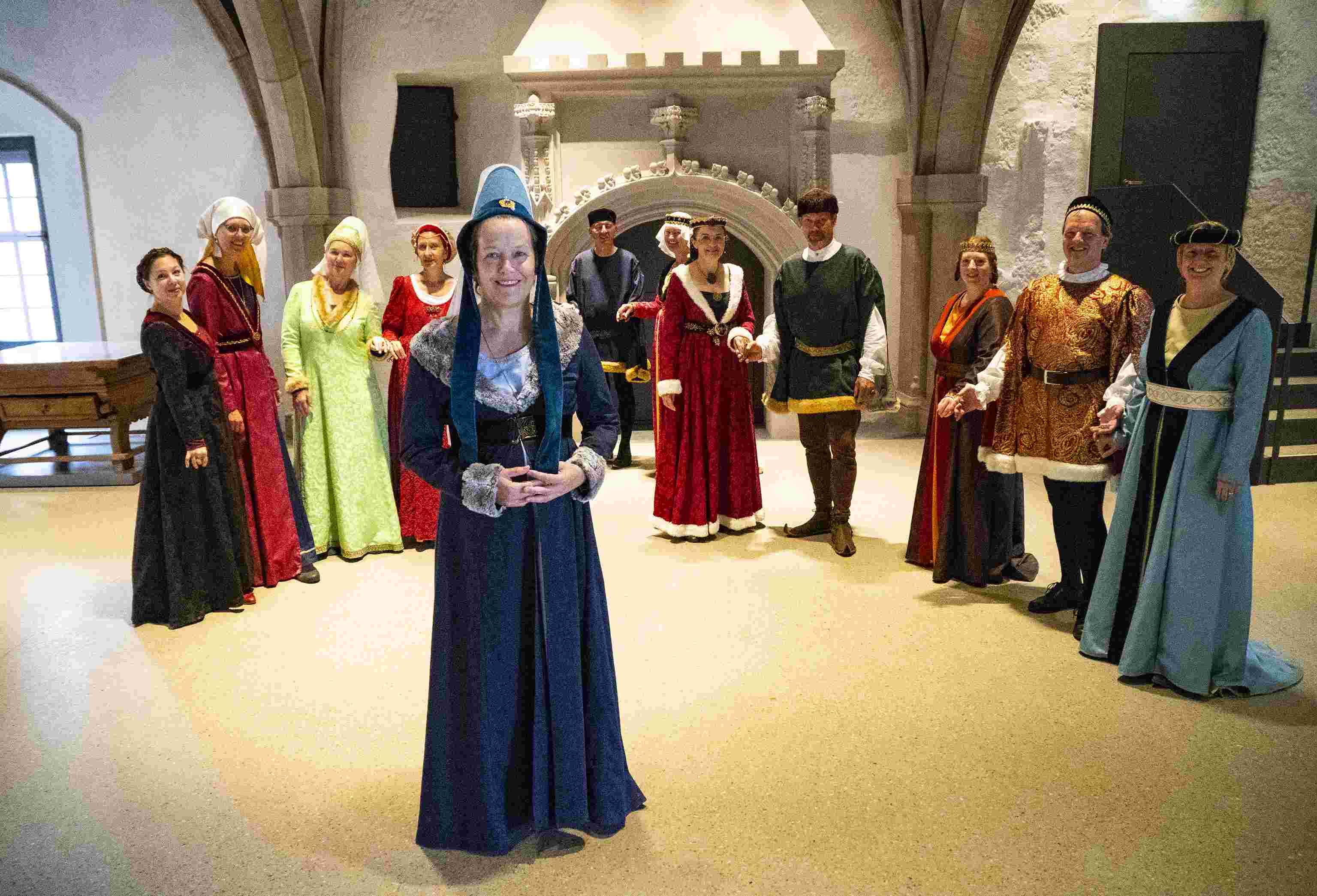
Einmal per Zeitreise zurück ins Nürnberg des 16. Jahrhunderts reisen – Wie kleideten sich die Patrizier oder einfache Bürgersleute? Wie sah ihr Leben aus, was tanzten, muszierten und sangen sie? Bei der Nürnberger Schembart-Gesellschaft sind solche Zeitreisen öfters möglich. Denn das 15. und 16. Jahrhundert sind die Lieblingsjahrhunderte des kleinen, agilen Vereins, der sich die Aufführung von Musik, Tanz und Gesang der Renaissance auf die Fahnen geschrieben hat. Wie viele Vereine sucht auch die Schembart-Gesellschaft immer wieder Nachwuchs. „Bei uns kann man sich vielfältig engagieren“, sagt Agnes Graf-Then, die Vorsitzende der Gesellschaft: „In unserer Musikgruppe, bei den Sackpfeifern, in der Tanzgruppe freuen wir uns gleichermaßen über neue Aktive.“
Für alle, die den Renaissancetanz kennenlernen wollen, ist die Zeit für einen Einstieg jetzt perfekt. Mit Beginn der neuen Spielsaison können Tanzinteressierte zur Probe in der Villa Leon kommen.
Unter der Leitung von Agnes Graf-Then lernen die Teilnehmer/-Innen einfache Country-Dances aus dem 16. und 17. Jahrhundert kennen. Diese Tänze stehen am 23. November 2019 auf dem Programm des Kathreinstanz-Abends der Schembart-Gesellschaft und können in der schönen Atmosphäre des Pellerhofes in der Nürnberger Altstadt getanzt werden. (Foto: Peter Budig)
- Ongoing classes
- Renaissance
- All levels