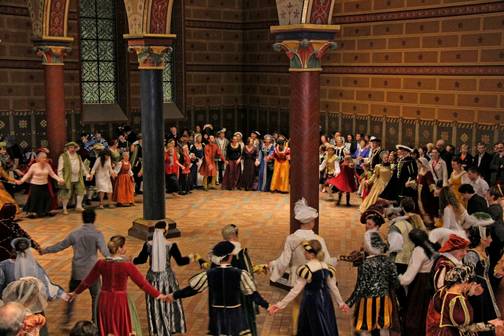
Grand bal Renaissance au Château Royal de Blois
Submitted by rabusier on

Le Banquet du Roy vous invite dans la salle des États Généraux, à renouer avec l’art de la danse du 16e siècle et cette passion typiquement Française à travers un événement festif, non convenu et participatif.

Tarif : Adulte : 10 €/ Réduit : 7,50 € / Enfant (6 – 17 ans) : 5 €. Location de costume possible, renseignement 00 33 (0)2 54 90 33 32.

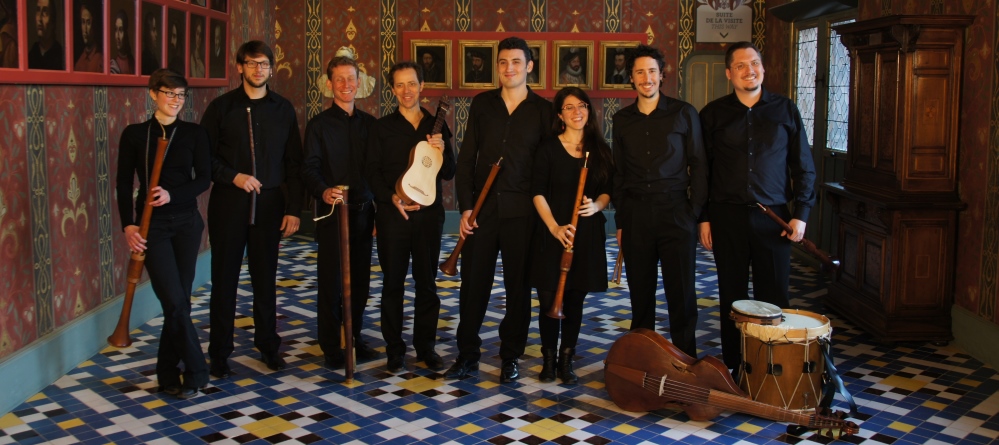
Le Banquet du Roy : Olivier Gladhofer, Emmanuel Vigneron, Anabelle Guibeaud, Maxime Fiorani, Adrien Reboisson, Yannick Lebossé.

En retrouvant les pratiques des ménestriers du Roy, ces musiciens professionnels qui prenaient part aux réjouissances de la cour, Le Banquet du Roy transforme le temps d'un soir le spectateur en acteur d'un bal-découverte. Ouvert à tous, c'est un moment d'échange, de partage, de rencontre autour d'un patrimoine collectif que ces musiciens inscrivent comme une tradition vivante, inscrite dans le monde d'aujourd'hui. Guidé par un maître à danser, l'apprenti-danseur s'approprie à son rythme pavanes, bransles, et autres allemandes ; et expérimente la sensation jubilatoire de partager avec le groupe la même pulsation collective. Ce bal Renaissance est aussi l'occasion de découvrir un large spectre de sonorités et d'instruments, choisis en fonction des caractères des danses. Du son noble et puissant des bombardes et des chalemies (les "haulz") aux harmonies subtiles des flûtes, guiternes et dulcianes (les "bas"), c'est toute la richesse des esthétiques du 16e qui sert de fil conducteur à cette machine interactive à voyager à travers le temps.

  • Ball
  • Renaissance
  • French Renaissance
  • All levels

Le Banquet du Roy

Submitted by rabusier on

Fondé en 2012 sous l’impulsion de musiciens passionnés du Val de Loire, l’ensemble Le Banquet du Roy a pour ambition de faire connaître les trésors musicaux de la Renaissance auprès de tous les publics. A travers des spectacles vivants et originaux, nous cherchons à les intégrer dans des pratiques actuelles et à les mettre en regard de notre monde contemporain. Croisant musique, danse, ou poésie, c'est une multitude d'esthétiques oubliées, tantôt nobles et graves, tantôt joyeuses et légères, que nous souhaitons retrouver et partager avec le plus grand nombre.

Site web : http://www.lebanquetduroy.com

Youtube : https://www.youtube.com/channel/UC5LPqCYY6hIp85oyP8UCdUQ

Facebook : https://www.facebook.com/lebanquetduroy

  • Dance group
  • Performer
  • Renaissance
rabusier
lebanquetduroy@gmail.com

Das Menuett-Wochenende

Das Menuett ist für uns heute der Inbegriff des Tanzes in Barock und Rokoko. An unserem Menuett-Themenwochenende stehen gleich dreierlei Arten von Menuett auf dem Programm. Die drei Teile sind auch einzeln Buchbar.

Am Samstagnachmittag: Z-Menuett nach Gottfried Taubert 1717

Am Anfang eines Balls im 18ten Jahrhundert wurde ein Menuett nach dem anderen gespielt. Getanzt wurde dazu das Z-Menuett – ein einfacher Paartanz, bei dem man die Schritte variieren kann. Gottfried Taubert hat dem Menuett in dieser Form in seinem 1717 erschienenen Buch „Rechtschaffender Tantzmeister“ ein umfassendes Kapitel gewidmet. Das Z-Menuett gehört zu den absoluten Grundlagen des Tanzes im 18ten Jahrhundert und sollte jeder beherrschen, der heute diese Zeit darstellen möchte.

Am Sonntagvormittag: La Baviere (Pecour 1705) Menuett-Teil

Der Solopaartanz „La Baviere“ von Pecour wurde 1705 veröffentlicht und besteht aus einem Menuett- und einem Forlane-Teil. An diesem Vormittag beschäftigen wir uns nur mit dem Menuett-Teil. Sehr schön ist der Anfang – mit einem Kanon, bei dem erst der Herr von seiner Dame umkreist wird, und dann werden die Rollen getauscht und die Dame wird umkreist. Vier verschiedene Schritte sind zu lernen – wer am Samstag dabei war, sollte sie schon kennen und kann sie hier vertiefen.

Am Sonntagnachmittag: Menuett-Contredanses

Als einfachster Teil des Wochenendes folgen wieder gesellige Gruppentänze. Das Menuett war nicht nur als Paartanz beliebt, auch in den geselligen Contredanses treffen wir es gelegentlich an. Wir finden es in Gassentänzen und Cotillons, alleine oder ab-wechselnd mit einem anderen Tanz gepaart. Wir tanzen eine kleine Auswahl dieser Tänze.

Die Frankfurter Barocktanzreihe

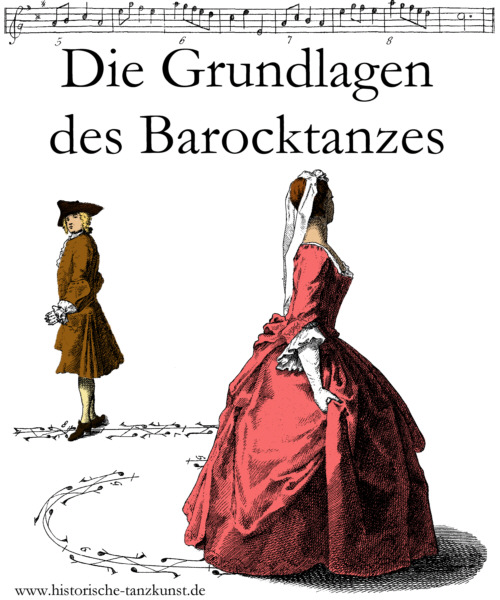
Einmal im Monat gibt es in Frankfurt an einem Sonntag in der speziell für Anfänger konzipierten Reihe: „Die Grundlagen des Barocktanzes“ die Gelegenheit, einen selten angebotenen Tanzstil kennen zu lernen. Dabei werden sowohl die einfacheren Contredanses, als auch die komplizierteren Solopaartänze der Zeit angeboten. An einigen Themenwochenenden im Jahr gibt es zusätzlich am Samstag einen längeren Workshop.

Weitere Termine der Reihe 2016:

18. Sep.: Hessen im Tanz des 18ten Jhdts.
13. Nov.: Tänze für den Münchner Hof
11.Dez.: Playford songs and dances

Weitere Informationen finden sich auf meiner Webseite www.historische-tanzkunst.de sowie im Flyer.

  • Workshop
  • Baroque
  • Beginner
  • Intermediates

Herbsttanzkurs in Oberwesel 19. Jahrhundert

Die schönsten Tänze um 1800

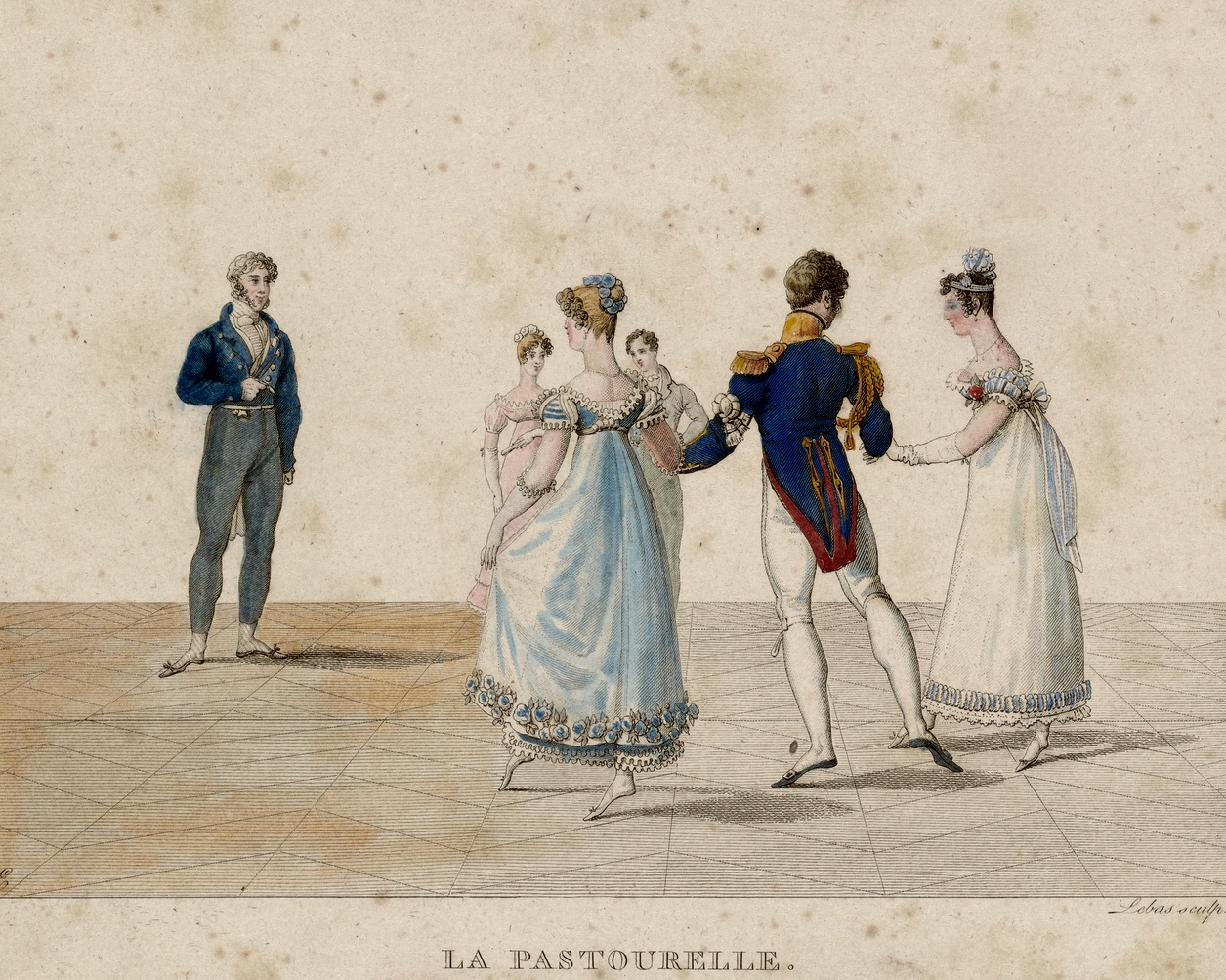
In diesem Kurs lernen wir die schönsten Tänze vom Beginn des 19. Jahrhunderts: Eine originelle Polonaise, ein echtes Menuett und die schönsten Ecossaisen, Anglaisen, Quadrillen, Douzen und frühen Mazurkas, wie sie in Deutschland um 1800 getanzt wurden.

  • Workshop
  • Quadrilles
  • Regency
  • Intermediates

when Poland was baptized

When Poland was baptized
Cracovia Danza Court Ballet invites you to the premiere of the show when Poland was baptized, illustrating dance and pantomime appearance forms of ceremony and etiquette of Western culture on the Slav court Mieszko I. Presentation will be shown as part of the Night of Cracovia Sacra, July 25, in the chair. 21, on the outdoor stage erected on the Krakow market. Cracovia Danza dancers will be accompanied by musicians: Maria Pomianowska with instrumental ensemble and vocal octet Octava Ensemble.
The presentation, prepared by Romana Agnel, specialist in the field of old dances and characteristic, founder and director of the Cracovia Danza Court Ballet, show times will be a breakthrough in the country Polan. The symbolic birth of the Polish State will be in the context of pre-Christian culture and creating a culture of court.
The performance will be shown elements of Slavic rites inspired by descriptions of the chronicles of Jan Dlugosz, as well as systems of Western courtly dances. Among the dancing the night Sobotkos there will be old Slavic deities whose appearance will refer to projects Sophia Stryjeńska. Contrast to the lively, spontaneous world of Slavs will courtiers came with princess Dobrawa from Prague, representing Western civilization, dancing in a hierarchical and formalized ceremonial court dances. The play will show that with the adoption of the Christian faith from the court of Prague Poland enters also into another world dance culture, whilst becoming an important element in building a tradition of ballets characteristic.
Welcome!

  • Performance
  • Medieval
  • All levels

Danza Española del Siglo de Oro

14.45 - 16.4 h – Elementary level
- Pavana italiana (Mss. Real Academia de la Historia) – Reconstructed for Maria Jose Ruiz Mayordomo: https://www.academia.edu/7495304/Pavana_de_Espana_y_Pavana_Espanola_Maria_Jose_Ruiz

- Españoletas (Mss. RABASF-González). Entrada and 2 mudanzas (body, arms, hands and castagnettes)

- Variations of Canario on the pattern of Fabritio Caroso (Il Ballarino, 1581), different rhythm propositions and space aspects.


10 – 12h – Intermediate / Advanced level:

- Jácara (Libro de Danzar de D. Balthasar de Rojas Pantoja): Entrada and 2 mudanzas – Reconstructed for Maria Jose Ruiz mayordomo: https://www.academia.edu/7495304/Pavana_de_Espana_y_Pavana_Espanola_Maria_Jose_Ruiz

- Villano (Libro de Danzar de D. Balthasar de Rojas Pantoja): Entrada and 2 mudanzas

- Fandango del Siglo XVIII (Anon. – transmitted for Mercedes León Quica's daughter, restaured for Maria José Ruiz - https://www.academia.edu/24876585/_El_gesto_cor%C3%A9utico_en_la_m%C3%BAsica_hispC3%A1nica_de_la_segunda_mitad_del_siglo_XVIII_una_propuesta_de_interpretaci%C3%B3n_hist%C3%B3ricamente_informada_del_fandango_

  • Summer School
  • Spanish baroque
  • Beginner
  • Intermediates
  • Advanced

XVII Court Dance Festival "Cracovia Danza" - "Court Dance in South America" will begin on August 4!

  Seventeenth edition, organized by the Cracovia Danza Court Ballet and the Foundation "Ardente Sole" Court Dance Festival will be held from 4-9 August 2016 in Krakow under the slogan Court Dance in South America. Traditionally, one of the important elements of the festival are workshops conducted by prominent experts from around the world. The classes are aimed at both the professional dancers as well as for amateurs. This year's workshop will be hosted by masters of old dances: Barbara Segal (dance English Baroque dance), Marie-Claire Bär Le Corre (dance French, workshops for children), Ana Yepes (Spanish dance), Alaknanda Bose (Indian dance Kathak) and Leszek Rembowski (former Polish dance). This year, the return of the Italian dance workshops. Will be hosted by Gloria Giordano.   For several years now, the festival expanded to offer is about acting classes. The classes will be conducted by Agnieszka commedia dell'arte Cianciara-Fröhlich and Jonathan Fröhlich, the only Polish actors specializing in this genre of theater. Krzysztof Antkowiak, dancer Court Ballet Cracovia Danza, but betray their trainees secrets of the art of mime.   ACCOMMODATION: Participant's accommodation is on their own. On request, there is list of hostels and shelters attached. In exceptional cases, it is possible to help in booking, but it has to be declared earlier. Through the Organizer, you can book cheap accommodation (10 PLN / person / night) at a school in the city center (in classrooms and gym). The school has a full sanitary facilities. Seats are limited. Book in advance required. Guests who are going to book the accommodation shall provide their own mattresses and sleeping bags. ALIMENTATION: Participants alimentation is on their own. It is possible to order meals in the restaurant at the Villa Decius, during the workshops. The price for one dinner is 16 PLN (soup or appetizer, main dish, beverage). Book in advance required. Payment for lunches in advance on August 4th  2016.   THE COURSE INVOLVES - five-day long workshops - evening concert and shows at Villa Decius - “Cracovia Danza” historical ball - consultation with experts - membership of “Decius Danza” workshop team, which leads to participation in presentations, concerts and performances on stages set in the historic places of Cracow and parade through the streets of Old Town PRICE OF COURSE ALSO INVOLVES: - a souvenir photo - diploma of participation - admission-free entrance to ticketed evening performances at Main Market   COST OF PARTICIPATION The price of one course: 290 PLN (60 €)* The price of classes for children: 180 PLN (40 €)* *DISCOUNT!!! 1. Guests, who sign up for 3 and more courses 2. Guests, who participate in workshops third time and more, are paying only 200 PLN (50 €) for one course, and for children classes - 160 PLN (35 €). ADVANCE AMOUNT Advanced amount for workshops participation is 200 PLN (50 €)/person, payment until July 10th 2016. The second part of payment for workshops participation paid by bank transfer or cash directly before the start of workshops There is also the option of paying for the entire workshops. BANK ACCOUNT ON WHICH THE PAYMENT SHOULD BE PAID (IN PLN): 74 8589 0006 0000 0011 0044 0002 Bank Spółdzielczy Rzemiosła w Krakowie Fundacja „Ardente Sole” al. Krasińskiego 20/9 30-101 Kraków In the title: „Workshop fee: first and second name of workshop participant”. Applications, together with deposit payment receipt, should be sent by the post or email (ardentesole@ardentesole.pl) by July 10th 2016. If you want to pay in EURO please contact with us.  
  • Performance
  • Summer School
  • Baroque
  • Early Baroque
  • Spanish baroque
  • mixed
  • All levels