Höfischer Tanz
- Teacher
- Baroque
- Playford
- 19th century
- Regency
Erika
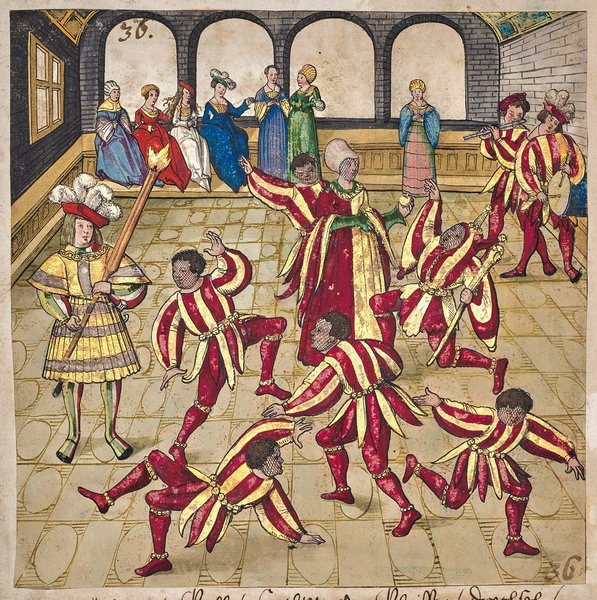
Professor Margaret McGowan is a noted dance historian and historian of early modern France, one of the first scholars to focus on the history of dance, in particular in the late Renaissance and the fin-de-siècle period at the end of the nineteenth century. Author of nearly a dozen books, she has published over eighty articles and book chapters. She won the Wolfson Prize for her book "Dance in the Renaissance: European Fashion, French Obsession".
"In this lecture, I try to represent the different forms of dance and of the dancing skills of amateur dancers and of professionals. I shall show how techniques evolved during the Early Modern Period, and how and why the role of professional dancers became more and more significant.
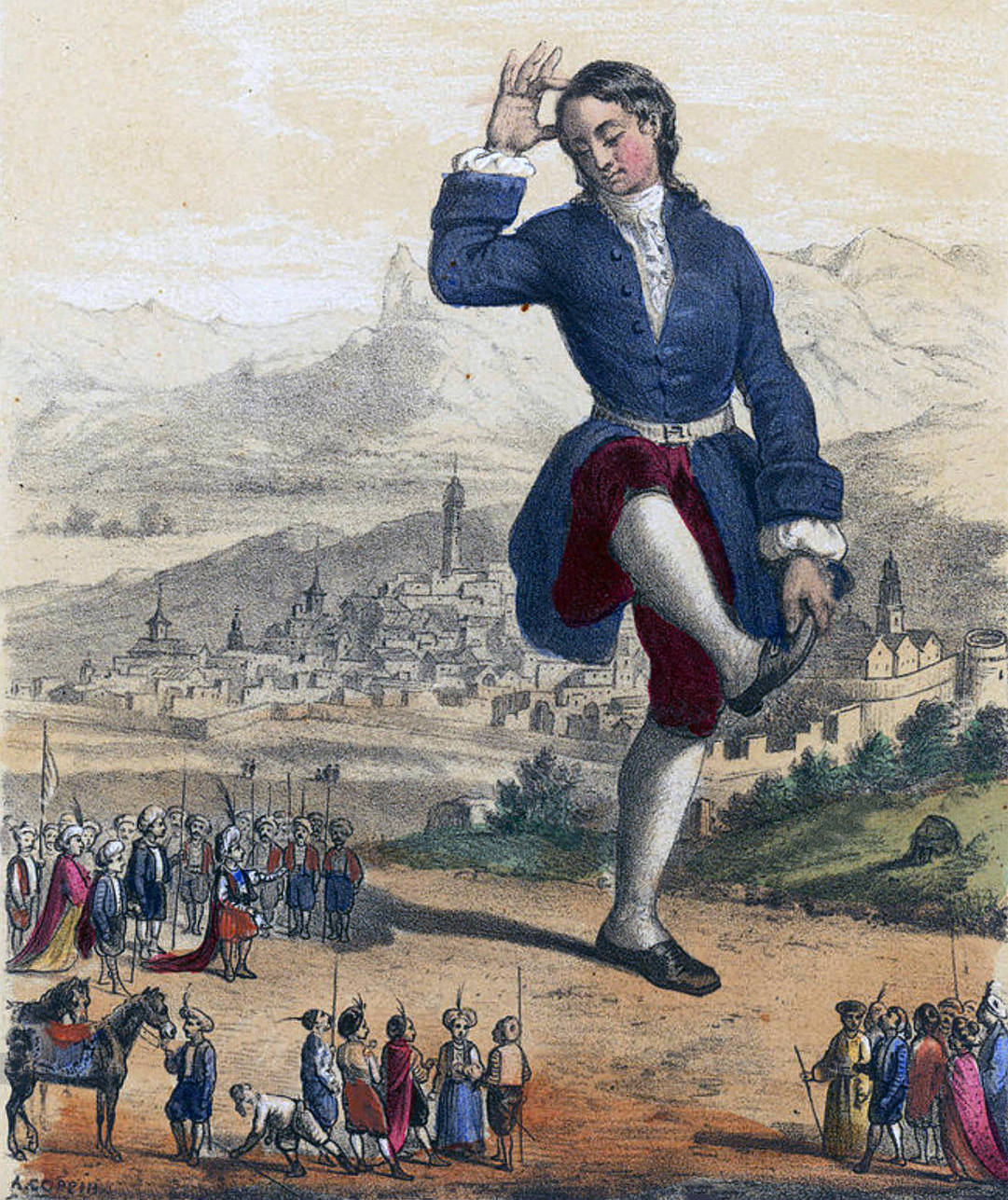
Zum diesjährigen Sommerseminar würdigen wir den 340sten Geburtstag des deutschen Komponisten Georg Philipp Telemann. Zu seinem umfassenden Werk zählen auch viele Tänze wie Sarabanden, Menuette, Bourées und mehr. Diese bieten uns einen großen Fundus zum Üben des Barocken Schrittmaterials und der Arbeit mit den Originalen Choreographien des 18. Jahrhunderts. In Telemanns Suiten zu literarischen Werken wie Gullivers Reisen oder Don Quijote offenbart sich Humor und Fantasie, die auch in unserem Sommerseminar nicht zu kurz kommen werden.
Die Vormittagskurse werden für drei unterschiedliche Niveaus im Barocktanz gehalten:
Anfänger und leichte Vorerfahrung: → Jutta Voß
Intermediate: → Pia Brocza.
Fortgeschrittene: → Bernd Niedecken.
Der Besuch der Nachmittagskurse ist optional.
Offene Stunde für alle: → Technikstunde mit Bernd Niedecken
Danach geht es in den einzelnen Klassen weiter, die sich jeweils sowohl an Anfänger als auch Fortgeschrittene richten und über Telemanns humorvolle Suiten eine darstellerische Tanzszene erarbeiten.
→ Eine Choreographie zu Musik von Telemann mit Jutta Voß
→ Gullivers Reisen mit Pia Brocza
→ Don Quijote mit Bernd Niedecken
An einigen Abenden gibt es auch Aktivitäten wie Kontratanz, Spaziergang und einen gemeinsam gestalteten "Darbietungs-Abend". Zum Abschlußabend am Samstag werden wir - hoffentlich - im Benediktussaal des Stifts Seitenstetten einen schönen Ball feiern, mit Kontratänzen und einem Buffet. Den Abschlußabend möchten wir im Kostüm verbringen. Neben historischem Kostüm von Barock bis Rokoko sind auch geschickte historisierende Improvisationen gerne gesehen wie Figuren aus Don Quijote oder Gullivers Reisen!
Alle weiteren Informationen und Preise auf unserer Homepage -> hier!
Sowie in der angehängten Ausschreibung und dem Anmeldeformular.
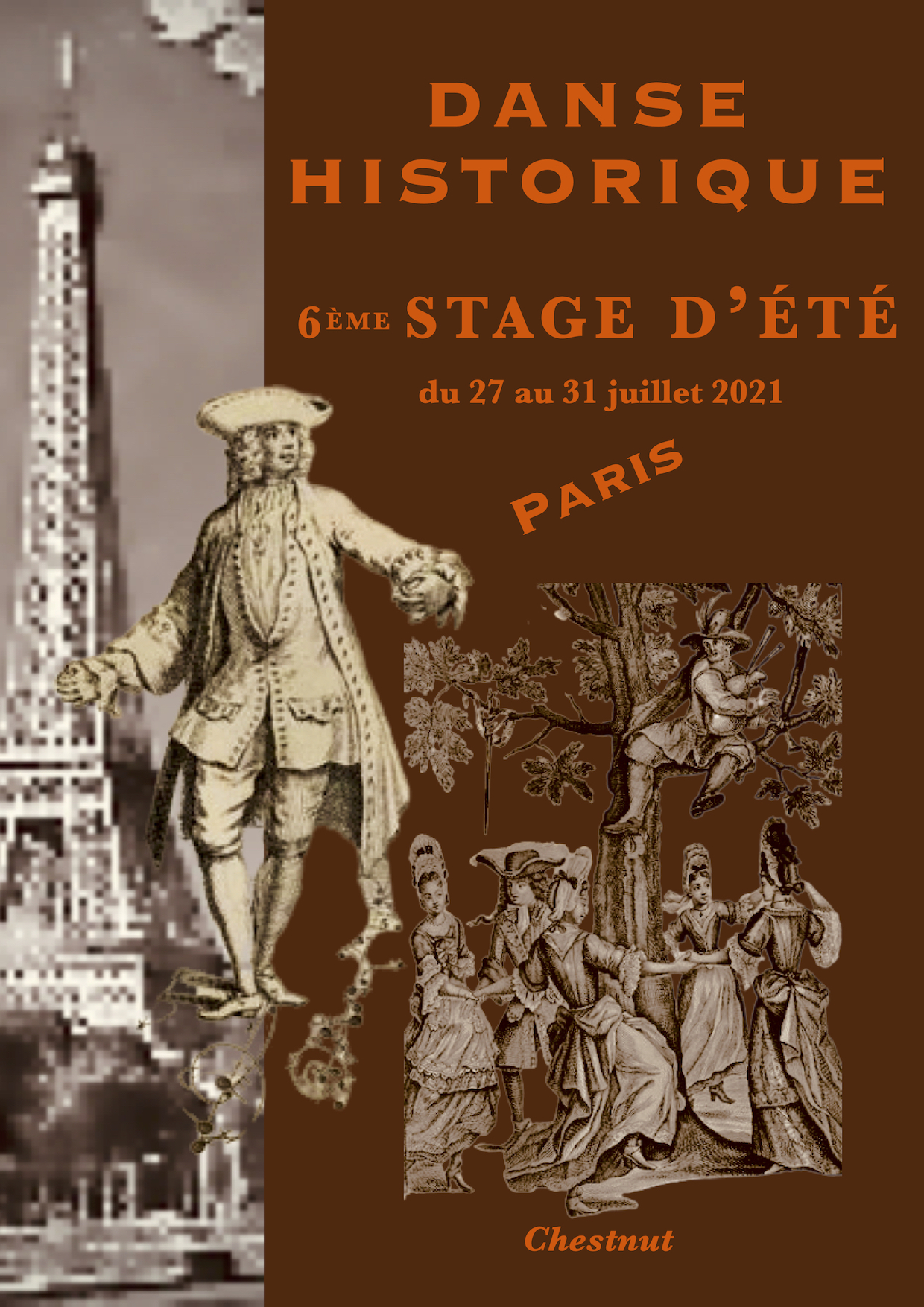
Due to the current health crisis and despite our attachment to the Tapis Vert in Normandy, the 6th edition of the summer courses of historical dance organized by chestnut in collaboration with Danses au (Pas)sé et HéliosKine will take place this year in Paris.
A good opportunity to experience Paris differently ! ....
This 6th edition retains all the advantages that make the success of these Summer Courses for 5 years! :
- 2 courses, 2 repertoires, 3 workshops
- the possibility to build your program according to your tastes and your energy. According to your wishes, you can concoct an intensive program (with a maximum of 6 hours of lessons/ day) or alternate in your day the moments of workshop with moments of relaxation or visit in Paris or its surroundings.
- studios adapted to the practice of dance
- a training place close to many cultural sites (Micadanses studios are close to the City Hall)
Please find all détails on chestnut website

2. Schedule
4. Instructors
5. Location
6. Fees
8. Registration
9. Contact
10. Flyers
1. COURSE n° 1 from Saturday 17 to Wednesday 21 July
2. COURSE n° 2 from Tuesday 27 July to Saturday 31 July

COURSE n° 1 from Saturday 17 to Wednesday 21 July
1. English Country Dances (3 hours / day) / Cécile Laye
The workshop will again give us the opportunity to celebrate the incredible richness of the repertoire of English figure dances which have contributed so much to the history of ancient dance and which have reinvented themselves regularly from the 16th century to the present day.Programme: "Homonymous dances"
They are dances using the same music for different choreographies from ancient and modern repertoire: Le Basque (Cécile Laye); Kneeland Romp (Gary Roodman);Virgin Frolick (The Dancing Master, 1710);Hand to hand (Gary Roodman); The Merry Milkmaids (The Dancing Master, 1651 and 1728 versions) ; A trip to Macclesfield (Brian Wedgbury); An Enchanted Place (Antony Heywood); two versions of Drapers Gardent (The Dancing Master, 1706) including one in menuet steps.
and / or
2. Baroque dances (3 hours / day) / Irène Feste
Programme: "Unique choreographic scores"
The singularity of these scores comes from the fact that they are the only dances choreographed, respectively by M. Dupré and by Pierre Rameau, which have reached us to this day.
Each of these choreographic scores is in a collection to learn the art of writing or describing dance.
After Raoul-Auger Feuillet’s “Chorégraphie….” in 1700, other dance masters tried to write a method.
La Bourrée des Princesses by Mr. Rameau, a dance for a man and a woman, is featured in the “Abrégé de la nouvelle Méthode dans l’Art d’écrire ou de tracer toutes sortes de Danses de Ville…” , by Pierre Rameau, published in 1728.
The Entrée de l'Amiral de France by M. Dupré, is described and noted in the “ Méthode pour apprendre de soi-même la Chorégraphie, ou l’Art de décrire…” , de Dupré, Maître à danser au Mans, published in 1757.
This is a ballet entrance for a man, quite approachable for a woman!
We will also see together that there is a surprise.

COURSE n° 2 from Tuesday 27 July to Saturday 31 July
1. English Country Dances (3 hours / day) / Cécile Laye
The workshop will again give us the opportunity to celebrate the incredible richness of the repertoire of English figure dances which have contributed so much to the history of ancient dance and which have reinvented themselves regularly from the 16th century to the present day.Programme: "From the Grand Square to the Square of Mahony"
From the old and modern directories, we will work on the evolution of a figure from the 17th century to the present day.The program will allow dancers to work with different aesthetics and proposals. The following dances will be included: Hunsdon House (The Dancing Master, 1670); Little Hunsdon (Pat Shaw); Les Lanciers (Alexander Strathy version, 1822); La Beaudri (La Cuisse, 1762);Cupid’s Garden (Marjorie Heffer); Play to win (Antony Heywood); Mary K (Gary Roodman)
and / or
2. Baroque dances (3 hours / day) / Pierre-François Dollé
Programme: "Les Caractères de la danse, fantaisie musicale de Jean-Fery Rebel"
After a gentle warm-up, mixing a moment of relaxation and body reconnection with progressive stretches, we will tackle together the technique of the «Belle Dance», returning to the fundamentals of all the steps necessary for the easy practice of this technique.
In a second time, we will explore the famous «Caractères de la danse», musical fantasy of Jean-Fery Rebel, a kind of exercise of style, which unfolds, like a thread of Ariane, most of the dances of ball and theatre in use in the first quarter of the eighteenth century.
After a prelude allowing the customary reverences, we will have pleasure to dance the Courante, the Menuet and the Bourrée, ball dances par excellence, then to travel in a lively and dense Chaconne, a Sarabande, a Gigue, a Rigaudon, a Passepied, a Lourre, a pastoral Musette to finish with an Italian Sonata, a sort of window open to a new fashion to come
These Characters of Dance were performed by many artists in the 18th century, including the dancers Marie Sallé and Marie-Anne de Camargo, who choreographed and danced them on the French and English stages in particular.
When Marie Sallé moved the audience with her sensitivity and charm, the Camargo impressed the Parisian public with its mastered technique, its jumps and its chats!
It is this whole range of intentions and styles that, in a choreography created by myself, in an idea of progression, we will study together, for the pleasure of dance, movement and the emotions that dance gives us.
Let’s dive together into these famous «characters», mythical piece if any!

Cécile LAYE
Cécile Laye is CHESTNUT’s teaching and artistic director. She studied old dance forms in England with the Dolmetsch Historical Dance Society, Nonsuch History and Dance and EFDSS (English folk Dance and Song Society). She worked in particular under such famed teachers and researchers as Anne Daye, Anne Cottis, Peggy Dixon, Ethyl Anderson, Marjorie Fennessy, Tom Cook and Alan Davies. In France she studied with Francine Lancelot, Andréa Francalancci and Barbara Sparti. At the end of the eighties, she founded AMARILLIS, a dance company meaning to bring to the public figure dances of the Stuarts’ time and the English inheritance, as well as some aspects of history and literature, with the collaboration of musicians and singers. AMARILLIS was replaced by CHESTNUT in 1998. CHESTNUT took over its predecessor’s artistic activities (creating dance and theatre shows), its teaching (preparing dancers for Balls through a rich program of workshops and classes) and its publication ones (CDs, dance descriptions, articles on Playford and modern dances). Over the years, Cécile LAYE has build up a strong experience as a dancing master and ball caller (French Renaissance balls/ English figure dances balls, or a mixture of both). She can pass on her taste for and pleasure in elegant dancing to beginners as well as seasoned dancers. Besides her activities in the field of dancing, Cécile Laye studied dramatic art and staging, graduating at Cours Florent. She also graduated at Eva Ruchpaul’s Yoga Institute and the Paris school of Gestalt-therapy. She played Shakespeare, Molière and Marivaux in Paris and elsewhere in France and takes part in creating new plays and shows, for children in particular. She draws on both sides of her extensive training, physical and artistic, to develop her teaching method. Her constant aim is to understand the needs of a given group and of each person making up the group, to build up a class so that each person gradually understands the dance, becomes aware of his/her body and its expressive capacities, be it during a lesson, a ball, or on stage.

Irène FESTE
From an early age, Irène Feste trained in classical dance with J. Pelletier, Y. Meyer, S. Prince and M. Denard.After a Master Engineer in Telecommunications and Networks and her Diploma of teacher of Classical Dance, she discovered Belle Dance and Baroque Eloquence awith the Cie L'Eclat des Muses de C. Bayle (Le Ballet de la Merlaison).She was introduced to the Italian Renaissance style with B. Sparti and G. Giordano. She is a performer in France and at the International for: Divertimenty, Les Corps Eloquents, Le Baroque Nomade, La Tempesta, Doulce Mémoire, Il Ballo and is choreographer-interpreter of Cie Fantaisies Baroques, co-founded with P.-F. Dollé (Danceries en Fables, L'Ile des Esclaves, 1717: Les Honneurs faits au Tsar, Métamorphoses - le Chat Botté...) In 2013 and 2019, she choreographed for director Pascal Ruiz: Le Masque d'Or, Le Secret des Mémoires. In 2015, she participated in the BBC’s The King who invented Ballet, for the tercentenary of the death of Louis XIV. Artist performer, choreographer and dancing master, through her research (Centre National de la Danse - Aide à la Recherche et au Patrimoine en Danse 2013,  2014, 2016, 2020), she contributes to the diffusion of ancient dance, from the sixteenth to the nineteenth centuries, during workshops in France and Europe, pedagogical and choreographic actions in schools and conservatories.
Since 2020, she has been choreographer and performer of the company Danses au (Pas)sé(Le Ballet des 5 Sens, a young audience performance).

Pierre-François DOLLÉ
Pierre-François Dollé, after a multidisciplinary training at the Balettakademie in Cologne, he danced very contrasting repertoires within different companies which led him to work, among others, in Germany and England. Back in France, he obtained his DE as a dance teacher and crossed paths with Christine Bayle, with whom he created many ballets. He also dances for the company l'Eventail, and works with many choreographers, directors and conductors of the baroque stage. In various styles, he now has a sustained activity of choreographer, notably in collaboration with the company Cracovia Danza, the Arts Florissants or for productions in Japan, United States and Germany. He founded Cie Fantaisies Baroques, with Irène Feste, in 2007. In 2013, 2014, 2016 and 2020, he obtained the Aid for Research and Heritage in Dance from the Centre National de la Danse for research on dances from the early 17th century and on Empire and pre-Romantic styles.
All our instructors are PRO DA members :

LOCATION
Located on rue Geoffroy l'Asnier in the 4th arrondissement of Paris, Micadanses studios are equipped and made available to amateur and professional dancers to host rehearsals, workshops, workshops and other meetings around dance.
Teaching Fees (€/pers.) :
1 workshop (15 hours) : 195 €
2 workshops (30 hours) : 360 €
Micadanses studios are located at different numbers on Geoffroy l'Asnier Street. Numbers and access codes will be communicated to you later after your registration.
Registration confirmation is confirmed by returning the registration form together with the amount of the deposit.
Registration form COURSE n° 1 (July, 17 to 21): Course n° 1 Registration Form
Registration form COURSE n° 2 (July, 27 to 31): Course n° 2 Registration Form
contact@chestnut.fr ou 0033 660 222 321

Due to the current health crisis and despite our attachment to the Tapis Vert in Normandy and the welcome of Jean Galodé, its director, the 6th edition of the summer courses of historical dance organized by CHESTNUT will take place this year in Paris.
A good opportunity to experience Paris differently ! ....
This 6th edition retains all the advantages that make the success of these Summer Courses for 5 years! :
- 2 courses, 2 repertoires, 3 workshops
- the possibility to build your program according to your tastes and your energy. According to your wishes, you can concoct an intensive program (with a maximum of 6 hours of lessons/ day) or alternate in your day the moments of workshop with moments of relaxation or visit in Paris or its surroundings.
- studios adapted to the practice of dance
- a training place close to many cultural sites (Micadanses studios are close to the City Hall)
Please find all détails on chestnut website
2. Schedule
4. Instructors
5. Location
6. Fees
8. Registration
9. Contact
10. Flyers
1. COURSE n° 1 from Saturday 17 to Wednesday 21 July
2. COURSE n° 2 from Tuesday 27 July to Saturday 31 July
COURSE n° 1 from Saturday 17 to Wednesday 21 July
1. English Country Dances (3 hours / day) / Cécile Laye
The workshop will again give us the opportunity to celebrate the incredible richness of the repertoire of English figure dances which have contributed so much to the history of ancient dance and which have reinvented themselves regularly from the 16th century to the present day.Programme: "Homonymous dances"
They are dances using the same music for different choreographies from ancient and modern repertoire: Le Basque (Cécile Laye); Kneeland Romp (Gary Roodman);Virgin Frolick (The Dancing Master, 1710);Hand to hand (Gary Roodman); The Merry Milkmaids (The Dancing Master, 1651 and 1728 versions) ; A trip to Macclesfield (Brian Wedgbury); An Enchanted Place (Antony Heywood); two versions of Drapers Gardent (The Dancing Master, 1706) including one in menuet steps.
and / or
2. Baroque dances (3 hours / day) / Irène Feste
Programme: "Unique choreographic scores"
The singularity of these scores comes from the fact that they are the only dances choreographed, respectively by M. Dupré and by Pierre Rameau, which have reached us to this day.
Each of these choreographic scores is in a collection to learn the art of writing or describing dance.
After Raoul-Auger Feuillet’s “Chorégraphie….” in 1700, other dance masters tried to write a method.
La Bourrée des Princesses by Mr. Rameau, a dance for a man and a woman, is featured in the “Abrégé de la nouvelle Méthode dans l’Art d’écrire ou de tracer toutes sortes de Danses de Ville…” , by Pierre Rameau, published in 1728.
The Entrée de l'Amiral de France by M. Dupré, is described and noted in the “ Méthode pour apprendre de soi-même la Chorégraphie, ou l’Art de décrire…” , de Dupré, Maître à danser au Mans, published in 1757.
This is a ballet entrance for a man, quite approachable for a woman!
We will also see together that there is a surprise.
COURSE n° 2 from Tuesday 27 July to Saturday 31 July
1. English Country Dances (3 hours / day) / Cécile Laye
The workshop will again give us the opportunity to celebrate the incredible richness of the repertoire of English figure dances which have contributed so much to the history of ancient dance and which have reinvented themselves regularly from the 16th century to the present day.Programme: "From the Grand Square to the Square of Mahony"
From the old and modern directories, we will work on the evolution of a figure from the 17th century to the present day.The program will allow dancers to work with different aesthetics and proposals. The following dances will be included: Hunsdon House (The Dancing Master, 1670); Little Hunsdon (Pat Shaw); Les Lanciers (Alexander Strathy version, 1822); La Beaudri (La Cuisse, 1762);Cupid’s Garden (Marjorie Heffer); Play to win (Antony Heywood); Mary K (Gary Roodman)
and / or
2. Baroque dances (3 hours / day) / Pierre-François Dollé
Programme: "Les Caractères de la danse, fantaisie musicale de Jean-Fery Rebel"
After a gentle warm-up, mixing a moment of relaxation and body reconnection with progressive stretches, we will tackle together the technique of the «Belle Dance», returning to the fundamentals of all the steps necessary for the easy practice of this technique.
In a second time, we will explore the famous «Caractères de la danse», musical fantasy of Jean-Fery Rebel, a kind of exercise of style, which unfolds, like a thread of Ariane, most of the dances of ball and theatre in use in the first quarter of the eighteenth century.
After a prelude allowing the customary reverences, we will have pleasure to dance the Courante, the Menuet and the Bourrée, ball dances par excellence, then to travel in a lively and dense Chaconne, a Sarabande, a Gigue, a Rigaudon, a Passepied, a Lourre, a pastoral Musette to finish with an Italian Sonata, a sort of window open to a new fashion to come
These Characters of Dance were performed by many artists in the 18th century, including the dancers Marie Sallé and Marie-Anne de Camargo, who choreographed and danced them on the French and English stages in particular.
When Marie Sallé moved the audience with her sensitivity and charm, the Camargo impressed the Parisian public with its mastered technique, its jumps and its chats!
It is this whole range of intentions and styles that, in a choreography created by myself, in an idea of progression, we will study together, for the pleasure of dance, movement and the emotions that dance gives us.
Let’s dive together into these famous «characters», mythical piece if any!
Cécile LAYE
Cécile Laye is CHESTNUT’s teaching and artistic director. She studied old dance forms in England with the Dolmetsch Historical Dance Society, Nonsuch History and Dance and EFDSS (English folk Dance and Song Society). She worked in particular under such famed teachers and researchers as Anne Daye, Anne Cottis, Peggy Dixon, Ethyl Anderson, Marjorie Fennessy, Tom Cook and Alan Davies. In France she studied with Francine Lancelot, Andréa Francalancci and Barbara Sparti. At the end of the eighties, she founded AMARILLIS, a dance company meaning to bring to the public figure dances of the Stuarts’ time and the English inheritance, as well as some aspects of history and literature, with the collaboration of musicians and singers. AMARILLIS was replaced by CHESTNUT in 1998. CHESTNUT took over its predecessor’s artistic activities (creating dance and theatre shows), its teaching (preparing dancers for Balls through a rich program of workshops and classes) and its publication ones (CDs, dance descriptions, articles on Playford and modern dances). Over the years, Cécile LAYE has build up a strong experience as a dancing master and ball caller (French Renaissance balls/ English figure dances balls, or a mixture of both). She can pass on her taste for and pleasure in elegant dancing to beginners as well as seasoned dancers. Besides her activities in the field of dancing, Cécile Laye studied dramatic art and staging, graduating at Cours Florent. She also graduated at Eva Ruchpaul’s Yoga Institute and the Paris school of Gestalt-therapy. She played Shakespeare, Molière and Marivaux in Paris and elsewhere in France and takes part in creating new plays and shows, for children in particular. She draws on both sides of her extensive training, physical and artistic, to develop her teaching method. Her constant aim is to understand the needs of a given group and of each person making up the group, to build up a class so that each person gradually understands the dance, becomes aware of his/her body and its expressive capacities, be it during a lesson, a ball, or on stage.
Irène FESTE
From an early age, Irène Feste trained in classical dance with J. Pelletier, Y. Meyer, S. Prince and M. Denard.After a Master Engineer in Telecommunications and Networks and her Diploma of teacher of Classical Dance, she discovered Belle Dance and Baroque Eloquence awith the Cie L'Eclat des Muses de C. Bayle (Le Ballet de la Merlaison).She was introduced to the Italian Renaissance style with B. Sparti and G. Giordano. She is a performer in France and at the International for: Divertimenty, Les Corps Eloquents, Le Baroque Nomade, La Tempesta, Doulce Mémoire, Il Ballo and is choreographer-interpreter of Cie Fantaisies Baroques, co-founded with P.-F. Dollé (Danceries en Fables, L'Ile des Esclaves, 1717: Les Honneurs faits au Tsar, Métamorphoses - le Chat Botté...) In 2013 and 2019, she choreographed for director Pascal Ruiz: Le Masque d'Or, Le Secret des Mémoires. In 2015, she participated in the BBC’s The King who invented Ballet, for the tercentenary of the death of Louis XIV. Artist performer, choreographer and dancing master, through her research (Centre National de la Danse - Aide à la Recherche et au Patrimoine en Danse 2013, 2014, 2016, 2020), she contributes to the diffusion of ancient dance, from the sixteenth to the nineteenth centuries, during workshops in France and Europe, pedagogical and choreographic actions in schools and conservatories.
Since 2020, she has been choreographer and performer of the company Danses au (Pas)sé(Le Ballet des 5 Sens, a young audience performance).
Pierre-François DOLLÉ
Pierre-François Dollé, after a multidisciplinary training at the Balettakademie in Cologne, he danced very contrasting repertoires within different companies which led him to work, among others, in Germany and England. Back in France, he obtained his DE as a dance teacher and crossed paths with Christine Bayle, with whom he created many ballets. He also dances for the company l'Eventail, and works with many choreographers, directors and conductors of the baroque stage. In various styles, he now has a sustained activity of choreographer, notably in collaboration with the company Cracovia Danza, the Arts Florissants or for productions in Japan, United States and Germany. He founded Cie Fantaisies Baroques, with Irène Feste, in 2007. In 2013, 2014, 2016 and 2020, he obtained the Aid for Research and Heritage in Dance from the Centre National de la Danse for research on dances from the early 17th century and on Empire and pre-Romantic styles.
All our instructors are PRO DA members :
LOCATION
Located on rue Geoffroy l'Asnier in the 4th arrondissement of Paris, Micadanses studios are equipped and made available to amateur and professional dancers to host rehearsals, workshops, workshops and other meetings around dance.
Teaching Fees (€/pers.) :
1 workshop (15 hours) : 195 €
2 workshops (30 hours) : 360 €
Micadanses studios are located at different numbers on Geoffroy l'Asnier Street. Numbers and access codes will be communicated to you later after your registration.
Registration confirmation is confirmed by returning the registration form together with the amount of the deposit.
Registration form COURSE n° 1 (July, 17 to 21): Course n° 1 Registration Form
Registration form COURSE n° 2 (July, 27 to 31): Course n° 2 Registration Form
contact@chestnut.fr ou 0033 660 222 321
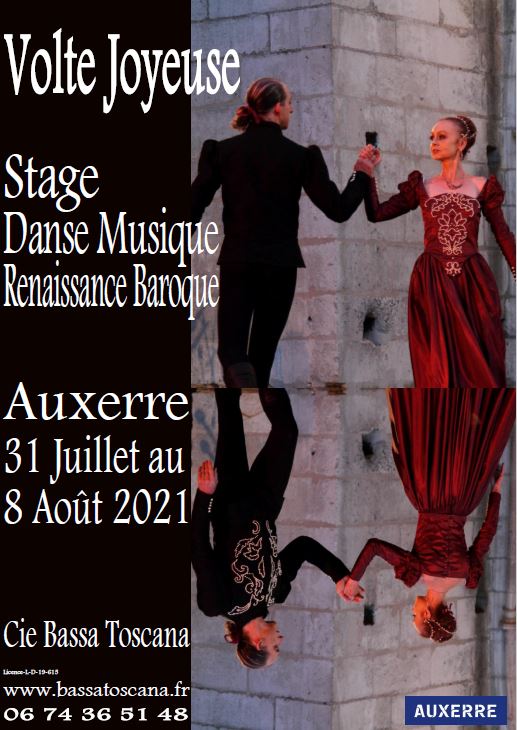
« A balli, a balli liete venite »*
Si le monde marche sur la tête, si nous avons le sentiment d’être des marionnettes, faisons volte-face et dansons avec légèreté et humour.
Carnaval, fête des fous sont les manifestations d’un monde inversé. Déjà connus dans l’antiquité, ces moments de logique à l’envers avec négation de l’ordre établi se codifient dès la Renaissance.
Volte Joyeuse, le 8 août 2021 à l’Abbaye Saint-Germain, sera une réminiscence d’une retraite illuminée d’Auxerre, réputée au XIXème siècle, avec son cortège de chars à thèmes, constituant ainsi les différents tableaux du spectacle. Dans l’esprit des Fêtes vénitiennes de Campra, la représentation sera l’expression des émotions et des réjouissances collectives d’une fête dansante, où se mêleront les facéties de personnages carnavalesques.
Pour clore la soirée, cette allégresse festive sera partagée avec le public au Bal Renaissance sur le parvis de l’Abbaye (si la situation sanitaire nous le permet).
PS :* « Viens aux danses, aux danses heureuses »
tiré du texte de Se l’aura spira de Frescobaldi
Les Artistes qui encadreront les stagiaires de la compagnie lors du spectacle du 8 août :
Renaissance Italienne
Bernadette Jacquet
Stéphane Quéant
Danse Baroque
Gudrun Skamletz
Flûte et Tambour
Solène Riot
Comédien
Olivier Banse
Bassa Toscana
23, rue des Grands Champs
Laborde
89000 Auxerre
Président:
Jean-François Méchain
Animateurs:
Renaissance Italienne
Bernadette Jacquet
Stéphane Quéant
Danse Baroque
Gudrun Skamletz
Flûte et Tambour
Solène Riot
Renseignements
S. Quéant: 06 74 36 51 48
Studio de danse
Maison de la Danse,
9, rue Milliaux
89000 Auxerre
La compagnie Bassa Toscana a été créée fin 2000. Elle a établi son siège à Auxerre, en Bourgogne, pour mettre en valeur le patrimoine et l’histoire de la région. Bassa Toscana fait le pari d’une offre culturelle originale, fondée à la fois sur les connaissances historiques et patrimoniales et sur la convocation du rêve et de l’imaginaire. Les costumes sont des reconstitutions de gravures des XVe et XVIe siècles. Quant aux danses, ce sont les traités de Négri, de Caroso et de Thoinot Arbeau, chanoine de Langres (« Orchésographie », 1588) qui ont permis de retrouver les chorégraphies de la Renaissance.
La compagnie Bourguignonne propose des créations, des conférences dansées, des stages et des ateliers pour enfants ou adultes qui mettent en valeur le lien fort entre le passé et le présent, entre le patrimoine et le monde actuel. A travers la découverte et la pratique de la danse Renaissance, Bassa Toscana a pour ambition de révéler la richesse d’un patrimoine français dans le but d’affermir la cohésion et le lien social autour des valeurs artistiques et historiques.
La rencontre avec Obsidienne et Compagnie permet aux chorégraphes de Bassa Toscana de participer aux créations de ce groupe musical (Ballades en balades, Fricassée de chansons, Le Jardin des Délices, Miracle, le Roman de Fauvel, le Livre Vermeil de Montserrat, Chantons sous la neige et Le Monde à l’envers pour les fêtes de l’âne entre 2005 et 2019 ou encore, L’Amour de moy s’y est enclose, pour les festivals de musique ancienne de Nantes et du Haut Jura).
Bassa Toscana a été engagée dans plusieurs projets au côté de La Fenice avec Jean Tubéry élargissant son répertoire à la danse Baroque.
La compagnie est également associée à d’autres ensembles musicaux tels que Perceval, Les Coccigrues, Les Hautbois d’Henry IV, La Bellezza, La Maurache, Joër… Elle a franchi les frontières de l’Allemagne avec les musiciens de l’Ensemble La Voilotte de Mannheim. La collaboration avec le conservatoire d’Auxerre a permis la création de nombreux spectacles, réunissant dans une même émotion scénique amateurs et professionnels.
Accueil des stagiaires 31 juillet
13h00 - 15h00 Accueil administratif et présentation du stage
15h00 - 18h00 Danse Renaissance tutti
Cours danseurs 1er au 7 août
11h00 - 13h00 Danse Renaissance G1, Danse Baroque G2
14h30 - 17h30 Danse Renaissance G2, Danse Baroque G1
Cours musiciens 1er au 7 août août
9h00 - 10h00 Cours tutti Tambourinaire
10h00 - 12h00 Cours individuels musique
14h30 - 17h30 Cours de musique d’ensemble, accompagnement des ateliers danse
Cours tutti (danseurs et musiciens) 1er au 7 août
10h00 - 11h00 Cours Danse Renaissance
13h00 - 14h00 Initiation Tambourinaire et Chant à mener la danse
Dimanche 8 août
11h00 - 13h00 Répétition du spectacle en studio
14h30 - 18h30 Générale avec les musiciens à l’Abbaye St-Germain
20h30 Spectacle dans le Cloître de l’Abbaye Saint-Germain et Bal Renaissance sur le parvis
Pour une participation au spectacle, prévoir un costume de style renaissance ou baroque.
Cette organisation est donnée à titre indicatif et peut être modifiée durant la semaine.
Danse
Tarif préférentiel pour une inscription avant le 31 mai 2021 360 €
Tarif de base pour une inscription après le 31 mai 2021 450 €
Tarif couple ou famille sur demande.
Musique
Tarif préférentiel pour une inscription avant le 31 mai 2021 320 €
Tarif de base pour une inscription après le 31 mai 2021 400 €
Nombre de places limitées
Acompte
Un acompte de 100 €uros à l’ordre de Bassa Toscana doit être envoyé avant le 31 mai 2021 pour le tarif préférentiel ou avant le 15 juillet 2021 pour le tarif de base avec la fiche d’inscription. L’acompte n’est pas remboursable en cas de désistement après le 15 juillet 2021.
Bulletin d’inscription à renvoyer avec le paiement à:
M. Chemin, trésorier de Bassa Toscana,
10, rue de la Roirie
35610, Pleine Fougères
Les frais de voyage, d’hébergement et les repas sont à la charge des stagiaires.
Une liste d’adresses peut vous être envoyée sur demande
L’organisation du stage peut être modifiée en fonction des contraintes dues à la crise sanitaire.
En cas d’annulation, aucun acompte ne sera encaissé.
Mairie d’Auxerre
CRD d’Auxerre
Abbaye Saint-Germain
Ensemble Obsidienne et Cie www.obsidienne.fr
Atelier Elbock www.elbock.fr
La Mini Académie Auxerre www.mini-academie.com
organized by
Il Teatro della Memoria (artistic direction: Claudia Celi e Andrea Toschi)
Renaissance & baroque singing: Rosanna Rossoni
15th & 16th Century dancing: Claudia Celi
17th & 18th Century dancing: Ilaria Sainato
19th Century social dancing: Paolo Di Segni
Recorder: Marco Rosa Salva
Renaissance Lute, Theorbo & Baroque guitar: Francesco Tomasi
Baroque & classical Oboe: Angela Paletta
Cembalo Accompaniment: Paolo Tagliapietra
Qi Gong Seminar: Angela Paletta