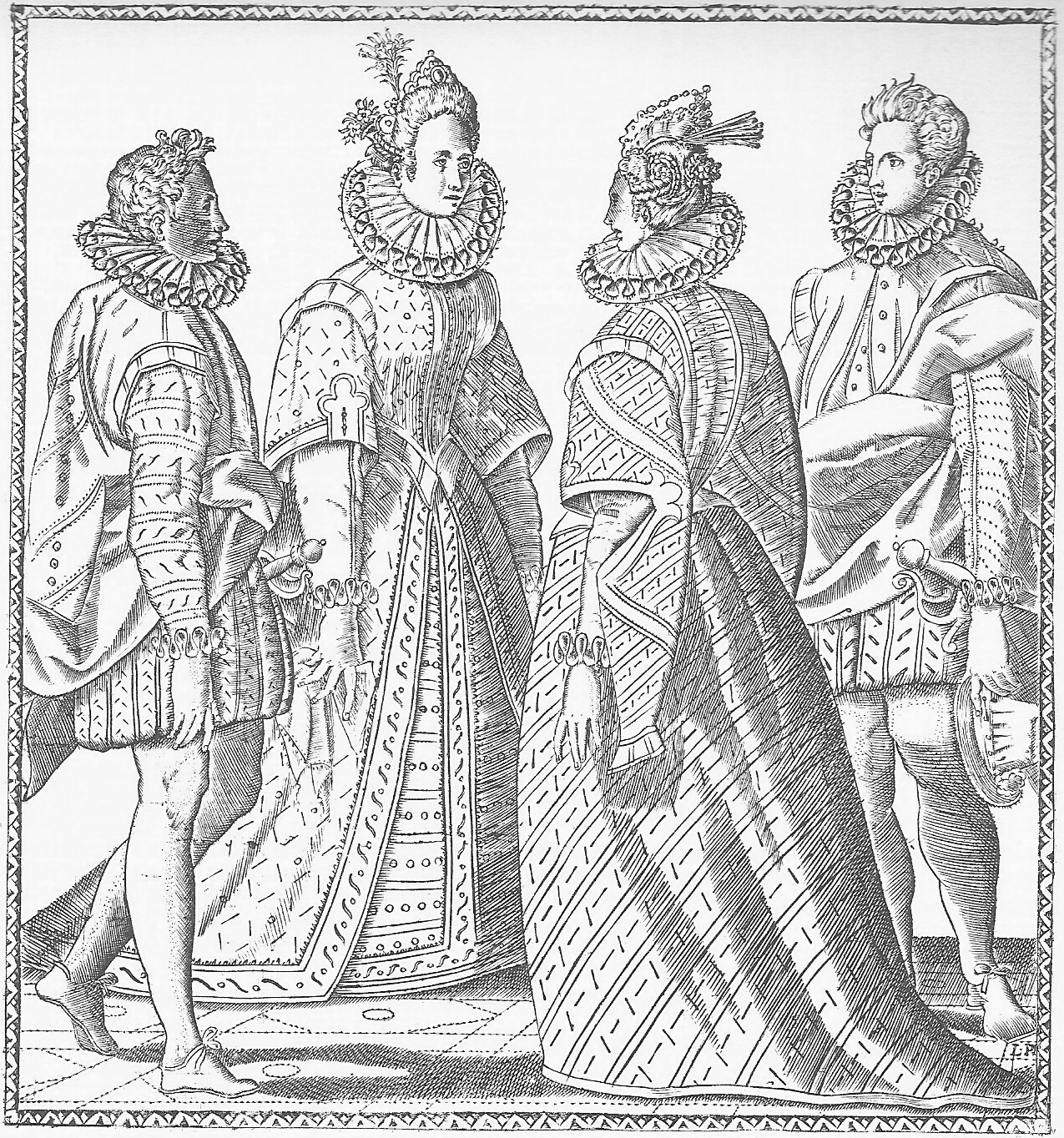
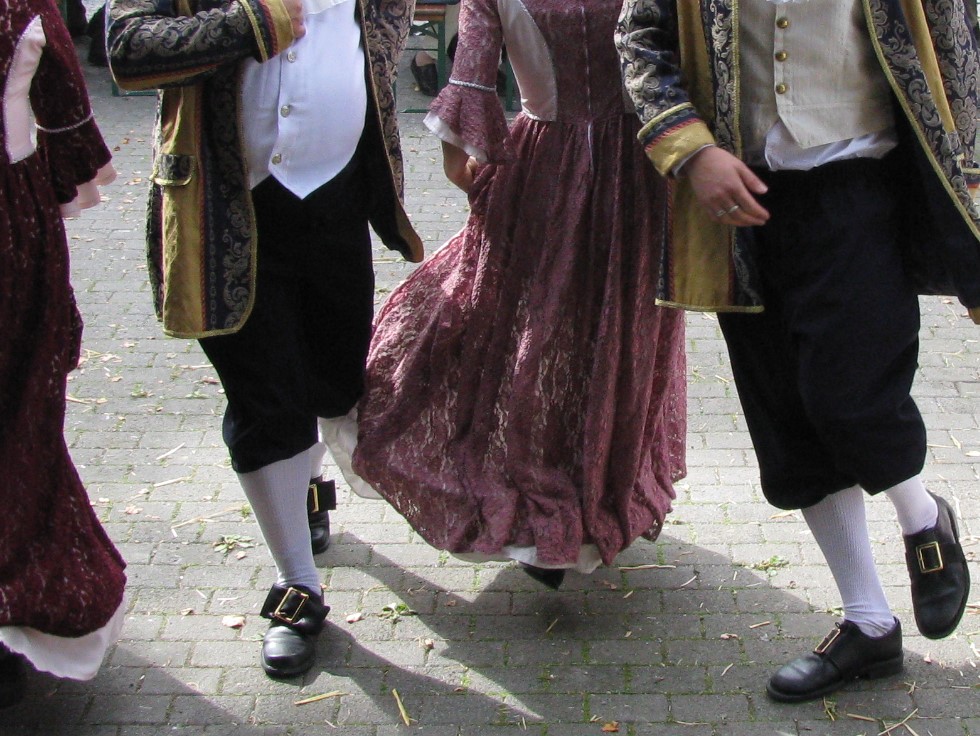
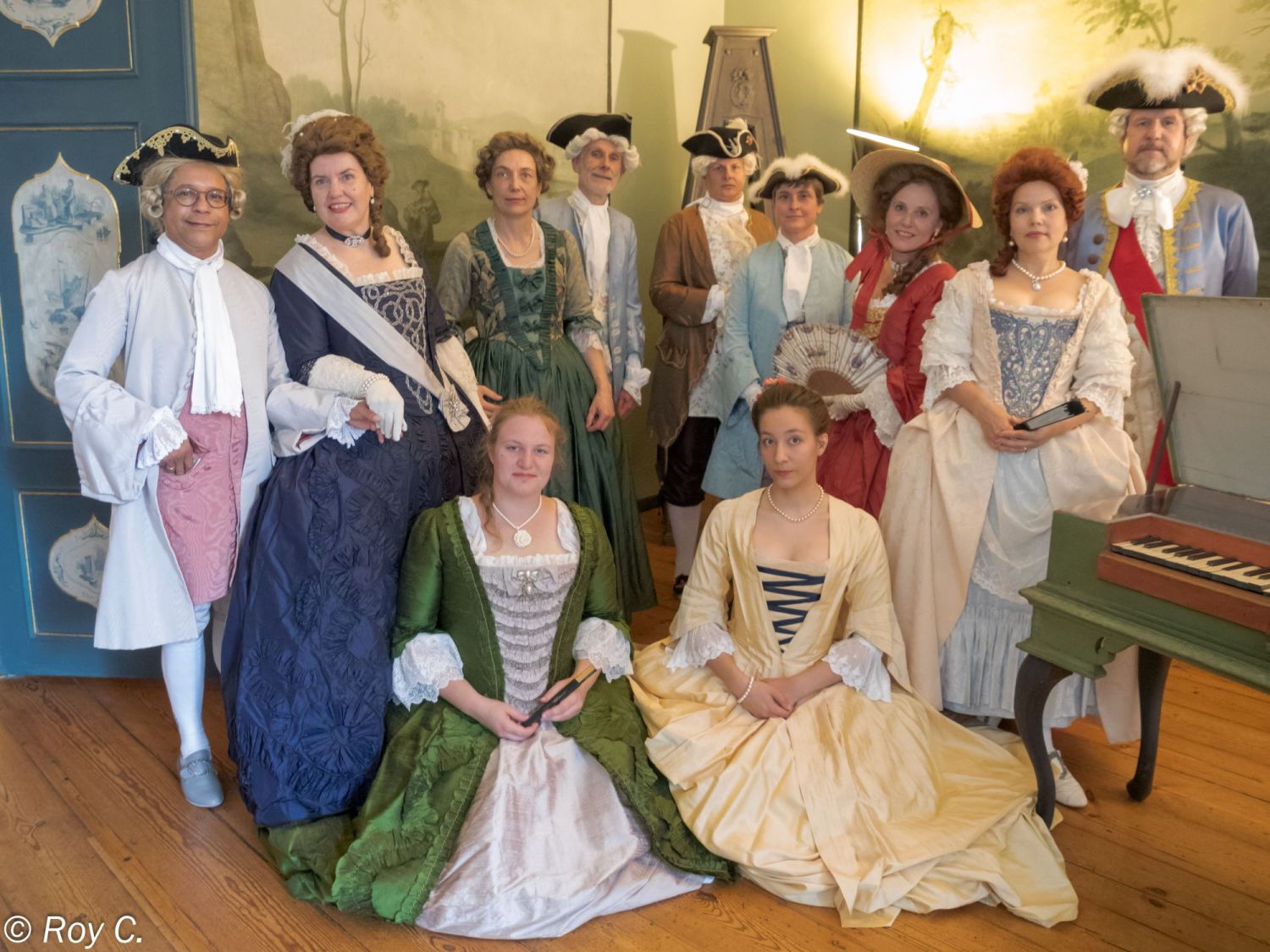
Historical Dances Summer Training Courses 2018
by Chestnut & Fantaisies Baroques 

DSC_6188

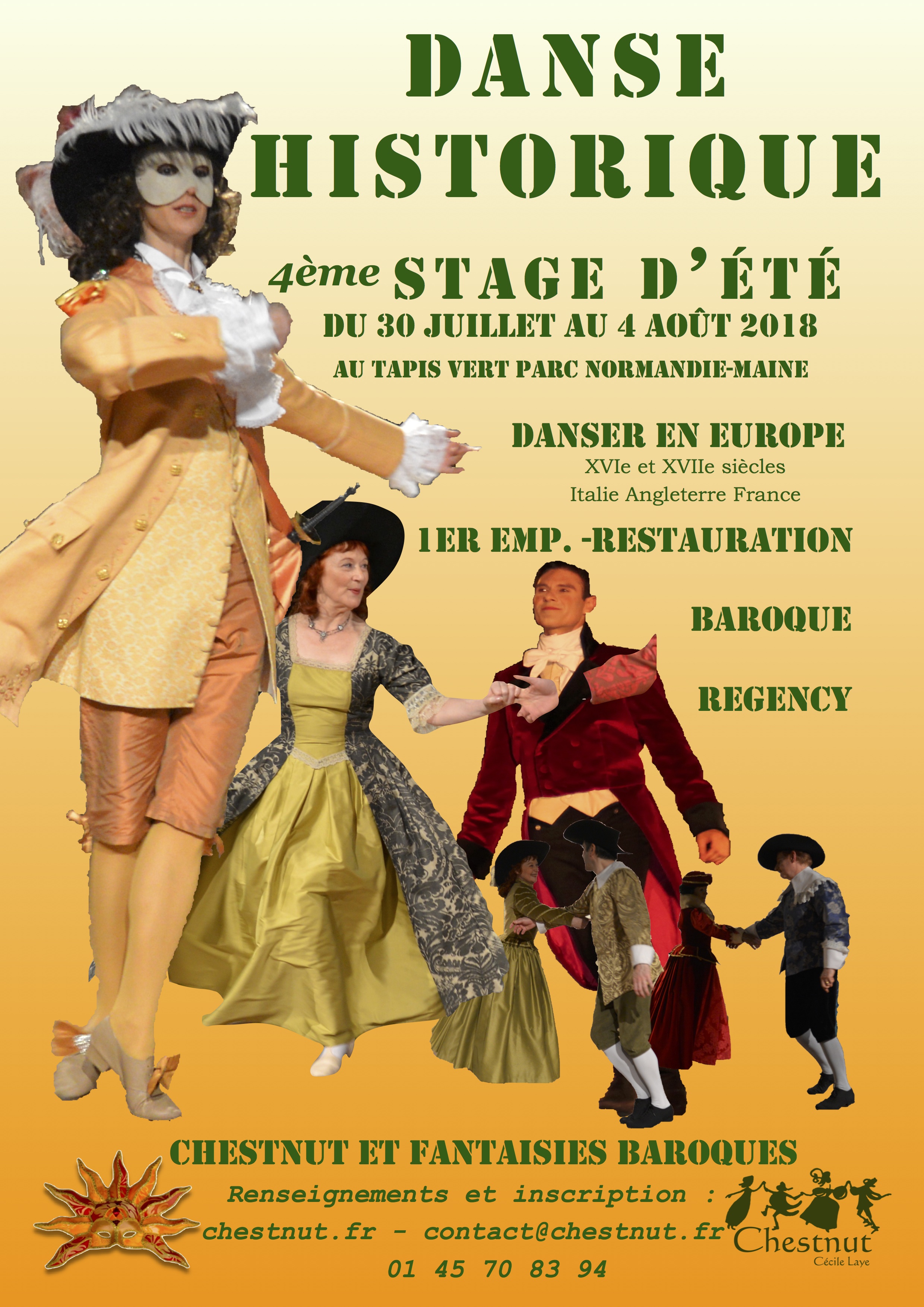
Chestnut and Fantaisies Baroques welcome you from July 30 to August 4, 2018 to their fourth summer school of period dances in Normandy.


  • Dancing in Europe during the end of the 16th and the beginning of the 17th centuries (Italian, French and English tradition)
  • Baroque dances
  • Jane Austen & Regency dances
  • French 1rst Empire - Restauration dances

With four different subjects and two instructors (Cécile Laye and Irène Feste), you’ll be able to make up your own schedule according to your tastes and how energetic you feel. You may opt for an intensive dance programme, up to 6 hours daily, or choose a mix of workshops and time for resting or for touring the area.

In our workshops, the programme allows for all levels of dancing. Each dancer will be taught variations suitable to his/her possibilities.

Each day will start at 9 a.m. with a half hour of warming up exercises, led by each instructor in turn.


WORKSHOP DESCRIPTION


MORNING : 


  • Dancing in Europe during the end of the 16th and the beginning of the 17th centuries through the Italian, French and English traditions workshop (3h : 9h45-12h45): Cécile Laye, The workshop will cover several modern dances. The focus will be on squares for two couples and dances including one or several heys. France: Les Bouffons, out of Thoinot Arbeau’s Ochésographie (1588), first and third passages. Italy: Bizarria d'Amore, choreographed by Cesare Negri and published in his 1602 book, Le Gratie d'Amore. England: Hit and Miss and Parson's Farewell, dances known at the time of Elisabeth 1st and James 1st, collected by the London publisher John Playford in the 1651 edition of The English Dancing Master.

or
DSC_6054alpha

  • Baroque dances workshop (3 hours: 9:45-12:45): Irène Feste, La Lorraine de Balon, ball dance for one man and one woman, composed on a rigaudon de Provence music. This dance appears in the XVIIth Recueil de danses pour l’année 1719.


AFTERNOON :


  • Jane Austen's and Regency dances workshop (1h30 : 15h/16h30 or 17h/18h30 on alternate days): Cécile Laye, Some figures were kept through English 17th and 18th century dances, from circles for eight to cotillon, with Newcastle (John Playford,1651) and La Nouvelle Promenade (James Fishar,1775). We’ll see the use of perpendicular lines in both these dances – they also occur in many choreographies of the period. The workshop will include a proposal for stepping in a longways duple minor set. At the start of the 19th century it became fashionable to use traditional Scottish and Irish steps in longways for as many as will while the figures in longways became much simpler than in earlier times. The stepping proposed will be based on Countess of Yarmouth's Fancy (Alexander Wells, 1800)

and

  • French 1rst Empire - Restauration workshop (1h30 : 15h-16h30 or 17h-18h30 on alternate day): Irène Feste, The Mazurka arranged by Saint Léon for H.R.A. Prince Charles of Württemberg and the Allemande created for the three princesses. These dances made up by Michel Saint Léon, whose son was Arthur Saint Léon, the famous dancer, were meant for the princes and princesses of the Württemberg house to improve their education and enable them to dance at the court balls. During the first third of the 19th century Mazurka was quite fashionable in all great European salons. L’Allemande à trois consists in a series of interweaving movements and figures for which we could make up names, such as arches, rosette, revolving around the sun…

EVENING ACTIVITIES


Evening entertaiment will be organized for trainees and instructors to share a good time:

  • Tuesday: team quizz on period dances
  • Wednesday: films
  • Thursday: will be decided by trainees
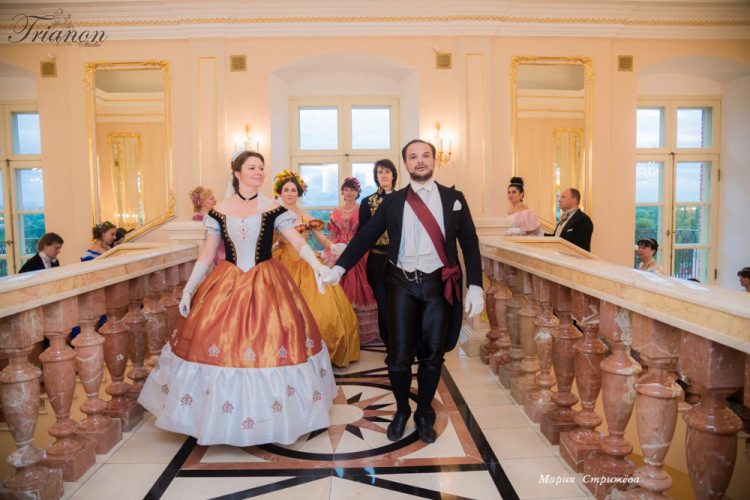
  • Friday :  Costume Ball including the dances studied in the workshops. (Please note: costume is not a must.)

TEACHERS


IMG_0546

Cécile Laye studied historical dances in England with Dolmetsch Historical Dance Society, Nonsuch History and Dance and EFDSS (English folk Dance and Song Society). She studied in particular with famous teachers or researchers such as Anne Daye, Anne Cottis, Peggy Dixon, Ethyl Anderson, Marjorie Fennessy, Tom Cook and Alan Davies. In France, she studied under Francine Lancelot, Andréa Francalancci and Barbara Sparti. In 1998 she founded the CHESTNUT company to make available the repertoire of figure dances of the time of the Stuarts and the English inheritance, from a literary and historical point of view, in collaboration with musicians, dancers, actors, singers, horse riders and fencers. She also graduated from Cours Florent in acting and staging.


Irène Feste

After a diploma in ballet dancing, Irène Feste studied « Belle Dance » with  L’Eclat des Muses, a company led by Christine Bayle. In 2007, she founded her own company with Pierre-François Dollé:  Fantaisies Baroques. They design and perform dance/theatre shows in schools and music schools. Irène Feste specialises in baroque and Premier Empire (Napoleonic time) dances, her two main fields of research. She regularly dances with compagnie Divertimenty.


VENUE


Le Tapis Vert, a residence for artists nestling in a large estate in the Normandie-Maine park, offers several accommodation possibilities on site, from boarding-house to rented rooms and camping. Also on site, two superb halls for activities and a circus tent make for a high quality environment.

TheatreTapis vert 04image003Chap-int


FEES


Tuition prices (€/pers.) : 

1 hour 30 Module : €125

  • French 1rst Empire - Restauration (1h30 in the afternoon)
  • Jane Austen & Regency dances (1h30 in the afternoon)

3 hours Module :  €216

  • Baroque dances (3 hours in the morning)
  • Dancing in Europe 16th & 17th centuries (3 hours in the morning)
  • French 1rst Empire - Restauration + Jane Austen & Regency dances (2 x 1h30 in the afternoon)

4 hours 30 Module : €288

  • Baroque dances (3 hours in the morning) + French 1rst Empire - Restauration or Jane Austen & Regency dances (2 x 1h30 in the afternoon)
  • Dancing in Europe 16th & 17th centuries (3 hours in the morning) + French 1rst Empire - Restauration or Jane Austen & Regency dances (2 x 1h30 in the afternoon)

6 hours Module: €336

  • Baroque dances (3 hours in the morning) + French 1rst Empire - Restauration and Jane Austen & Regency dances (2 x 1h30 in the afternoon)
  • Dancing in Europe 16th & 17th centuries (3 hours in the morning) +French 1rst Empire - Restauration and Jane Austen & Regency dances (2 x 1h30 in the afternoon)


Accommodation and meals prices  (€/pers.) : see them on chestnut.fr

Please, note : before you fill in your registration form,please check with us calling 0033 6 60 22 23 21 to find out which type of accommodation is still available.

HOW TO GET THERE


Reaching Tapis Vert

  1. By car

Le Tapis vert is 200 km away from Paris and 130 km away from Rennes.

  1. By train

The nearest train station is Alençon, reached either through Surdon from Paris Montparnasse-Vaugirard or by TGV through Le Mans. Share taxi or car from Alençon station.

A shuttle will be organized to fetch the trainees arrived at the station of Alençon by the train of 4:07 pm. Thank you for indicating us that you will arrive by the train.

TRAINEES’ WELCOME


Trainees are welcome from 17:00 on Monday July 30, 2018.

Please note : as no evening meal is provided on the first day evening (Monday), please bring a picnic dinner !

Departure on Saturday, August 4 after breakfast.


REGISTRATION


Please note : before you fill in your registration form, please check with us calling 0033 6 60 22 23 21 or contacting us at contact@chestnut.fr to find out which type of accommodation is still available.


Registration form here


Payment from abroad : please contact us


CONTACT- INFORMATION


contact@chestnut.fr ou 0033 6 60 22 23 21

  • Workshop
  • Summer School
  • Course
  • Renaissance
  • Cinquecento
  • French Renaissance
  • Baroque
  • Playford
  • 19th century
  • Quadrilles
  • Regency
  • All levels

X International Historical Dance Festival

    We are happy to announce the X anniversary of the International Festival of Historical Dance which will take place from 18 to 26 August 2018.    Within these 10 years, every August we danced together, learnt new dances and enjoyed each other’s company.    This year we want to offer you an amazing journey to Russia because the Festival will be dedicated to our history, traditions and dancing.        

They say, if you want to see European Russia you should go to St. Petersburg

but if you want to feel a truly Russian spirit you can feel it only in Moscow.

        We would like to celebrate our X anniversary with a whole lot of illustrious events exchanging experience and dancing together with our colleagues from other countries.   It is a great opportunity to get to know different dance styles and ballroom atmosphere of other schools and meet new friends.    

So our dear guests will have:

   
  • Dance classes by the very famous and everyone's favourite maitre Arnaud Degioanni from France, the head of "Carnet de Bals" Association.
  • Historical Dances in English traditions by Zsuzsi Dingsdale from Hungary.
  • Experience Interchange with some European Dancing Groups.
   

And the balls!

     
  • Open Ragtime Ball in one of Moscow parks,
  • Russian Ball at the Izmaylovo Kremlin,
  • Scottish Ball
  • and the traditional Grand Ball in one of Moscow manors. 
   

We are waiting for you at our Festival!

 
  • Workshop
  • Summer School
  • Ball
  • Ongoing classes
  • Course
  • 19th century
  • Quadrilles
  • Regency
  • Waltz
  • Costumes
  • mixed
  • Intermediates
  • Advanced
  • All levels

L’Arte del Ballare

Die Tanzkunst im 15. Jahrhundert Mit Lieven Baert, Gent
 

Einige italienische Tanzmeister wie Da Piacenza, Ebreo und Cornazano haben uns verschiedene Manuskripte mit Tanztheorie und Choreographien hinterlassen.

Sie sprechen darin alle über „die KUNST zu Tanzen“ und erwarten von den Ausführenden den Regeln der Musikalität, der Schrittgenauigkeit und

rhythmischen Perfektion, der Eleganz und des Ausdrucks oder der Dynamik zu folgen.

Die Musik ist vielschichtig (mehr sogar als in den folgenden Jahrhunderten) und man benötigt ein gutes musikalisches Bewusstsein und Konzentration, um die Choreographien mit ihrem ganzen Potential auszuführen.

Dieser Kurs legt seinen Schwerpunkt auf Tanztechnik und Stil des Quattrocento mit einem hohen Niveau!

Schwierigkeitsgrad: Geeignet für alle Tänzer mit einer guten Basis bei Balli und Bassadanze des Quattrocento. Kenntnis der Basisschritte der vier Misure (Bassdanza, Quadernaria, Saltarello, Piva) wird vorausgesetzt.

15. und 16. September 2018

Katholisches Jugendheim Oberwesel, Martinsberg 3

Stadthalle Oberwesel

Samstag 9:30 – 12:30 und 13:30 – 17:00 Uhr

Sonntag 9:30 – 12 .30 und 13:30 – 16:00 Uhr

Teilnahmegebühr: 75,00 Euro

Träger der Veranstaltung: Katholische Erwachsenenbildung im Bistum Trier,

Fachstelle Bad Kreuznach Bildungswerk Oberwesel


Anmeldung bis 15. August 2018 per E-Mail an:

s.janning@gmx.net

Susanne Janning

Münsterstraße 14

D-55116 Mainz

Tel.: 0049 (0)6131 / 233375

Und gleichzeitiger Überweisung der Teilnahmegebühr auf das Konto

des Bildungswerks Oberwesel

BIC: MALADE51SIM

IBAN: DE34 5605 1790 0002 2000 20

Es sind Kaffeepausen vorgesehen. Getränke sind vorhanden.

Gemeinsames Mittagessen: jeder, der möchte, kann gerne etwas für unser kleines Buffet mitbringen (zum Beispiel: Salate, Brot,

hartgekochte Eier, Gemüsesticks, Würstchen, Käse, Kuchen etc.). So bekommen wir meistens ein leckeres Buffet für alle zusammen.


  • Workshop
  • Renaissance
  • Quattrocento

Historische Tänze & Tanz im Schloss mit Lieven Baert

L18-09/TiS18 - in Kooperation mit der Landesmusikakademie Rheinland-Pfalz e.V.

Die von der Gesellschaft in früheren Jahrhunderten bevorzugten Gruppentänze haben ihren ganz besonderen Reiz. Bei diesem Wochenendlehrgang können sowohl Tanzinteressierte wie Multiplikatoren, Anfänger oder fortgeschrittenere Tänzer ihre Kenntnisse vertiefen oder die faszinierende Welt der Contredanses und Quadrillen neu für sich entdecken. Mitglieder des Tanzensembles für historische Tänze “Danza Vosolvia” aus Oberwesel werden uns nach dem Mittagessen am Sonntag Einblick in die Mode vergangener Zeiten gewähren.

Nach der Kaffeepause in der Landesmusikakademie treffen wir uns im Gartensaal von Schloss Engers, um mit Lieven die erarbeiteten Tänze im barocken Ambiente zu genießen. Ein entsprechendes Kostüm ist kein Muss – würde aber sicher zum nicht alltäglichen Tanzerlebnis beitragen! Mit einem festlichen 3-Gänge-Menü im Schloss (Getränke sind nicht in der Gebühr enthalten) werden wir dieses wunderbare Wochenende abrunden.

Lieven Baert (Belgien) hat während seiner langen, internationalen Karriere  bei vielen Produktionen getanzt, choreografiert und Regie geführt und ist auf die kreative Rekonstruktion des Tanzrepertoires des Mittelalters bis zur frühen Neuzeit spezialisiert. Bei der “Landshuter Hochzeit” - Deutschlands größtem historischen Festival - leitet er seit 1997 das Tanzspiel, ein Tanzspektakel basierend auf Quellen des 15. Jahrhunderts mit mehr als 80 Tänzerinnen und Tänzern.

Lehrgangsort:

56566 Neuwied-Engers


Termin:

Sa., 01. September 2018, 14:00 Uhr bis
So., 02. September 2018, ca. 21:00 Uhr


Gebühr:

125 € / Mitglieder 100 € inkl. Verpflegung und Unterkunft(Einzelzimmerzuschlag 10 €)
zusätzliche Übernachtung auf Anfrage


PL-Az.:

18ST003511


Weitere Infos und Anmeldung


  • Workshop
  • Baroque

The Jane Austen Festival Regency Costumed Summer Ball

Celebrating Jane Austen’s novel Persuasion published in December 1817

Tickets for the Ball include entrance, the dancing, entertainment and a delicious two course buffet. The tables seat ten and when purchasing tickets please tell us who you wish to sit near and if you are vegetarian or have a food allergy. (By email to our Summer Ball Coordinator, Georgia Delve, summerballjafestivalbath@gmail.com) There is a cash only bar for the purchase of liquid refreshments.

Tickets for the Pre-Ball Dance Workshop in the afternoon are for those attending the Ball details from here

The venue is  close to Bath Abbey and Pulteney Bridge with the nearest parking in Manvers Street or Southgate car parks (more details from here) or the Podium Shopping Centre car park beneath Waitrose. Everyone arrives in costume to the Ball, there is somewhere to hang a coat and umbrella but no changing facilities.

Dances are called by the wonderful Diana Campbell website and there is live music supplied by the superb trio Green Ginger website. The Ball would not be complete without our very special MC and John White of Select Society website will be with us announcing and organising the card tables.

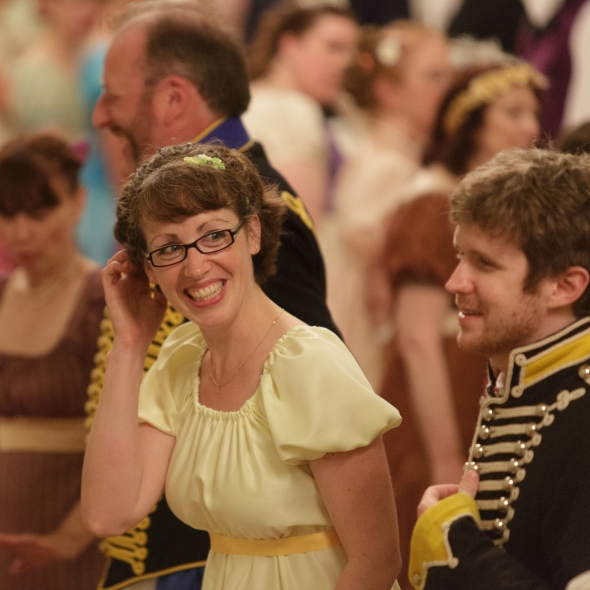
Our Ball is a costumed event and all ladies and gentlemen dress in the style of the Regency or 18th Century period. The look is the Empire line, with a high waist just below the bust, very flattering and feels wonderful to wear. This is a terrific opportunity to go to town and wear a ball gown or breeches, plus all the accessories which look fantastic. Ideas for costumes can be found on our website under Other Information and Costume 101 where you will find links to suppliers and rental companies. Bath Theatrical Costume Hire in Frome, Somerset, 01373 472786 are particularly helpful.

Regency dancing is elegant and refined and even though some of the same steps can be found in a Barn Dance it is far less boisterous; after all we are ladies and gentlemen of quality not of the lesser sort! However, it is energetic and can be tough on the calf muscles but you do not have to dance every dance! There is no need to bring a partner of the opposite sex or indeed a partner at all, as you will be made most welcome even if you come on your own. We usually find that there are more ladies then men, the same was true in Jane Austen’s day, so there will be times when ladies dance with ladies and it does not matter a bit.

Tickets will be posted free to UK addresses.

Tickets to overseas will be available to collect from the Festival Stewards at the venue 30 minutes before the Dance Workshop or 30 minutes before the Ball. Please bring a copy of the email confirmation of purchase with you.

source: http://www.janeaustenfestivalbath.co.uk/2018-summer-ball/

  • Ball
  • Regency

Il Brando

Il Brando - eine interessante Tanzform für mehrere Tänzer.

Es ist schwer, Brandi anhand ihres Aufbaus von anderen Gruppentänzen zu unterscheiden. Wie Balli und Balletti enthalten auch Brandi eine Mischung aus unterschiedlichen Schrittfolgen und Tanztypen. Negri beschreibt 4 Brandi mit 4 bis 8 Tänzern. Alta Regina ist vielleicht der Bekannteste: ein Tanz für vier Hirten und vier Nymphen. In den Beschreibungen  findet man oft einen oder mehrere führende Tänzer, was vielleicht auf eine Verbindung zur französischen Branle hinweist, wobei die Ähnlichkeiten mit den Branles aus Arbeau's Orchesography gering sind.

Wir werden diese Tanzform anhand von 2 Choreographien aus Cesare Negris Le Gratie D'Amore, 1602, kennenlernen: Il Brando Biscia Amorosa (für 4 Tänzer) und Il Brando di Cales (für 6 Tänzer).

Der Kurs ist von mittlerer Schwierigkeit, Erfahrung der italienischen Tanztechnik des 16. Jahrhunderts wird erwartet. Bitte angemessene Tanzkleidung und Tanzschuhe mitbringen.


Der Tanzmeister

Mit Kaj Sylegård aus Stockholm ist es uns gelungen, einen hervorragenden Tanzmeister auf dem Gebiet des historischen Tanzes und der Musik zu gewinnen.

Seit 1991 beschäftigt er sich professionell mit dem historischen Tanz und graduierte am University College of Dance in Stockholm und der Stockholm Royal Academy of Music. Zu seinen Lehrern gehörten Jane Gingell in London, sowie Anna-Karin Stahle-Varney und Regina Beck-Friis in Stockholm.

Derzeit lehrt er an der University College of Dance, der Ballet-Academy in Stockholm und der Swedish Ballet School. Darüber hinaus wirkte er an zahlreichen namhaften Aufführungen in London und Boston mit


Die Zeiten:

Samstag, 29.09.2018    Sonntag, 30.09.2018

09:30 bis 12:30 Uhr     09:30 bis 12:30 Uhr

14:00 bis 17:00 Uhr     13.30 bis 15:00 Uhr


Die Kosten:

Der Unkostenbeitrag in Höhe von 80,-- Euro ist
nach Erhalt der Anmeldebestätigung zu zahlen.

Die Teilnehmerzahl ist begrenzt.

Der Kursort

Der Kurs findet statt im Gemeindehaus,
Badstr. 15 in Ludwigsburg-Hoheneck.


Man erreicht es über die BAB A81, Ausfahrt Ludwigsburg Nord, dann B27 nach Ludwigsburg (Richtung Zentrum). In Ludwigsburg (vor dem Schloss) an der Kreuzung links Richtung Marbach, da
gleich wieder links Richtung Freiberg, Hoheneck. In Hoheneck auf der Bottwartalstr. bleiben und dann rechts in die Ludwigsburgerstr. bis Ortsmitte, danach rechts in die Badstraße.


Vom Bahnhof Ludwigsburg mit der Buslinie 427, Haltestelle Ebelstrasse


Übernachtungsmöglichkeiten:

www.bed-and-breakfast.de

Tel: (0721) 831 64 20, Fax (0721) 831 63 99

www.hotelmaerchen.de

www.kloster-im-park.de

http://www.krauthof.de


Hotels & Unterkünfte:

http://www.ludwigsburg.de/servlet/PB/menu/1237565_l1/index.html


Sehenswertes in/um Ludwigsburg

Residenzschloß von 1704

Kostümmuseum mit Gewändern ab 1650

Porzellanmuseum

Barocktheater

Blühendes Barock


Pomeranzengarten in Leonberg

Er ist der einzig erhaltene Renaissancegarten
Baden-Württembergs


Sehenswertes in Stuttgart

Altes und neues Schloss

Solitude

Staatgalerie

Musikinstrumentenmuseum


  • Workshop
  • Cinquecento
  • Intermediates

Kontratänze im Wandel der Zeiten - eine Zeitreise


Unter Leitung der Tanzlehrerin und Tanzhistorikerin Jadwiga Nowaczek kehren wir zu den Wurzeln des Kontratanzes zurück und machen eine kleine Reise durch die Tanzgeschichte. Sie beginnt mit John Playford (1623-1686) und den Tänzen „Nobody’s Jig“, „Mr. Lane’s Magot“ und „Black and Grey“. Diese drei Tänze sind in einer ausgezeichneten Aufnahme als ein Stück eingespielt, und es wird die Kontratanzenden schon etwas herausfordern, diese drei Choreographien ohne Unterbrechung zu tanzen. Zum Ausruhen erfreuen wir uns an dem schönen langsamen Well Hall. Aus der Barockzeit tanzen wir „La Gasconne“ (Feuillet 1706), aus dem Rokoko einen Tanz im Quadrat, Cotillon oder Contredanse francaises genannt (Feldtenstein 1772), und aus dem frühen 19. Jahrhundert eine schwungvolle Ecossaise, die durch das rasante Chassieren durch die Gasse gekennzeichnet ist (Helmke 1829). Alle Tänze bis auf den Cotillon sind in longways-Aufstellung zu tanzen und sollen mit den passenden Schritten der jeweiligen Epoche ausgeführt werden.

Dieser Workshop ist ein Angebot für alle, die historische Kontratänze stilbewusst genießen und neben Playfords auch andere Quellen und Variationen tänzerisch erkunden möchten.

Anmeldung über: über http://www.lag-tanz-hessen.de/.

  • Course
  • mixed
  • Beginner
  • Intermediates
  • Advanced