25. Court Dance Festival Cracovia Danza
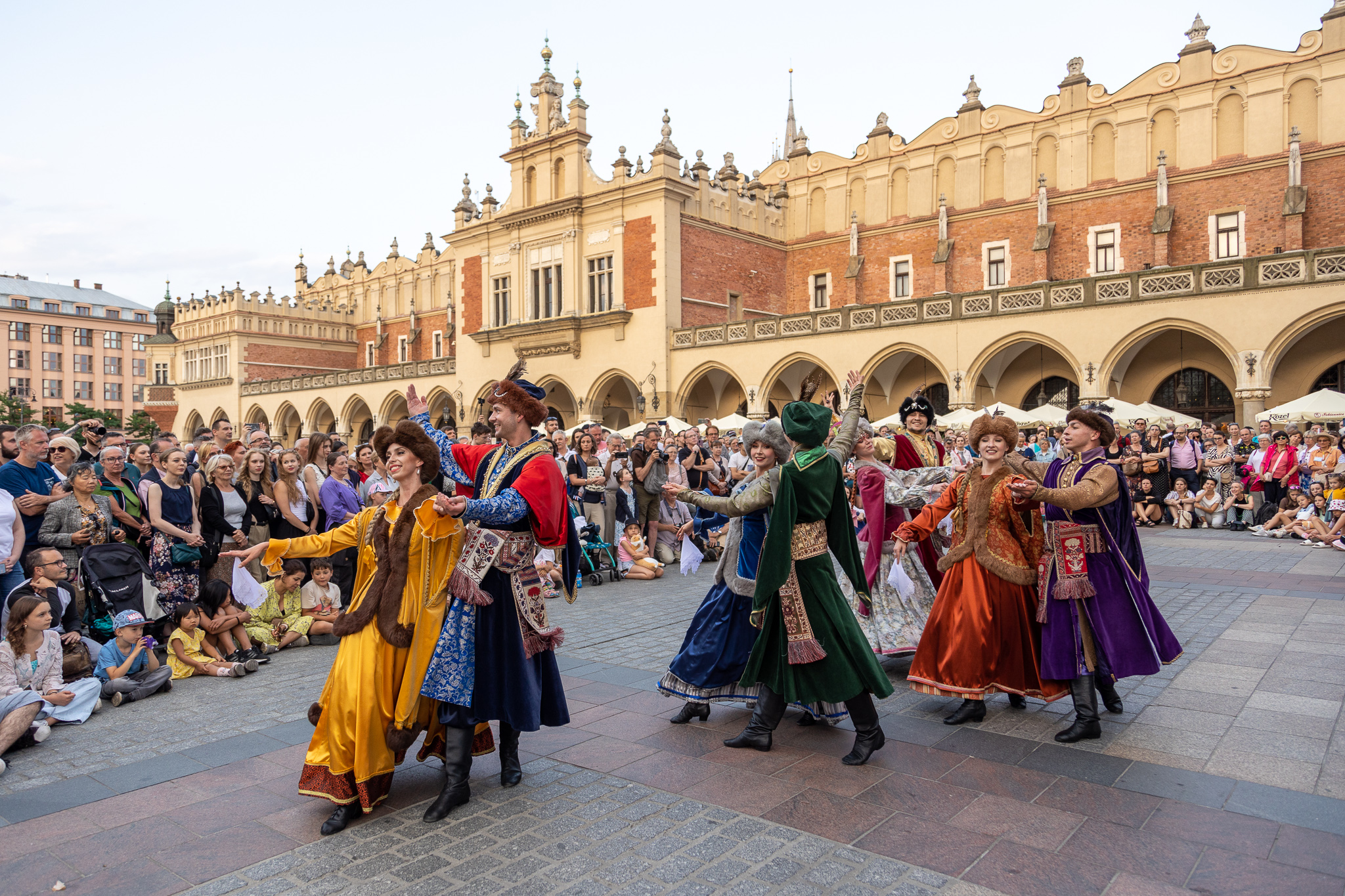
The Court Dance Festival is an artistic event whose main goal is to present presentations related to the dance heritage of Krakow, Poland, Europe and even the whole world. The culture of court dances present in every country is a source of inspiration for creating spectacles and artistic performances reaching back to the tradition and practice preserved to this day. For many years, Krakow, through the Festival and its events, has become a world center of court dance bringing together individual artists, dance, music and theater groups, workshop participants as well as dance theoreticians and historians from various countries.
This year’s Court Dance Festival „Cracovia Danza” is titled „Nature, Gardens, Parks and Court Dance„. Ensembles will come to Krakow and present their performances related to the theme of the Festival using various dance techniques.
We plan that this year the following performances will take place in Krakow: The French ensemble HéliosKine and dancers associated with the Academy of Baroque Dance in Versailles (baroque dance). Indian group from New Delhi Sanskriti Alaknanda (Kathak – Indian classical dance). The Cracovia Danza Court Ballet will present its latest performance „Water Music” to the music of Georg Friedrich Handel and Georg Philipp Telemann (baroque dance). Reaching for themes related to nature during this year’s Festival, the Cracovia Danza Ballet contributes with its dance to the protection of nature and the heritage of parks and gardens, as well as promoting a healthy lifestyle.Art director: Romana Agnel
Organizer: Cracovia Danza Ballet
Co-organizer: Ardente Sole Foundation
- Workshop
- Performance
- Summer School
- Exhibition
- Course
- French Renaissance
- Baroque
- mixed
- Beginner
- All levels
Der wilde Tanz durch die Jahrhunderte
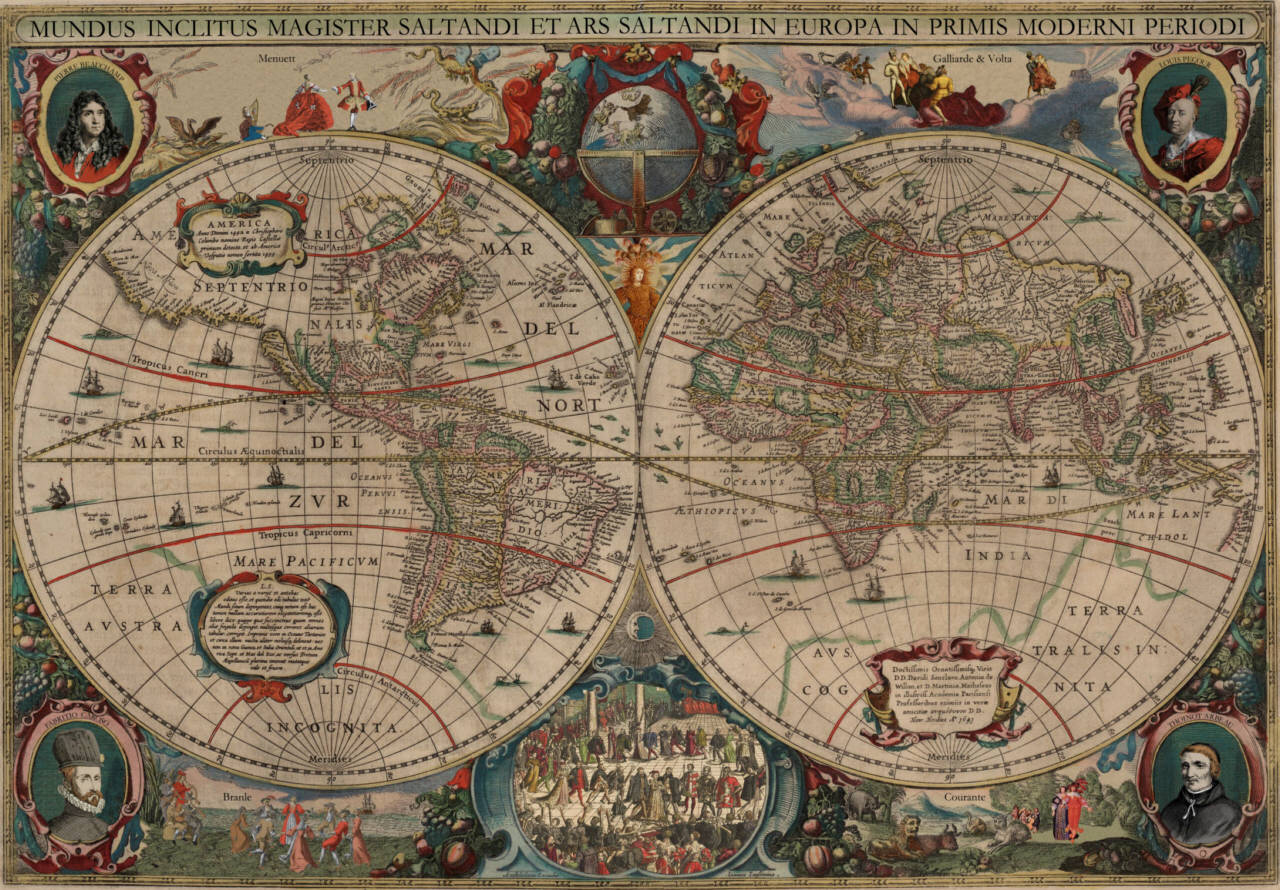
An diesem Wochenende begeben wir uns auf eine Tour de Force durch 500 Jahre Tanzgeschichte. Für jedes Jahrhundert habe ich einfache beispielhafte Tänze ausgewählt und wir gewinnen so einen quellenbasierten Überblick über das, was wir als historischen Tanz bezeichnen.
Am Samstag steht die Renaissance im Mittelpunkt. Wir beginnen im 15. Jahrhundert mit den ersten erhaltenen rekonstruierbaren Tänzen aus Italien und Frankreich. Die wichtigste Tanzform dieses Jahrhundert ist sicherlich die Bassedanse, die italienischen Balli sind allerdings für uns heute wesentlich spannender.
Im 16. Jahrhundert haben wir dann zusätzlich bereits Quellen aus England und Deutschland. Im Italien des Cinquecento werden die Tänze zum Teil sehr anspruchsvoll und stehen dem heutigen Bühnentanz in nichts nach. In manchen Gruppen erfreuen sich daher insbesondere die einfachen Tänze, die uns ein französischer Kanoniker mit dem Pseudonym Arbeau überliefert hat, großer Beliebtheit. Der wichtigste Tanz dieses Jahrhundert ist sicherlich die Galliarde.
Am Sonntag stehen dann Barock, Rokoko und das 19. Jahrhundert im Mittelpunkt. Im Tanz ist der Übergang von der Renaissance zum Barock fließend. Für Spanien erscheint 1630 noch eine Übersetzung eines alten italienischen Tanztraktates, in Frankreich läutet De Lauze technisch bereits 1623 die barocke Technik ein. In England tanzt man noch bis spät ins 17. Jahrhundert zu Melodien aus der Renaissance – die geselligen englischen Tänze erfreuen sich auch heute noch einer großen Beliebtheit.
Während Ludwig XIV. als der tanzende König in die Geschichte eingeht, ist die choreographische Quellenlage im Frankreich des 17. Jahrhunderts erstaunlich dünn. Der Tanz des Jahrhunderts ist sicherlich die Courante als Lieblingstanz des französischen Königs, bevor das Menuett diesen Platz einnimmt.
Im 18. Jahrhundert hat das Menuett dann seinen Siegerkranz als Tanz des Jahrhunderts vollends erreicht. Aber auch die aus England importierten Country Dances in einer Gassenaufstellung, die Franzosen sagen Contredanse dazu, werden zu einem Massenvergnügen. In Frankreich wird mit den Cotillons eine eigene Gruppentanzform erfunden. Extrem bedeutend für den historischen Tanz ist eine weitere, im Jahr 1700 veröffentlichte, Erfindung – eine graphische Notation von Tanzschritten, die wir heute als Beauchamp-Feuillet Notation bezeichnen.
Unserer Reise endet im 19. Jahrhundert, dem Jahrhundert des Walzers. Während die Ballettbewegungen, die heute immer noch eine Grundlage des Bühnentanzes bilden, nun kodifiziert werden, verflacht der Tanz im Ballsaal. Neben den Rundtänzen erlernt man jetzt nur noch eine kleine Anzahl von Quadrille-Choreographien, für die immer neue Musik bereitgestellt wird. Und ein neuer Spaßtanz: der Cotillon (nicht zu verwechseln mit dem gleichnamigen Tanz aus dem 18. Jahrhundert) ist nun ein Höhepunkt des Ballabends.
Die Zeiten sind:
Samstag 13:00-15:30 und 16:15-18:45 Uhr
Sonntag 10:00-12:30 und 13:30-16:00 Uhr
Historischer Tanz in Frankfurt 2024:
27.-28. April Rokoko:
Der Gesellschaftstanz im Rokoko im Überblick
8.-9. Juni Barocktanz:
„L' Heureuse Retour“ und andere leichte Barocktänze
7.-8. September Alle Zeiten:
Der wilde Tanz durch die Jahrhunderte
15.-16. Juli 19. Jahrhundert – Biedermeier:
Der Tanz um 1848
2.-3. November und
9.-10. November Empire:
Das Jane-Austen Wochenende
7.-8. Dezember Barocktanz:
„La princesse de Darmstadt“
Weitere Informationen finden sich auf meiner Webseite www.historische-tanzkunst.de sowie im Flyer.
- Workshop
- Renaissance
- Quattrocento
- Cinquecento
- French Renaissance
- Baroque
- Early Baroque
- Playford
- Rococo
- 19th century
- Quadrilles
- Regency
- Waltz
- mixed
- Beginner
- Intermediates
EDC Annual Lecture 2024: the 40th Anniversary Celebration
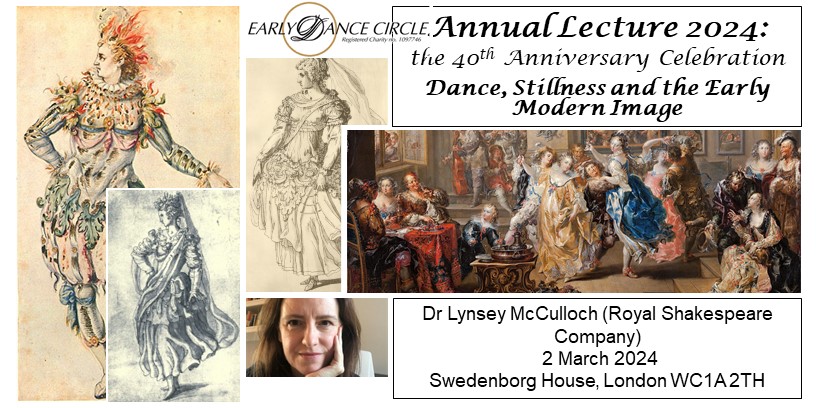
2024 marks 40 years since the birth of The Early Dance Circle. A full day is planned to celebrate, including a dance workshop, the Annual Lecture, a light supper and a vintage-themed dance evening.
THE PROGRAMME FOR THE DAY
- 1:30 pm Doors Open
- 2:00 - 3:30 Workshop on the Dances of Thomas Bray, in honour of Diana Cruickshank (former Chair of the EDC), led by Barbara Segal
- 3:30 - 4:00 Afternoon Tea/Coffee Break
- 4:00 - 5:30 Dr Lynsey McCulloch’s lecture on Dance, Stillness and the Early Modern Image
- 6:00 A light supper will be provided
- 7:30 – 9:00 Dancing, with our members calling to recorded music
Dr Lynsey McCulloch’s lecture on Dance, Stillness and the Early Modern Image will deal with the iconic nature of the dance image in the English court masque. She will examine the use of stillness within dance - not as a precursor to motion - but as a state in its own right and also look at dance as a static image in art and printed sources in the early modern period. Dr McCulloch has taught at Coventry University and is a Research Fellow in the Department of Learning and National Partnerships at the Royal Shakespeare Company. Her new book, Dance and the Static Image, has just gone to press.
The event is free to EDC Members (a birthday present!); non-members is £10 per person. An EDC Annual Membership is £20; email members@earlydancecircle.co.uk to join. Reserve your tickets at http://tinyurl.com/bde4829s
- Workshop
- mixed
- All levels
Renaissanceball
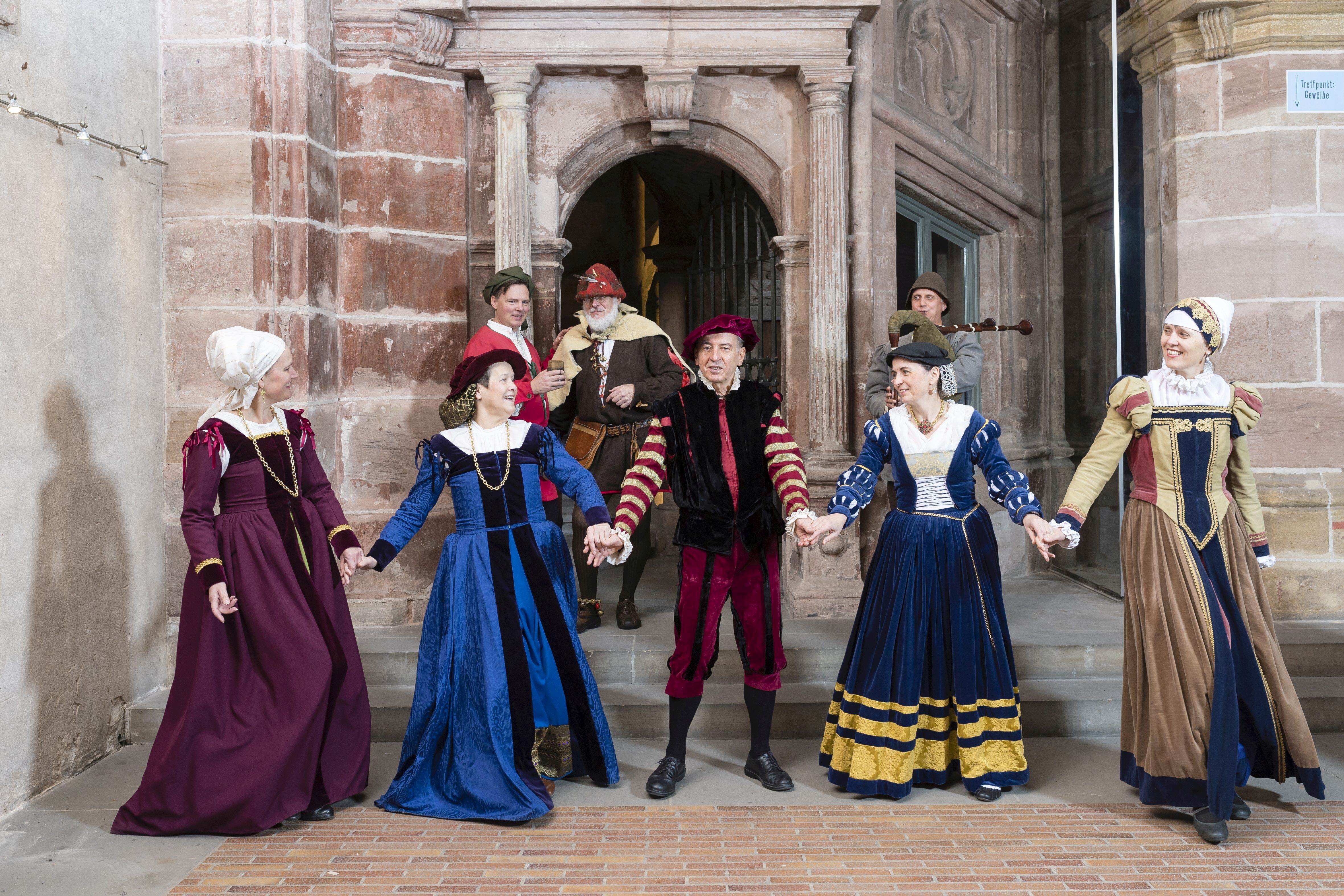
Der Katharinentag war traditionell der letzte Festtag vor der Adventszeit, in der früher ein striktes Tanzverbot und Fastengebot bestand. Also wurde an diesem Tag noch einmal ausgiebig getafelt und getanzt. Dieser Tradition folgend, haben wir unseren Renaissanceball unter das Motto „Kathrein stellt den Tanz ein“ gestellt. Unsere Tanzmeister Agnes Graf-Then und Siegfried Vogl erklären einfache historische Kreis- und Gassentänze, die man nach kurzer Einführung gleich mittanzen kann. Musikalisch begleitet werden wir „live and unplugged“ von unserem Musikensemble und unseren Sackpfeifern. Über gewandete Gäste freuen wir uns sehr, dies ist aber keine Voraussetzung für die Teilnahme an unserem Ball. Mittanzen dürfen alle, die tanzbegeistert sind und den historischen Tanz einfach und unkompliziert kennenlernen wollen. (Foto: Uwe Niklas)
Für einen kleinen Imbiss ist gesorgt.
Der Eintritt beträgt 20 Euro (inkl. Imbiss/ohne Getränke).
Wir bitten um Anmeldung unter info@schembart.de oder telefonisch unter 0911 4088298
- Ball
- mixed
- All levels
Historisches Tanzen vom Hochschulsport in Bielefeld
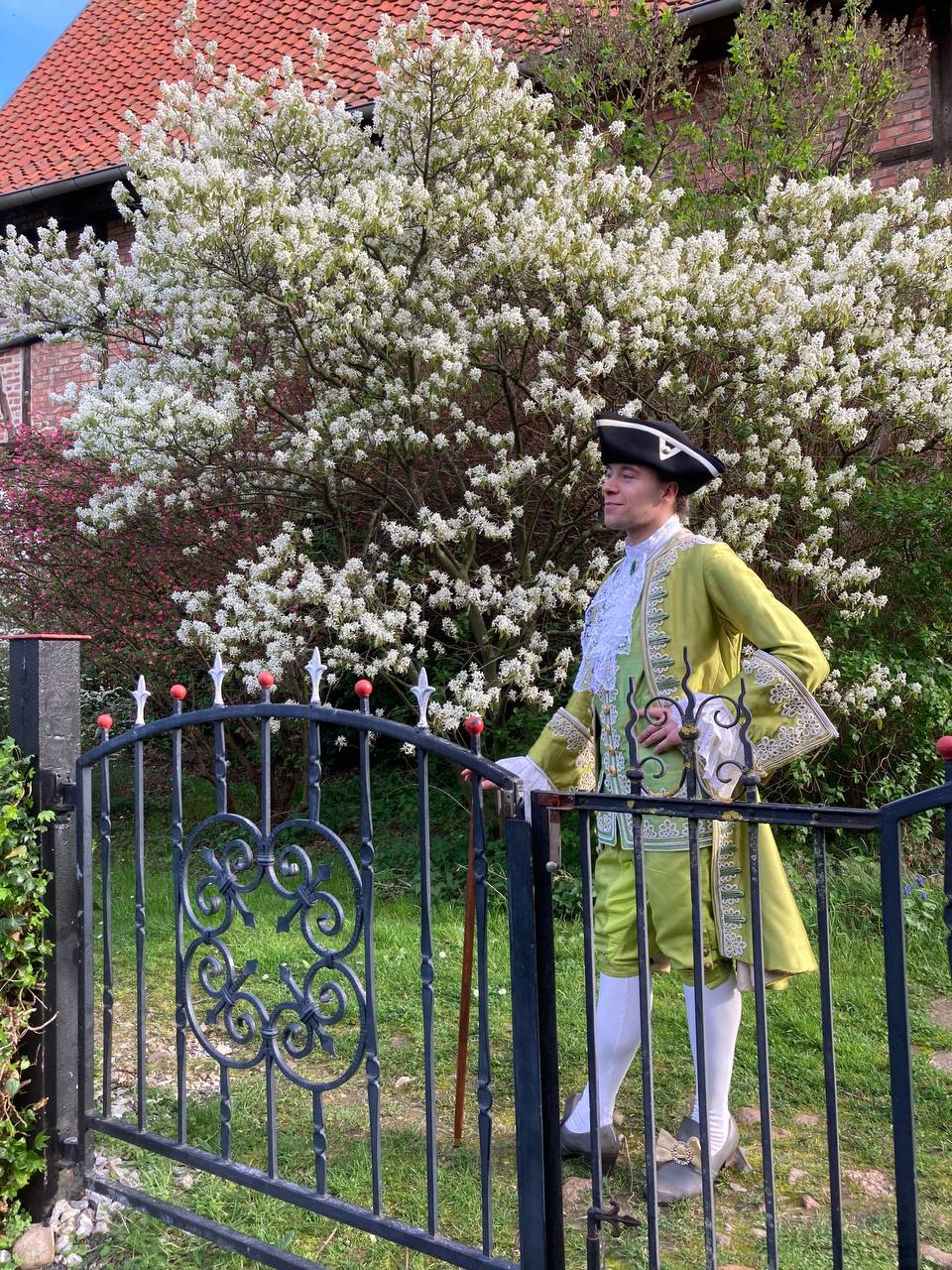
For the English version, see the full description below.
Unser Kurs ist vor allem dadurch bekannt, dass wir eine große, junge Gruppe sind, die sich seit Corona einen hohen Skilllevel erarbeitet hat. Dies war uns vor allem durch eine Aufteilung des Kurses in einen Anfänger- und einen Fortgeschrittenenkurs möglich. Somit kommen wir auf wöchentlich jeweils 3,5 Stunden Trainingszeit.
Die jeweils aktuellen Zeiten sowie weitere Informationen lassen sich am besten der Bielefelder Hochschulsportseite entnehmen, da diese leicht variieren können. Zur Teilnahme kann man sich als Student*in einfach im Kurs eintragen. Als externe Person ist eine Teilnahme ebenfalls möglich, hierzu muss jedoch eine sogenannte Gasthörerschaft abgeschlossen werden.
Bei Problemen, Fragen und ähnlichem gerne einfach direkt persönlich z.B. via Mail melden.
Our course is known for its size, youth and - ever since corona ended - quite a high skill level. We were able to achieve this skill level thanks to a separation of the course into a beginners and an advanced group. In total, we are able to practice for 3,5 hours each week.
Since the weekly time slot can slightly vary, the practice times and further information are best acquired from the website of Bielefeld University. As a student of the university, you can simply book the course. If you're not a student, you can still participate after applying for a so-called 'Gasthörerschaft'.
If there are any issues or you have open questions, feel free to contact me e.g. via e-mail.
- Dance group
- Playford
- mixed
English Country Dances / 2023 DANCE SUMMER COURSES / Cécile Laye
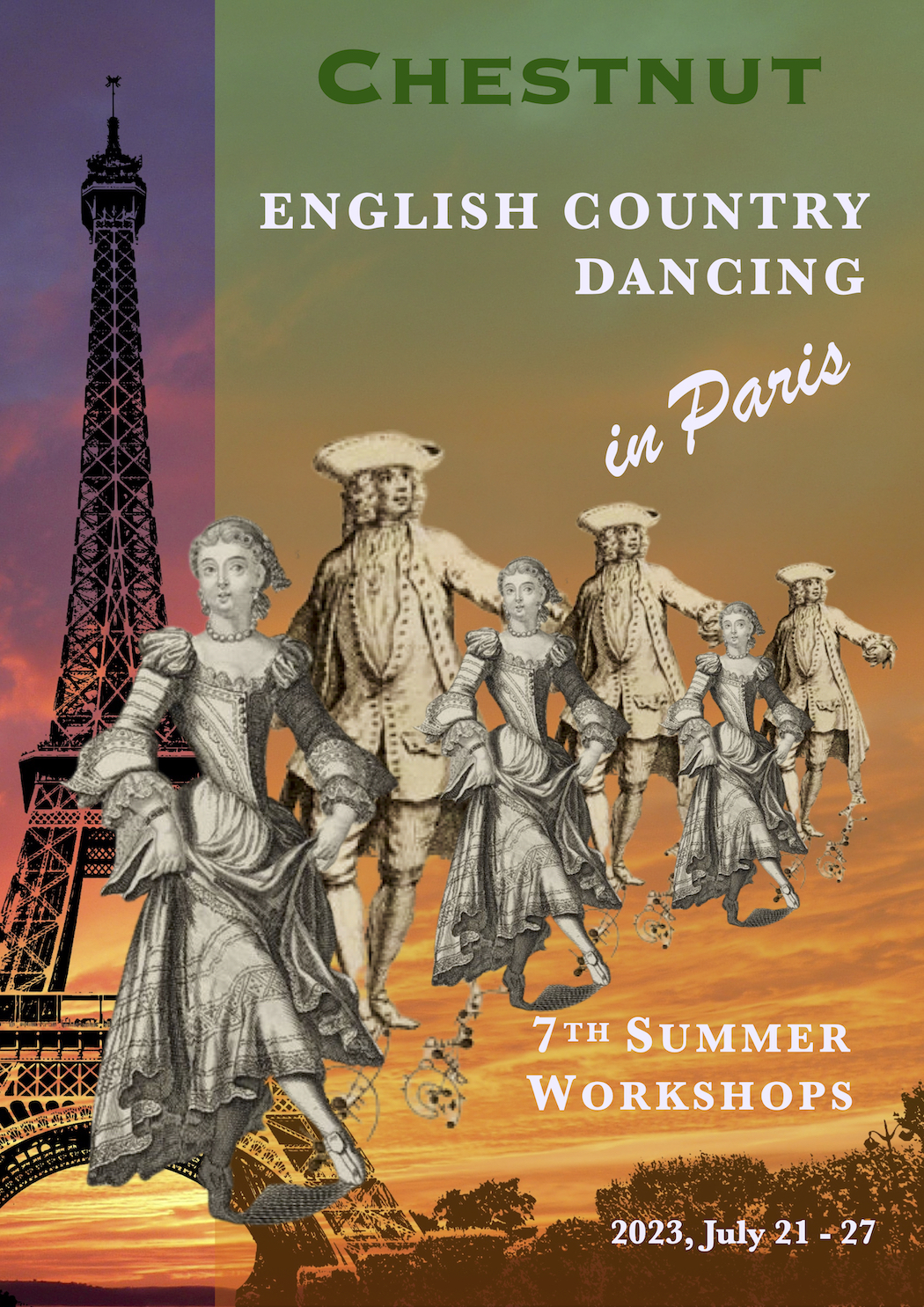
July 21, 22 and 23: BEGINNERS
A first approach to John Playford’s dances (1651-1670)
Meant for whom? For dancers new to this repertoire but with some experience in dancing, and for dancers aiming to teach English Country Dancing.
What’s on the programme? Introductions, verse and chorus dances. The following dances will be taught: Hit and Miss, Saturday Night -Sunday Morning, The Gun and Shepherd’s Holidays, plus a few longways for as many as will.
Where, when? At Micadanses, Rue Geoffroy l'Asnier, 75004 PARISFriday July 21 from 18:00 to 20:00 in the Biped studio
Saturday July 22 from 10:00 to 14:00 in the May Be studio
SundayJuly 23 from 10:00 to 15:00 in the May Be studio
Please note it is possible to register for two workshops or all three, with a reduction
Registrations will close on July 1, 2023.
July 24 and 25: INTERMEDIATE LEVEL
Country Dancing in the Early 18th Century (1699-1710) Bray, Walsh,Kynaston and The Dancing Master.
Meant for whom? For intermediate-level and advanced dancers familiar with the repertoire, or for dancers used to linking up several figures and steps.
What’s on the programme? Bray’s Maggot (Thomas Bray, 1699), Up with Aily (Henry Playford, 1703), The Humours of the Age (Kynaston, 1710), The Virgin’s Frolick (John Young, 1710), Hombey House (Walsh, 1710)
Where, when? At Micadanses, Rue Geoffroy l'Asnier, 75004 PARIS
Monday July 24 and Tuesday July 25 from 14:00 to 19:00, Biped studio
Please note it is possible to register for two workshops or all three, with a reduction.
Registrations will close on July 1, 2023.
July 26 and 27: ADVANCED LEVEL
20th and 21st century choreographers’ contribution
Meant for whom? Advanced dancers familiar with the repertoire, or dancers used to linking up long sequels of figures and steps.
What’s on the programme? 8, College Street (C. Laye) : Longways for 4 couples in 4 parts, Hand in Hand (Gary Roodman), Perpetual Motion (Tom Cook) and Dance to the Music of Time (Antony Heywood)
Where, when? At Micadanses, Rue Geoffroy l'Asnier, 75004 PARIS
Wednesday July 26 and Thursday 27 from 14:00 to 19:00, Biped studio
Please note it is possible to register for two workshops or all three, with a reduction.
Registrations will close on July 1, 2023.
Cécile LAYE, PRO DA member
Cécile Laye is CHESTNUT’s teaching and artistic director. She studied old dance forms in England with the Dolmetsch Historical Dance Society, Nonsuch History and Dance and EFDSS (English folk Dance and Song Society). She worked in particular under such famed teachers and researchers as Anne Daye, Anne Cottis, Peggy Dixon, Ethyl Anderson, Marjorie Fennessy, Tom Cook and Alan Davies. In France she studied with Francine Lancelot, Andréa Francalancci and Barbara Sparti. At the end of the eighties, she founded AMARILLIS, a dance company meaning to bring to the public figure dances of the Stuarts’ time and the English inheritance, as well as some aspects of history and literature, with the collaboration of musicians and singers. AMARILLIS was replaced by CHESTNUT in 1998. CHESTNUT took over its predecessor’s artistic activities (creating dance and theatre shows), its teaching (preparing dancers for Balls through a rich program of workshops and classes) and its publication ones (CDs, dance descriptions, articles on Playford and modern dances). Over the years, Cécile LAYE has build up a strong experience as a dancing master and ball caller (French Renaissance balls/ English figure dances balls, or a mixture of both). She can pass on her taste for and pleasure in elegant dancing to beginners as well as seasoned dancers. Besides her activities in the field of dancing, Cécile Laye studied dramatic art and staging, graduating at Cours Florent. She also graduated at Eva Ruchpaul’s Yoga Institute and the Paris school of Gestalt-therapy. She played Shakespeare, Molière and Marivaux in Paris and elsewhere in France and takes part in creating new plays and shows, for children in particular. She draws on both sides of her extensive training, physical and artistic, to develop her teaching method. Her constant aim is to understand the needs of a given group and of each person making up the group, to build up a class so that each person gradually understands the dance, becomes aware of his/her body and its expressive capacities, be it during a lesson, a ball, or on stage.
REGISTRATION
CONTACT
chestnut.cecilelaye@orange.fr or 0033 660 222 321 (contact@chestnut.fr doesn't work anymore!)
- Workshop
- Summer School
- Tudor
- Baroque
- Playford
- 19th century
- Quadrilles
- Regency
- mixed
- All levels
Dancing Well, Dancing Longer
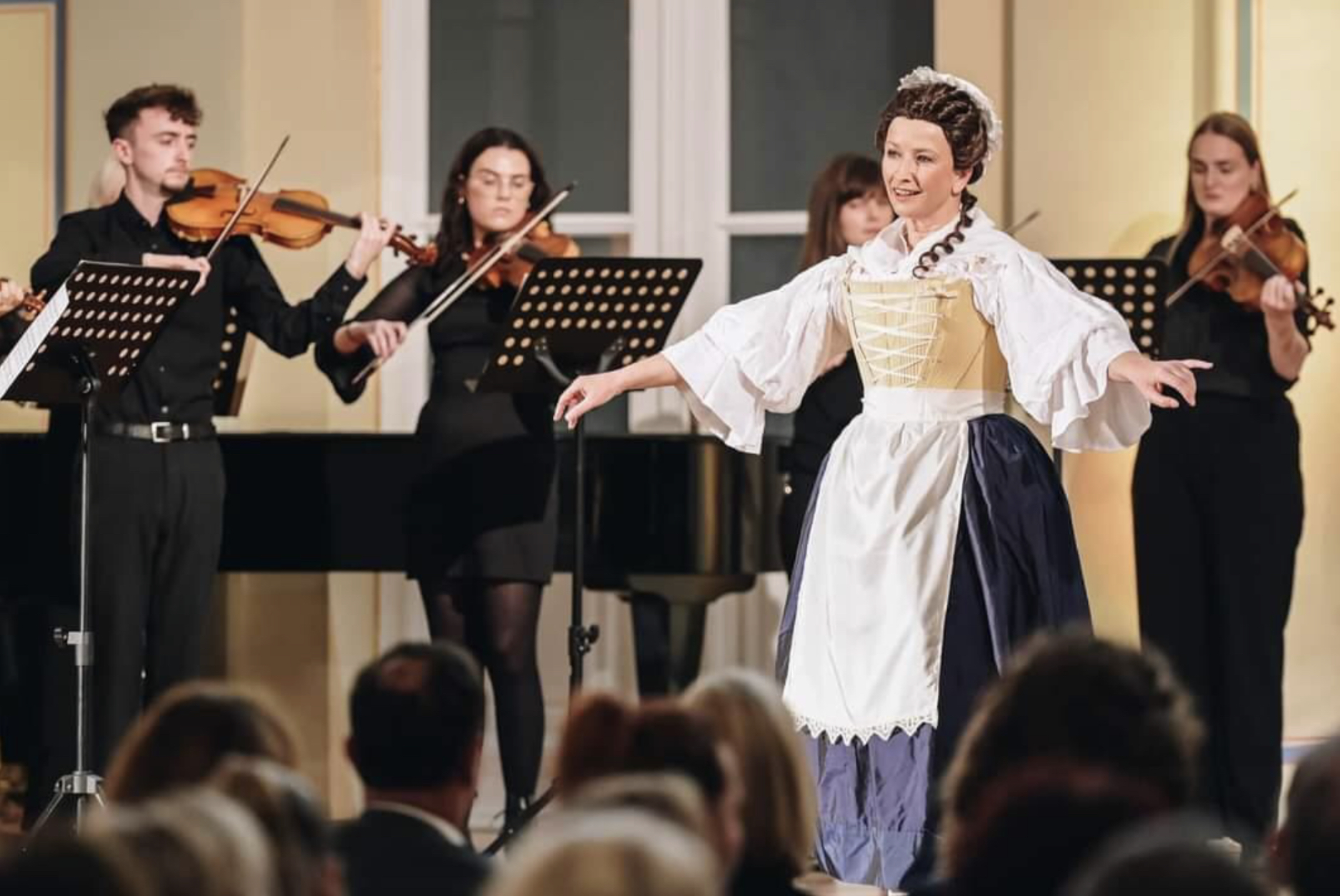
Description
The purpose of this course is to develop awareness of the technical skills needed to allow us to maintain our bodies, prevent injuries and keep dancing year on year. Many people, not all of course, who enjoy historical dance have not been through a formal dance training and may therefore not have had the anatomical instruction to understand fully the mechanics of the steps we use.
This course will explore aspects of dance technique that can be applied to historical dance forms to ensure safe practice and improve physical and interpretative skills. Sessions will explore effective warm up exercises for all levels of fitness and ability and specific physical skills that will improve alignment, strength and co-ordination. These aspects will then be applied to specific steps and dances of the Renaissance and Baroque eras to demonstrate how improvements in technical execution will also improve performance skills.
The first evening and each morning will start with a general warm up, using exercises that can be taken away for personal use or use with a group. This will be followed by exploration of technical aspects such as strength, stamina, posture, alignment and co-ordination. These skills will then by applied to sociable Playford country dances on the first evening, Renaissance dances on the Saturday and Baroque dances on the Sunday.
- Course
- mixed
- All levels
ENGLISCHE KONTRATÄNZE UND MEHR
Samstag 9. bis Sonntag 10. September 2023
ENGLISCHE KONTRATÄNZE UND MEHR
Referentin: Nicolle Klinkeberg, Herrsching
Mit Nicolle haben wir eine neue Tanzleiterin geworben, die für die LAG Tanz BW erstmals im September 2022 in Rastatt zwei schöne Tanztage gestaltet hat.
Nicolle Klinkeberg ist seit vielen Jahren Referentin für historischen Tanz und internationalenb Volkstanz. Zu ihren Lehrern im historischen Tanzbereich gehören u.a. Lieven Baert, Markus Lehner und Sigrid T’Hooft. Wir freuen uns auf ein Wiedersehen an einem neuen Ort. Aus ihrem Repertoire bringt sie uns interessante Tänze, die vielen Teilnehmern auch neu sein werden. Tanzbeschreibungen sind erhältlich. Als Besonderheit werden wir dieses Jahr noch ca. 1,5 Stunden nach dem Mittagessen am Sonntag tanzen und dann noch mit Kaffee und Kuchen den Abschluss finden.
Tanzkleidung: bequeme Kleidung (Damen gerne im Tanzrock), leichte Schuhe mit flachem Absatz
Ort: DEULA Baden Württemberg GmbH, Hahnweidstraße 101,
73230 Kirchheim/Teck (Von Stuttgart Hbf. mit der S1 nach
Kirchheim, dann 20 Minuten Fußweg oder Abholung nach Absprache.)
Beginn: Samstag 10:00 Uhr , Ende: Sonntag 16:00 Uhr nach Kaffee und Kuchen
Teilnehmerbeitrag: 185 €, Mitglieder 175 €, Schüler/Studenten 120 €.
Übernachtung im Doppelzimmer mit Dusche/WC, Vollpension und Kaffee/Kuchen. EZ-Zuschlag ist 10 €.
Auskunft und Anmeldung: Manfred Süß, Silcherstr. 31, 73773 Aichwald Tel. 07 11-36 50 16 4, eMail: manfred-aichwald@t-online.de
Anmeldung: bei Manfred oder über www.LAG-Tanz-BW.de/2334
Bitte eventuelle Anreise am Freitag bei Manfred anmelden!
Anmeldeschluss: 15. August (Rabatt 10 € bis 1. August)
p { margin-bottom: 0.25cm; line-height: 115% }
- Course
- mixed
- All levels
Englische Tänze - klassisch und modern
ENGLISCHE TÄNZE, KLASSISCH UND MODERN
Referent: Robin Slater, Dossenheim
Robin leitet seit 50 Jahren englische Tänze an. Sowohl durch seine alljährliche Teilnahme an Kursen in Belgien und England als auch durch seine Sammlung von 200 Tanzbeschreibungen lernt er immer wieder neue Tänze kennen. Seine 177 CD’s helfen ihm die richtige Musik zu finden. Die Tänze sind eine Mischung aus alten Quellen von 1650 und neueren aus England, USA, Belgien und den Niederlanden. Robins Programm besteht aus anspruchsvollen, aber auch einfacheren Tänzen.
Tanzkleidung: bequeme Kleidung mit leichten Schuhen
Ort: DEULA Baden Württemberg GmbH, Hahnweidstraße 101, 73230 Kirchheim/Teck (Von Stuttgart Hbf. mit der S1 nach Kirchheim, dann 20 Minuten Fußweg oder Abholung nach Absprache.)
Beginn: Samstag 10:30 Uhr Ende: Sonntag 14:00 Uhr nach dem Mittagessen
Teilnehmerbeitrag: 175 €, Mitglieder 165 €, Schüler/Studenten 130 €.
Übernachtung im DZ mit Dusche/WC und Verpflegung, EZ-Zuschlag 12 €. Der Beitrag enthält eine Getränkepauschale für Säfte und Sprudel.
Auskunft: Adelheid Merhof,
Maria-Montessori-Str. 9, 69221 Dossenheim,
Tel. 0 62 21-86 80 48 6, Mobil 01 79-93 42 29 5,
eMail: adelheid.merhof@online.de
Anmeldung: bei Adelheid oder über www.LAG-Tanz-BW.de/2309
Bitte eventuelle Anreise am Freitag bei Adelheid anmelden!
Anmeldeschluss: 11. Februar (Rabatt 10 € bis 28. Januar)
- Course
- mixed
- All levels
Tänze aus dem Gesangbuch
Tänze aus dem Gesangbuch - Tanztag mit dem Kirchenmusikpädagogen Dr. Siegfried Macht
Samstag, 11. März 2023 9:00 - 18:00 Uhr in Biberach/Riss ( 2 Stunden Mittagspause )
Martin-Luther-Gemeindehaus, Waldseer Straße 18, 88400 Biberach
p { margin-bottom: 0.25cm; direction: ltr; color: #000000; line-height: 120%; text-align: left; orphans: 2; widows: 2 }p.western { font-family: "Liberation Serif", serif; font-size: 12pt; so-language: de-DE }p.cjk { font-family: "Noto Sans CJK SC Regular"; font-size: 12pt; so-language: zh-CN }p.ctl { font-family: "FreeSans"; font-size: 12pt; so-language: hi-IN }a:link { so-language: zxx }
Populäre Lied-Tänze aus 6 Jahrhunderten in Choreographien ihrer Zeit
Ein Seminar für alle, die mehr Bewegung in die Kirche bringen wollen und/oder einfach Freude an vielfältigen Tanzformen haben.
Schon Martin Luther verstand es, gängige Tanzmelodien seiner Zeit – heute würde man sie als „Schlager“ bezeichnen – mit religiösen Texten zu unterlegen, und vielen weiteren Liedern im Gesangbuch liegen Melodien zu Grunde, die zum Tanz anregen.
Dr. Siegfried Macht ist Professor für Kirchenmusikpädagogik an der Hochschule für evangelische Kirchenmusik in Bayreuth. Er hat zahlreiche Bücher in den Bereichen Märchen, moderne Lyrik, Religionspädagogik, Theologie, Lied und Tanz veröffentlicht. Als Vermittler von Tänzen zeichnet er sich durch Begeisterung, Klarheit und Humor aus.
Unter seiner Anleitung werden wir symbol-starke, bildhafte, den zugrundeliegenden Liedtext ausdeutende Tänze nach Choreographien aus Mittelalter, Renaissance, Barock und Klassik kennenlernen - je nach Liedcharakter eher meditativ konzertant oder springlebendig volkstümlich.
Anmeldung online über LAG Tanz BaWü : https://www.lag-tanz-bw.de/programm/2308
Teilnehmerbeitrag: 40.- €, LAG-Mitglieder 35.- €, Schüler/Studenten 25.- €
Rabatt je 5.- bei Anmeldung und Überweisung bis 28.2.2023
p { margin-bottom: 0.25cm; direction: ltr; color: #000000; line-height: 120%; text-align: left; orphans: 2; widows: 2 }p.western { font-family: "Liberation Serif", serif; font-size: 12pt; so-language: de-DE }p.cjk { font-family: "Noto Sans CJK SC Regular"; font-size: 12pt; so-language: zh-CN }p.ctl { font-family: "FreeSans"; font-size: 12pt; so-language: hi-IN }a:link { so-language: zxx } p { margin-bottom: 0.25cm; direction: ltr; color: #000000; line-height: 120%; text-align: left; orphans: 2; widows: 2 }p.western { font-family: "Liberation Serif", serif; font-size: 12pt; so-language: de-DE }p.cjk { font-family: "Noto Sans CJK SC Regular"; font-size: 12pt; so-language: zh-CN }p.ctl { font-family: "FreeSans"; font-size: 12pt; so-language: hi-IN }a:link { so-language: zxx }
- Course
- mixed
- All levels