Tänze des 19. Jahrhunderts
Informationen zum
Tanzworkshop mit Lieven Baert Februar 2018
Thema: „Tänze des 19. Jahrhunderts“
In diesem Wochenendkurs werden wir uns zwei Tänze aus dieser Zeit widmen. Erarbeitet wird ein Paartanz, das „Congomenuett“ von Saltator USA 1802, und eine Ecossaise. Grundkenntnisse des Schrittrepertoires des 19. Jahrhunderts ist daher Voraussetzung zur Teilnahme an diesem Kurs.
Uhrzeiten: Samstag, den 03. Februar 2017 von 10 bis 18 Uhr
Sonntag, den 04. Februar 2017 von 10 bis 16 Uhr
Ort: Gymnastikhalle des Gisbert von Romberg Berufskolleg, Hacheneyer Str. 185, 44265 Dortmund (Stadtteil Hacheney, Nähe Romberg-Park)
Kosten: 80 €
Die Teilnahmegebühr bitte bis zum 10. Januar 2017 auf folgendes Konto überweisen:
La Riverenza e.V.
Kontonummer: 001073818
BLZ: 440 501 99
Stadtsparkasse Dortmund
Stichwort „Workshop Lieven Baert“
Anmeldung: An dem Kurs können 20 Personen teilnehmen. Die Anmeldung bitte schriftlich mit dem entsprechenden Anmeldeformular an folgende Adresse senden:
Silke Degenhardt
Brennerstr. 13
44269 Dortmund
oder per Mail mit den entsprechenden Angaben
Übernachtung: Als preiswerte Übernachtungsmöglichkeit empfehlen wir das Kolpinghaus: Jugendgästehaus Adolph Kolping, Silberstraße 24-26
44137 Dortmund; Tel.: 0231-140074, Fax: 0231-142654, E-Mail: jgh-dortmund@djh-wl.de
Weitere Möglichkeiten lassen sich über die Touristeninformation erfragen: Verkehrsverein Dortmund; Tel.: 0231/18999-222; e-mail: info@dortmund-tourismus.de; Homepage: http://www.dortmund-tourismus.de
Versicherung: Die Kursteilnehmer sind für den Workshop vom Veranstalter nicht unfall- oder haftpflichtversichert.
- Workshop
- 19th century
- Intermediates
Last bath of the year in costume of the belle epoque
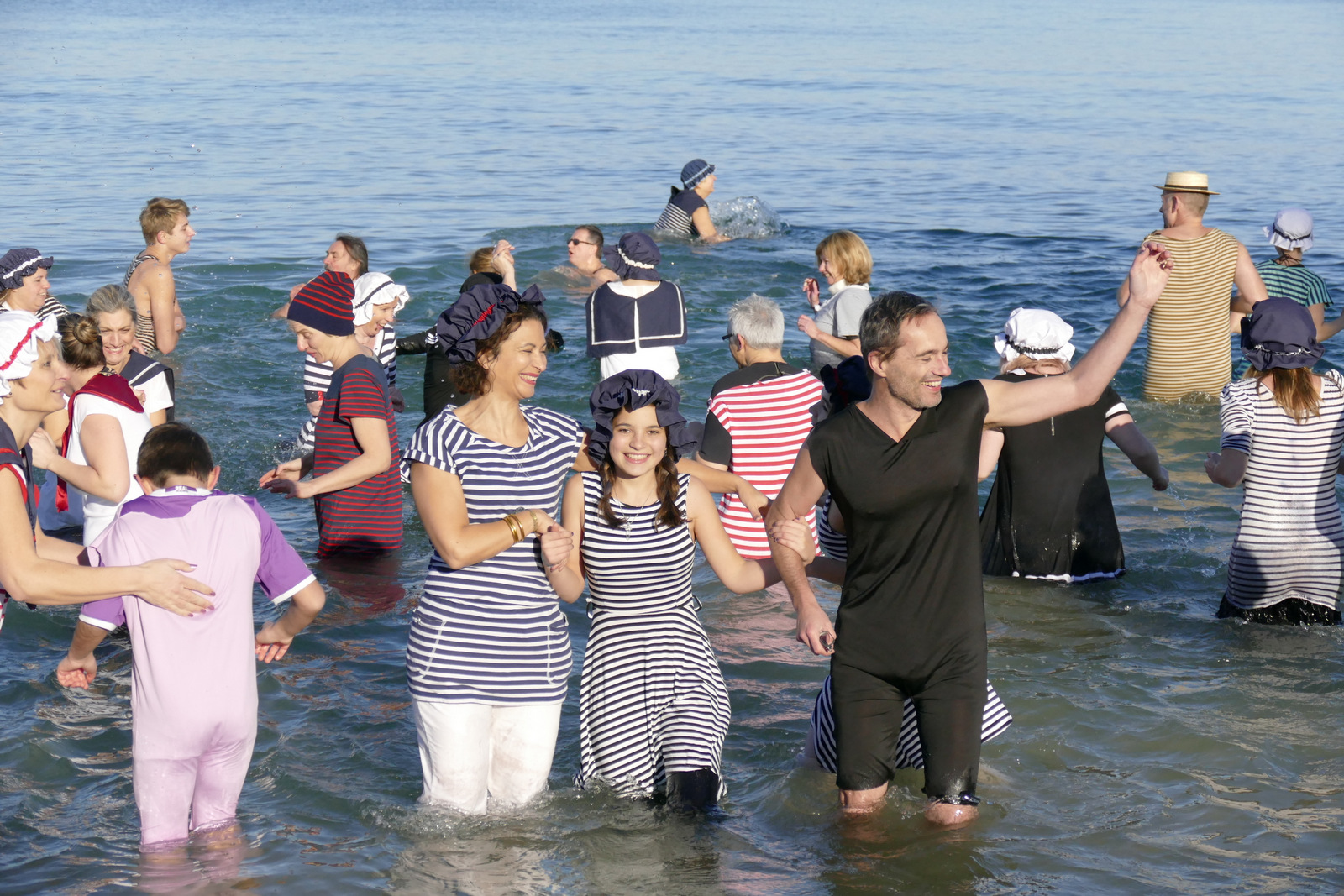
last bath of the year in costume of the belle epoque, in Normandy !
Dernier bain de l'année 2017 en costume de la belle époque
second edition
on sunday December 31, 2017 at 11 AM
Dimanche 31 Décembre 2017, RDV à 11 h du matin
RDV on the beach , in front of the grand hotel de Cabourg , France , Normandy, (2 hours from Paris)
the bravest in the water, the others on the beach ! music fanfare and collation , calva
last year, more than 50 participants !
come and try !
book youy bathing suit : cabourg1900@gmail.com
RDV sur la plage, devant le grand hotel de Cabourg , les plus courageux seront dans l'eau , les autres sur la plage !
l'an dernier , vous etiez plus de 50 inscrits ! reservez votre costume de bain dés maintenant
- Exhibition
- 19th century
- All levels
26th EASTER SCHOOL of 19th CENTURY SOCIAL DANCE and Scottish Country Dance
26th Easter School of 19th century dance and Scottish Country Dance - Società di Danza
Friday, 30 March - Monday 2 April 2018
Tabiano (Parma), Italy
Società di Danza
Director: F. Mòllica, S. Balsamo
With the participation as guest teacher of Mervyn Short (RSCDS)
Live music for Scottish Country Dance classes and Scottish Party by Keith Smith (violin) and Andrew Nolan (piano)
The traditional Easter School of the Società di Danza this year will be in Tabiano (Pr), in the Parmesan hills.
In a beautiful environment, we will have the opportunity to spend a few days of communuty life, and to study more in depth theoretical and practical aspects of 19 century dance.
Program: social dance of 19th century tradition.
Quadrilles, Scottish Country Dance, Contredanse Fancaise, Waltz, Polka, Mazurka and March.
The classes will be divided into three levels.
Classes and seminars will be held both morning and afternoon and free time to enjoy the spa.
The evenings will be devoted to parties.
Staying at the Grand Hotel Astro.
From Friday evening at dinner to Monday morning at lunch.
_______
Program
Friday, 30.3.2018
Afetrnoon: arrival
Evening: Theoretical seminar: tradition of 19th century social dance
Saturday, 31.3.2018
Morning: Classes of Quadrille, Scottish Country Dance, Waltz
Afternoon: Classes of Mazurka, Scottish Country Dance, Contradanse Francaise
Seminar on the history of dance
Evening: Party of 19th century dance
Sunday, 1.4.2018
Morning: Classes of Quadrille, Scottish Country Dance, Mazurka
Afternoon: Classes of Waltz, Scottish Country Dance, Polka
Seminar
Evening: Party of Scottish Country Dance
Monday 2.4.2018
Morning: Classes of Quadrille, Scottish Country Dance, Mazurka and Polka
Farewell Party
For further information contact: Società di Danza
- Workshop
- 19th century
- All levels
New Year Grand Ball 2018
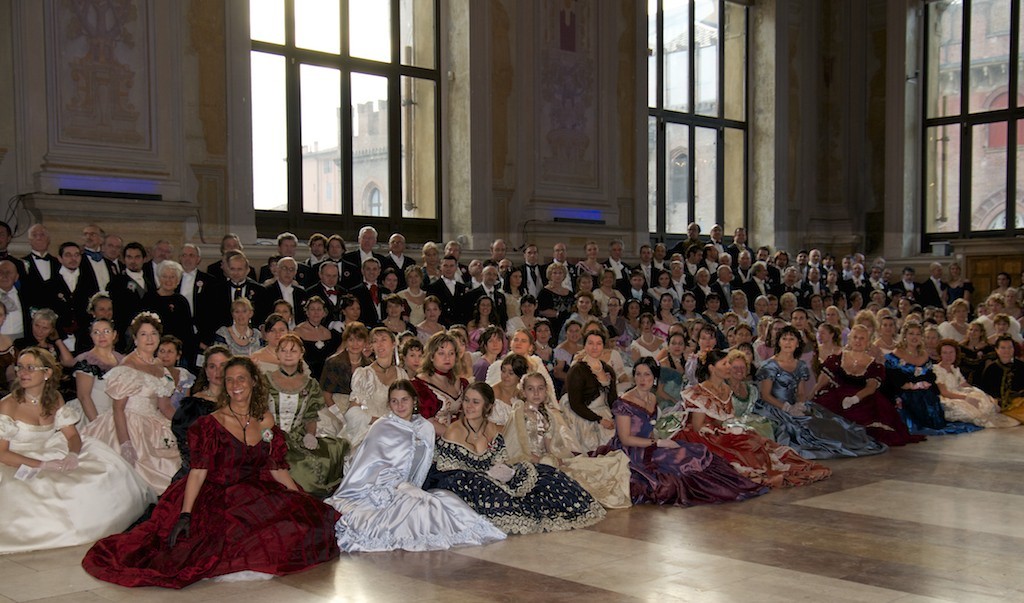
directed by Fabio Mòllica
To celebrate the New Year;s Day, Bologna invites you to the New Year Grand Ball.
In the largest historical hall in Italy Società di Danza presents the New year Grand Ball with live music and 19th century dance.
A special event to celebrate the New Year.
The New Year Grand Ball is proposed and organized in collabaration with Onlus (Charity)
With the participation of various groups of 'Società di Danza', cultural association funded in Bologna in 1991 by F. Mòllica with the aim of studying and promoting historical dance.
Information: info@societadidanza.it
- Ball
- 19th century
- Advanced
„Es muß ein Stück vom Himmel sein ...“
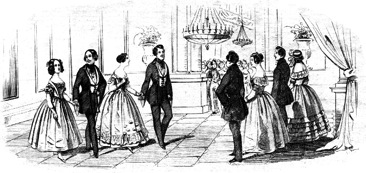
Diesmal haben Hannelore und Andrea ein besonders buntes und reichhaltiges Bouquet aus Raritäten und Gustostückerl gebunden.
Im Almanach der Modetänze 1831 veröffentlichte Eduard Friedrich David Helmke eine Serie von Contredanses: La Muette, Le Gremilet, l’Orléanais, l’Erynge, Le Tricotet. Wie sein Kollege Häcker benennt er die Schritte zu den Touren, und fügt zusätzlich malerische Attituden bei. Vorangestellt ist eine Allemande in der reizvollen Konstellation von vier Herren und acht Damen in 15 Figuren!
Die Enchaînements der erlernten Schritte finden nicht nur in den Solopassagen der Contredanses Anwendung, sie sind auch Ausgangspunkt für einen improvisierten Solotanz für Damen, der auf Lady Hamilton zurückgeht. Im dem sogenannten Shawltanz mit einem hauchdünnen Seidentuch müssen Geschmack und Grazie in den regelmäßigen Stellungen und ausdrucksvollen Bewegungen vorherrschen, die Anmut der Haltung stets die Kunstfertigkeit der Schritte überwiegen. (Theodor Hentschke, Allgemeine Tanzkunst 1836). Elisabeth Vigée Lebrun portraitierte die Fürstin Karoline von Liechtenstein (1768-1831) mit einem poetischen gewölbten Shawl. (Ein geeignetes Seidentuch mitbringen – Hannelores Shawl hat 2,6 x 1 m).
Eduard Eichler kombiniert in seiner Autrichienne, dem Neuesten Salon-Tanz für ein Paar aus dem Jahr 1859, Galopp- und Balancéschritte mit Drehungen im 6/8 Takt.
Die Attraktion der Ballsaison 1860, die Monstre-Quadrille, bekommt in unserem Ballprogramm einen Ehrenplatz.
Ins ausgehende 19. Jahrhundert entführt uns Per Sørensen mit Carl Links Salon-Quadrille.
Da Johann Raabs Polka-Mazurka-Quadrille L’Alliance zuletzt für viel Freude gesorgt hat, wird sie ins Ballprogramm aufgenommen. Für all jene, die sie bereits gelernt haben, wird es eine Auffrischungsprobe geben.
Wir eröffnen unsere gemeinsame Woche am 4. Februar 2018 um 16.00 Uhr im Bezirksmuseum Döbling; 1190, Döblinger Hauptstraße 96 (Straßenbahn 37 ab Schottentor bis Pokornygasse oder Bus 10A bzw. 39A bis Barawitzkagasse). Wir werden sachkundig und in englischer Sprache u.a. durch jene Räume geführt, in denen die Wiener Mäzenin Josephine von Wertheimstein ihren Salon zum Treffpunkt liberaler Persönlichkeiten mit den Dichtern Ferdinand von Saar, Hugo von Hoffmannsthal und dem Schubertfreund Eduard von Bauernfeld machte. (http://www.bezirksmuseum.at/de/bezirksmuseum_19/bezirksmuseum/).
Anschließend schlendern wir noch an nahegelegenen Sehenswürdigkeiten vorbei und fahren gemeinsam zum Heurigen. Dort können wir unseren Hunger und Durst stillen und vor allem: tanzen. (Ort wird noch bekannt gegeben.)
Ab 5. Februar 2018 finden die täglichen Tanzstunden zwischen 10:00 und 16:30 Uhr diesmal im Musischen Zentrum in der Nähe vom Theater in der Josefstadt: 1080 Wien, Zeltgasse 7 im „Atelier“ im obersten Geschoß statt. (Straßenbahnlinie 2 Station Lederergasse; oder 46 Station Strozzigasse, oder Bus 13A Lederergasse bzw. Piaristengasse). (http://www.musisches-zentrum.at/index.php/kontakt-menu)
Unser Gschnas unter dem Motto „zu Gast im Salon“ bringt uns hoch über Wien, am Cobenzl in den Ausläufern des Wienerwaldes wieder am Dienstag http://www.waldgrill-cobenzl.at; (Bus 38a ab U4 Endstation Heiligenstadt). Beginn ab 18.30 - Ende 21.30.
Der Mittwoch Nachmittag ist für individuelle Aktivitäten frei.
Der Tanzunterricht endet Freitag ca 13.00 Uhr. Am Nachmittag treffen wir uns zum „Thé dansant“ (15.00-18.00 Uhr) in den biedermeierlichen „Sträußelsälen“ im Theater in der Josefstadt, 1080 Wien, Josefstädter Straße 26 in entsprechender festlicher Abendkleidung. Anschließend können wir den Abend in Sigmund Freuds Stammcafé, wie vor uns auch schon Gary Cooper, Marlene Dietrich oder Romy Schneider, im Cafe Landtmann ausklingen lassen (Anmeldung erforderlich!).
Der Abschlussball findet am 10. Februar 2018 statt. (Eintreffen ab 17.15 Uhr. Umziehmöglichkeit vor Ort. Beginn 18.00). Wie in den letzten Jahren dürfen wir das unvergleichliche Ambiente des Palais Daun-Kinsky (1010 Wien, Freyung 4) genießen. Der ovale Festsaal eignet sich ideal für Walzerrunden und hat sich auch für Quadrille- wie auch Kolonnenaufstellungen bestens bewährt. Ein exquisites Galabuffet wird für uns im Gelben Salon angerichtet. Wir freuen uns wieder auf unsere erprobte Ballmusik der letzten Jahre.
Ballbesucher, die nicht die ganze Tanzwoche dabei sein können, sind uns zum Thé dansant und/oder dem großen Straußball herzlich willkommen. Die zahlreichen Walzer, Polkas, Galoppe, sowie die angeleiteten Tänze wie der Sir Roger (Wiener Fassung) und Cotillonspiele sind für alle zum Mitmachen. Lediglich die Kurstänze sind den Kursteilnehmern vorbehalten und können als Tanzdarbietung genossen werden. Die Ballspenden mit der Tanzordnung nach historischem Vorbild – wie immer in Handarbeit von Andrea gefertigt - sorgen für Abwechslung der Tanzpartner.
xxxxxxxxxxxxxxxxxxxxxxxxxxxxxxxxxxxxxxxxxxxxxxxxxxxxxxx
This time, Hannelore and Andrea have tied a particularly colorful and rich bouquet of rarities and gems.
E. D. Helmke published in his Almanach der Modetänze 1831 a series of contredanses: La Muette, Le Gremilet, l’Orléanais, l’Erynge, Le Tricotet. Like his colleague Häcker, he mentions the steps to the figures, and also adds picturesque attitudes. He prepends to this sequence an Allemand in the charming constellation of 4 Gents and 8 Ladies in 15 figures!
The Enchaînements of Helmke’s steps are inspiration for the solos of the Contredanses as well as for an improvised solo dance for Ladies, which goes back to Lady Hamilton. In the so-called Shawltanz with a delicate silk scarf, taste and grace prevail in the regular positions and expressive movements, over the dexterity of the steps. (Theodor Hentschke, Allgemeine Tanzkunst, 1836). Elisabeth Vigée Lebrun portrayed the Princess Caroline of Liechtenstein (1768-1831) with a poetic vaulted silk shawl. (Please bring a suitable silk scarf (Hannelore’s 2,65 x 1 m).
Eduard Eichler combines in his Autrichienne, the latest ballroom dance for a couple from 1859, galloping and balancing steps with turns in the 6/8 time.
The attraction of the season 1860, the Monstre-Quadrille, gets a place of honor in our ball program.
Per Sørensen takes us with Carl Link’s Salon-Quadrille in the outgoing 19th century.
Since so many dancers enjoyed Raab’s Polka-Mazurka-Quadrille L’Alliance, we decided to put this dance onto the ball-programm for those, who have learned this dance. We will review the figures.
We will open our dance week on February 4th 2018 at 4.00 pm in the Döbling district museum; 1190, Döblinger Hauptstraße 96 (tram 37 from Schottentor to Pokornygasse or bus 10A or 39A to Barawitzkagasse). We are looking forward to a guided tour in English. Here the patroness Josephine von Wertheimstein welcomed in her salon the poets Ferdinand von Saar, Hugo von Hoffmannsthal, Eduard von Bauernfeld, a wellknown friend of Franz Schubert and many other important contemporaries.
(http://www.bezirksmuseum.at/de/bezirksmuseum_19/bezirksmuseum/).
Afterwards we stroll past nearby sights and drive together to a Heurigen. There we can indulge ourselves in eating, drinking, and dancing. (Location will be announced soon.)
Daily classes will start on February 5th, from 10 am to 4.30 pm in „Musisches Zentrum“ near Theater in der Josefstadt: 1080 Vienna, Zeltgasse 7 in the "Atelier" on the top floor. (Tram line 2 stop Lederergasse, or 46 stop Strozzigasse, or bus 13A stop Lederergasse or stop Piaristengasse). (Http://www.musisches-zentrum.at/index.php/kontakt-menu). The lessons will be both in German and English.
Our fancy dress ball has the motto "to be guest in the salon" brings us high above Vienna, on the Cobenzl in the foothills of the Wienerwald (http://www.waldgrill-cobenzl.at; Bus 38a from U4 terminus Heiligenstadt). Tuesday from 6.30 p.m. to 9.30 p.m.
There will be no classes on Wednesday afternoon, so participants are free to explore Vienna or just rest their feet.
The dance classes end Friday, February 9th about 1.00 p.m. The afternoon Tea Dance (from 3 p.m. to 6 p.m.) will unfold its Biedermeier charm in the Straußelsäle, the last remaining dance hall in Vienna in which Strauss and Lanner played for dances, with evening dresses of the first half of the 19th century. The evening ends in Cafe Landtmann, where we can sit together and order individually food (reservation is necessery). This location was a favorite place of Sigmund Freud; and before us there have been Gary Cooper, Marlene Dietrich, Romy Schneider and Paul Mc Cartney.
For the Grand Strauss Ball on February 10th we reserve the belle etage of the Palais Daun-Kinsky (1010 Wien, Freyung 4): the oval ballroom, the Herren- and Damensalon and the Gelber Salon, created by the wellknown baroque architect Johann Lucas von Hildebrandt. There we can dance our Waltzes and Quadrilles and enjoy Viennese’s specials arranged at the delicious buffet. Before the ball there is also the possibility to change there. (Arrival 5.15 p.m. Solemn opening at 6 p.m.).
Following Viennese custom, we will have dance cards at the ball made by Andrea. The dance program will include dances, we learned or rehearsed during the week, the common turning dances (waltzes, polkas and Galops) and some contradances as the Sir Roger or the Cotillon (Germans), which will be called.
- Workshop
- Ball
- 19th century
- All levels
Jane Austen Festival Australia
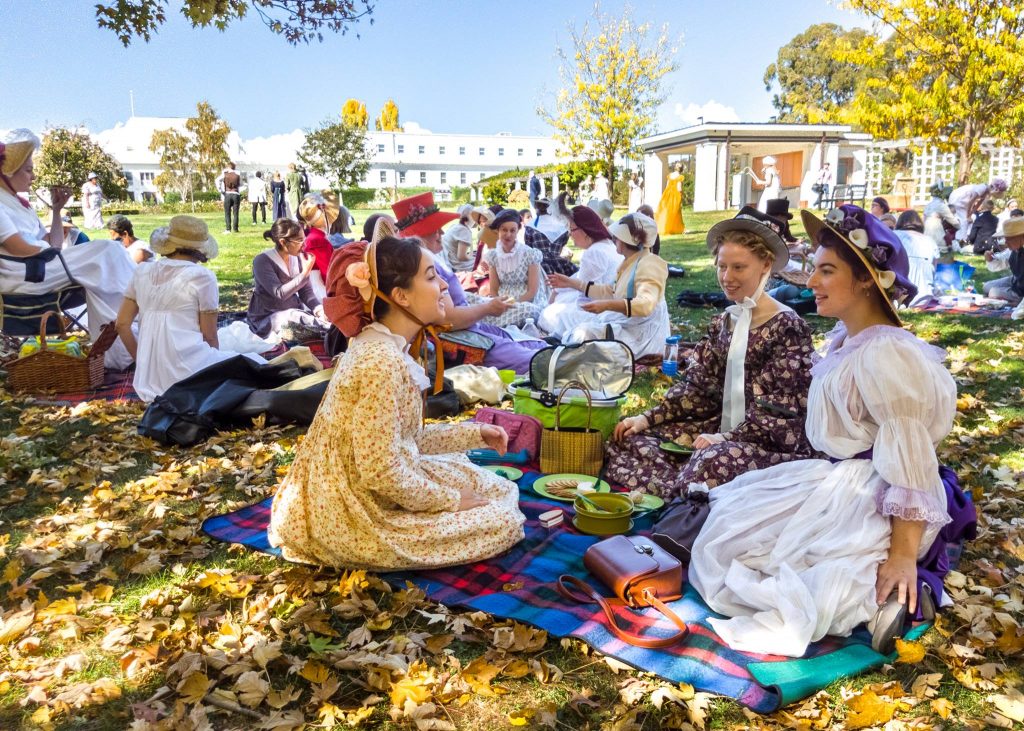
Jane Austen Festival Australia is an annual celebration in Canberra where living history enthusiasts from all over Australia come and indulge themselves in everything Georgian, Regency & Early Victorian - including dancing, music, food, games, archery, fencing, theatre, promenades, grand balls, talks, workshops, costumes and books. Since its inception in 2008 this little festival has blossomed into one of the most delightful weekend anyone could experience each April in an old and beautiful part of Canberra, the Federal capital of Australia.
Jane Austen Festival Australia was the idea of Aylwen Gardiner-Garden and first took place in 2008. Aylwen's aim was to hold an annual celebration where living history enthusiasts from all over Australia could come and indulge themselves in dance, music, food, games, costumes and books. This festival is now a regular part of the ACT Heritage Festival and Australian Heritage Week.
Each year the Festival grows with more people dressing in historic costume celebrating the life and works of Jane Austen. Events are organised by the Festival team under the guidance of the festival director Aylwen Gardiner-Garden - small soirees, concerts, a costumed promenade, theatre, period games, fashion, food, lectures and of course LOTS of dancing feature over four days and four nights - led by dance teacher and historian, John Gardiner-Garden.
- Workshop
- Ball
- Playford
- Rococo
- 19th century
- Quadrilles
- Regency
- Waltz
- Costumes
- All levels
Das Jane Austen Wochenende
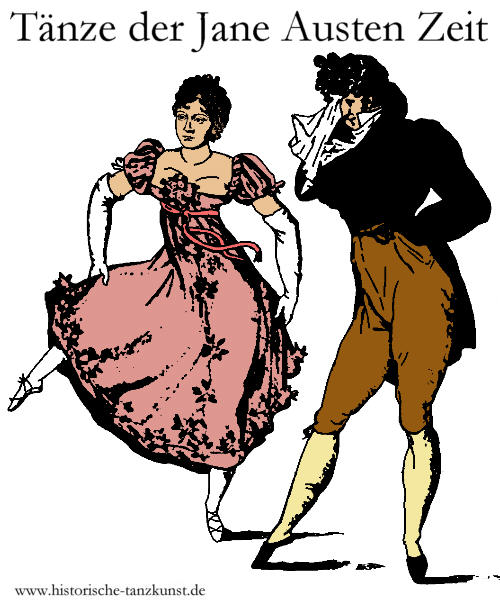
In den Romanen und Romanverfilmungen der britischen Autorin Jane Austen (1775-1817) wird gerne getanzt. Dies ist für viele der Erstkontakt mit Tänzen des 18ten Jahrhunderts und eine Inspiration, selbst einmal tanzend in die Rolle von Lizzie oder Mr. Darcy zu schlüpfen.
Am Samstag 10:30-13:30 und 14:30-17:30 Uhr, sowie am Sonntagvormittag 10:30-13:30 Uhr: Tänze der Jane Austen Zeit
Jane Austens begann 1787 mit dem Schreiben, ihr erster Roman erschien 1811, bereits 1817 starb sie – ein enges Zeitfenster für eine so große Wirkungsgeschichte. Wir machen einen kleinen Ausflug in das späte 18te und frühe 19te Jahrhundert, mit Tänzen, die sie wirklich gekannt und getanzt haben könnte.
Mit dabei an diesem Wochenende ist natürlich der „Savage Dance“, der einzige in ihrer eigenen Handschrift überlieferte Tanz, und „La Boulanger“, der einzige in ihren Büchern („Stolz und Vorurteil“) namentlich erwähnte Tanz.
Am Sonntagnachmittag 14:30-17:30 Uhr: Jane Austen Film- und Balltänze
In Jane Austen Verfilmungen und auf Jane Austen Bällen werden vielfach Tänze getanzt, die zu ihren Lebzeiten mit Sicherheit nicht mehr getanzt wurden. Ein sehr beliebtes Beispiel ist „Mr. Beveridge's Maggot“ von 1695 – ein sehr schöner Tanz, aber 80 Jahre vor ihrer Geburt erschienen. Wir ignorieren diesen Umstand einfach einmal und tanzen, was in Filmen und auf Bällen gerne getanzt wird.
An diesem Wochenende sind auch ausnahmsweise Kostüme willkommen – wer also in ein Empire Kleid oder in einen Frack schlüpfen möchte mag das tun, alle anderen tragen normale moderne Kleidung – wie immer.
Die Frankfurter Barocktanzreihe
Einmal im Monat gibt es in Frankfurt an einem Sonntag in der speziell für Anfänger konzipierten Reihe: „Die Grundlagen des Barocktanzes“ die Gelegenheit, einen selten angebotenen Tanzstil kennen zu lernen. Dabei werden sowohl die einfacheren Contredanses, als auch die komplizierteren Solopaartänze der Zeit angeboten. An einigen Themenwochenenden im Jahr gibt es zusätzlich am Samstag Workshops.
Weitere Termine der Reihe 2017:
16. Dezember: Nationaltänze
17. Dezember: Der Hessentag
Weitere Informationen finden sich auf meiner Webseite www.historische-tanzkunst.de sowie im Flyer.
- Workshop
- Rococo
- 19th century
- Regency
- Beginner
- Intermediates
8. International Dance Summer School - European and American Ballroom Dances from the Period 1800-1900
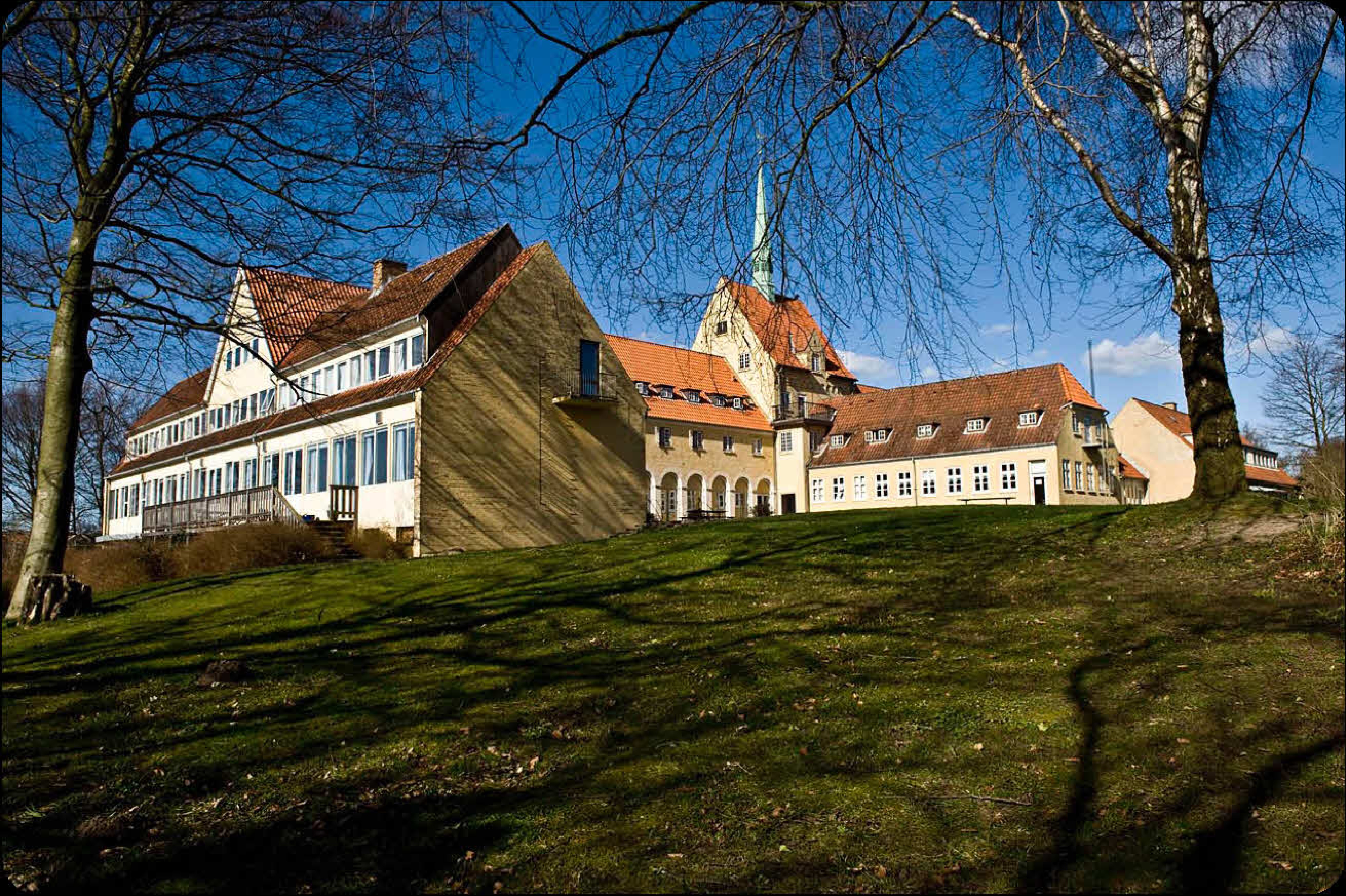
European and American Ballroom Dances from the period 1800-1900, Course, Thé-Dansant and Grand Ball. A week with dance, full lodging and sightseeing - further at: https://www.snoghoj.dk/short-courses/internationale-baldanse/?lang=en
- Summer School
- Ball
- Course
- 19th century
- All levels
The 18th Cracovia Danza Court Dance Festival
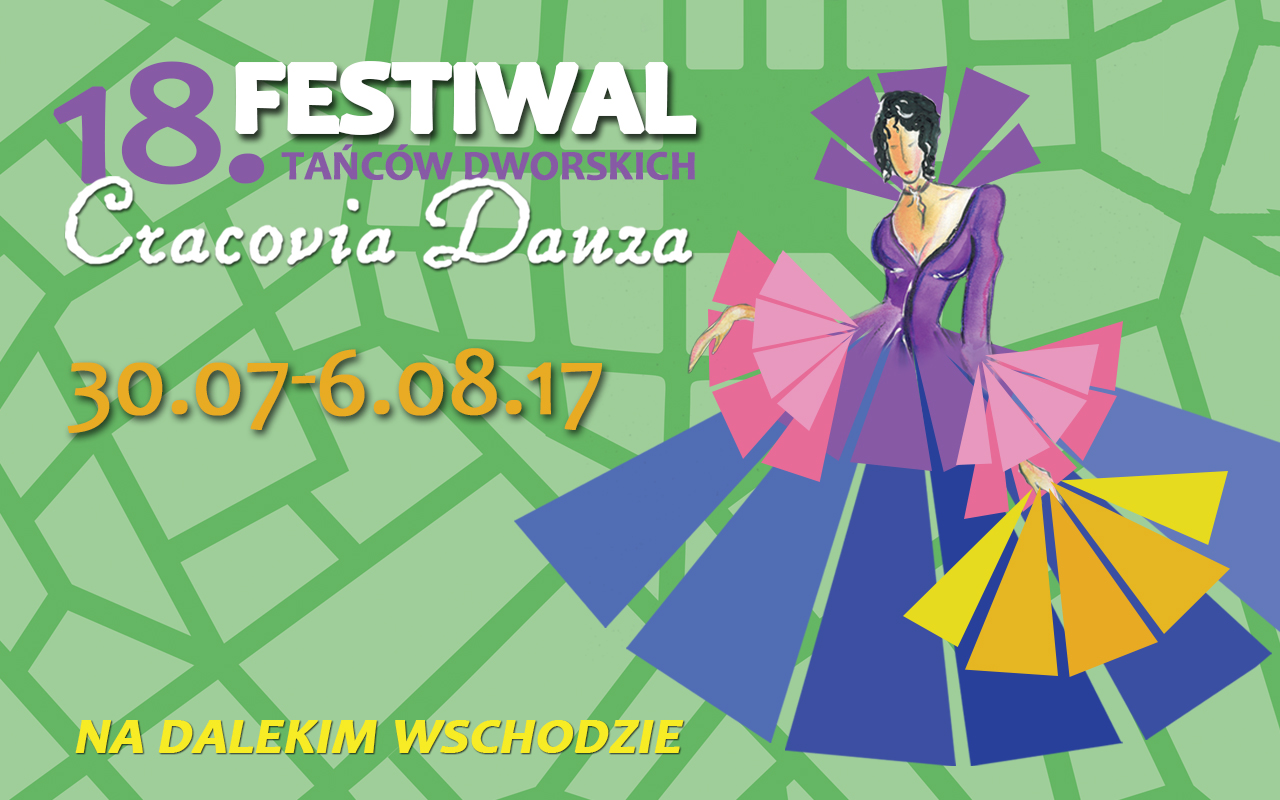
The 18th Cracovia Danza Court Dance Festival will take place in Krakow between July 30th and August 6th. Held under the In the Far East title, this year’s edition will concentrate on Asia. As usual, the Festival will welcome an international circle of dancers who will take part in open-air performances, presentations and court dance workshops. The 2017 festival edition will explore the main theme of the fan, a prop which fulfilled a role of profound importance in dances and choreographies of different styles and periods.
For the first time in the history of the festival, Korean dancers of the Chum-Sarang Arts Academy will come to Krakow and perform alongside the Jeolla Samhyenyukak music group. Jang Tae Yun with her students will present court dances of old-time Korea to mark the opening of the festival at the Renaissance Villa Decius, and will also appear during the Dances of 1001 Nights spectacle held in the Main Market Square on Saturday, August 5th. In that same performance in the Main Square we will also see Alaknanda Bose, expert of the Indian Kathak dance and a special guest of the festival for many years, with her group Sanskriti. On the second night of the festival finale, August 6th, the Cracovia Danza Ballet will appear with their Dancing Fan show alongside guest artists invited to the performance.
This year’s festival programme has been designed to unfold like a dance map of Krakow. On the Finale weekend (August 5th-6th), a veritable feast, Fiesta di Danza, will be prepared for the audience in the Main Market Square. This is where you may see not only great international spectacles, dance presentations brought together by the participants of the festival workshops, the performance given by this year’s holder of the resident ensemble title, but also participate in the grand Ball for the public (Saturday, August 5th). Also, the performance of the acclaimed Sbandieratori group of Ferrara who will present a mesmerising show of flag juggling, alongside the musicians of the Rione Santo Spirito district of Ferrara, is sure to become another highlight of the Festival. At the same time — all throughout the grand finale on Saturday and Sunday — some of the city’s historical places, situated right in the bustling heart of Krakow, will come alive thanks to dance. The Barbican will provide a setting for Travelling with Dance, dances At the Court and In the Palace will be held at the Bishop Erazm Ciołek Palace, and Collegium Maius — Jagiellonian University’s oldest building — will provide the backdrop for stories told with dance in The Study and Performance of Dance. Ages past will be conjured up through music, costumes, and, above all, the artistry of adept dancers, among them those of the Cracovia Danza Ballet and court dance masters: Barbara Segal, Marie-Claire Bär Le Corre and Gloria Giordano.
This year a distinction for young talented artists was awarded by Romana Agnel, the director of the festival, for the first time. The title of the resident ensemble and the opportunity to perform in front of a wide audience in the Main Market Square were offered to the “La Danza Antica” Music and Dance Ensemble from Lębork, laureate of this year’s “Schola Cantorum” Festival.
As every year, the festival is accompanied by 5-day long workshops, which this year will take place under the banner of “Krakow Dances”. Around 200 participants from Poland and abroad will take part in dance courses taught by dance masters from all over the world. The classes will be held in the building of the celebrated Bartlomiej Nowodworski High School No.1 situated near Plac Na Groblach square. The courses will be taught by Barbara Segal (English dance, Baroque dance), Marie-Claire Bär Le Corre (French dance, children’s workshops), Ana Yepes (Spanish dance), Gloria Giordano (Italian dance), Alaknanda Bose (Indian Kathak dance), Jang Tae Yun (Korean court dance) and Leszek Rembowski (early Polish dance). Acting workshops will also be featured in the programme. Classes devoted to the subject of commedia dell’arte will be given by Agnieszka Cianciara-Fröhlich and Jonathan Fröhlich, Poland’s only actors specialising in this theatre genre. Krzysztof Antkowiak, dancer of the Cracovia Danza Ballet, will reveal the ins and outs of the art of pantomime to his students. Each evening, for the duration of the festival week, you will also be able to see the teachers’ presentations held in the courtyard of the Bishop Erazm Ciolek Palace.
The only event of this kind in Poland, the Cracovia Danza Court Dance Festival is also unique globally. Every summer in Krakow it brings together masters of historical dance and numerous ensembles specialising in early dances from all over the world. The initiator and the director of the festival is Romana Angel.
For detailed programme and workshop enrollment information go to www.cracoviadanza.pl/festiwal
- Workshop
- Performance
- Summer School
- Ball
- Ongoing classes
- Course
- Renaissance
- French Renaissance
- Commedia dell'Arte
- Baroque
- Early Baroque
- Spanish baroque
- 19th century
- Costumes
- mixed
- All levels
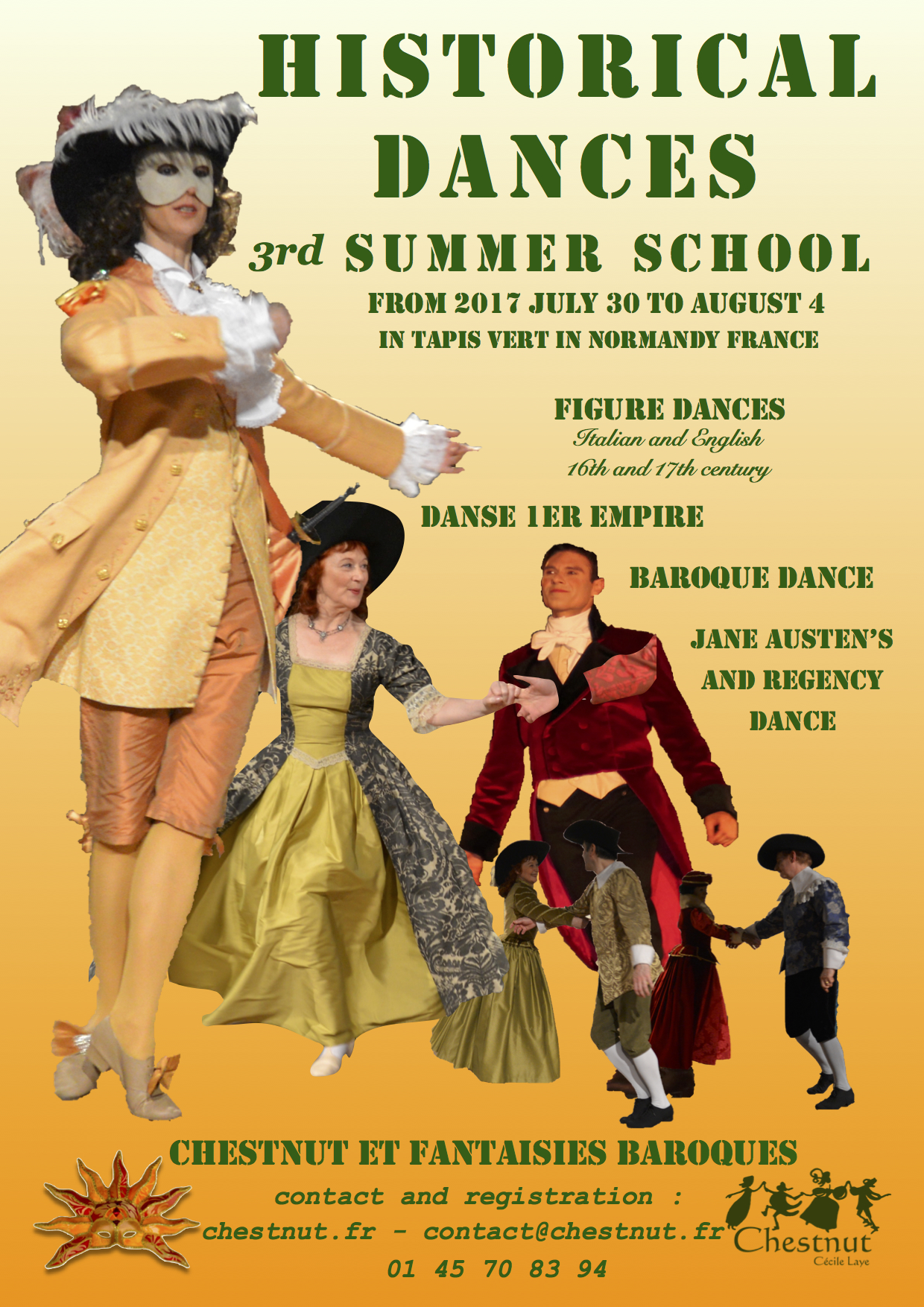
Third Historical Dances Summer School in Normandy 2017
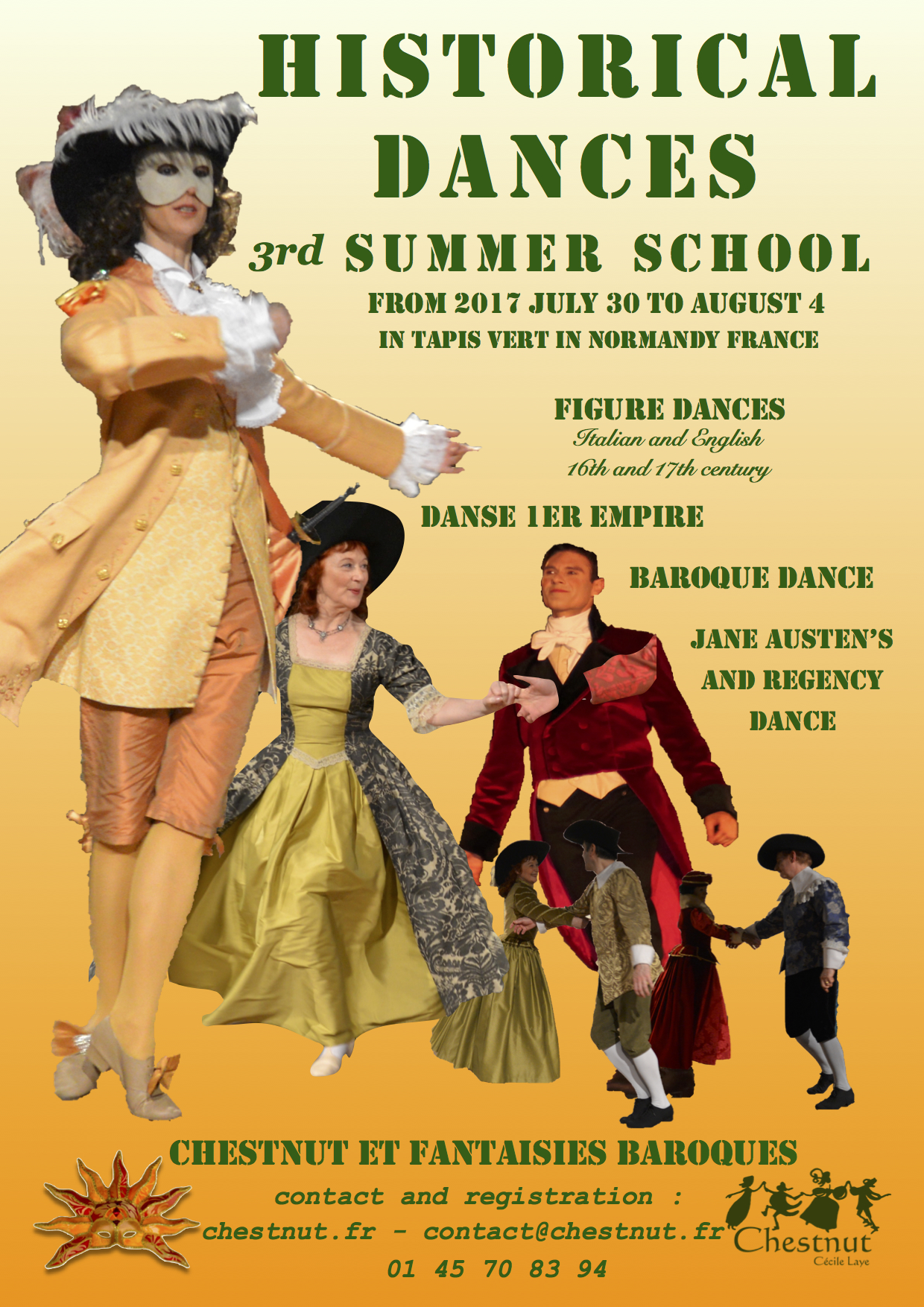
Four repertoires :
Figure dances, from the Italian tradition to the English one (16th and 17th century)
Baroque dance
Jane Austen’s and Regency dance
Danse 1er Empire
With four different repertoires and two instructors (Cécile Laye and Irène Feste), you’ll be able to make up your own schedule according to your tastes and how energetic you feel. You may opt for an intensive dance programme, up to 6 hours daily, orLogo Fantaisies Baroqueschoose a mix of workshops and time for resting or for touring the area. Each day will start at 9 a.m. with a half hour of warming up exercises, led by each instructor in turn.
N.B. : In our workshops, the programme allows for all levels of dancing. Each dancer will be taught variations suitable to his/her possibilities.
All details, contact and regsitration form available here : http://chestnut.fr/en/stage-dete-de-danse-historique-2017/
- Workshop
- Summer School
- Baroque
- Playford
- 19th century
- Regency
- Costumes
- Beginner
- Intermediates
- Advanced